
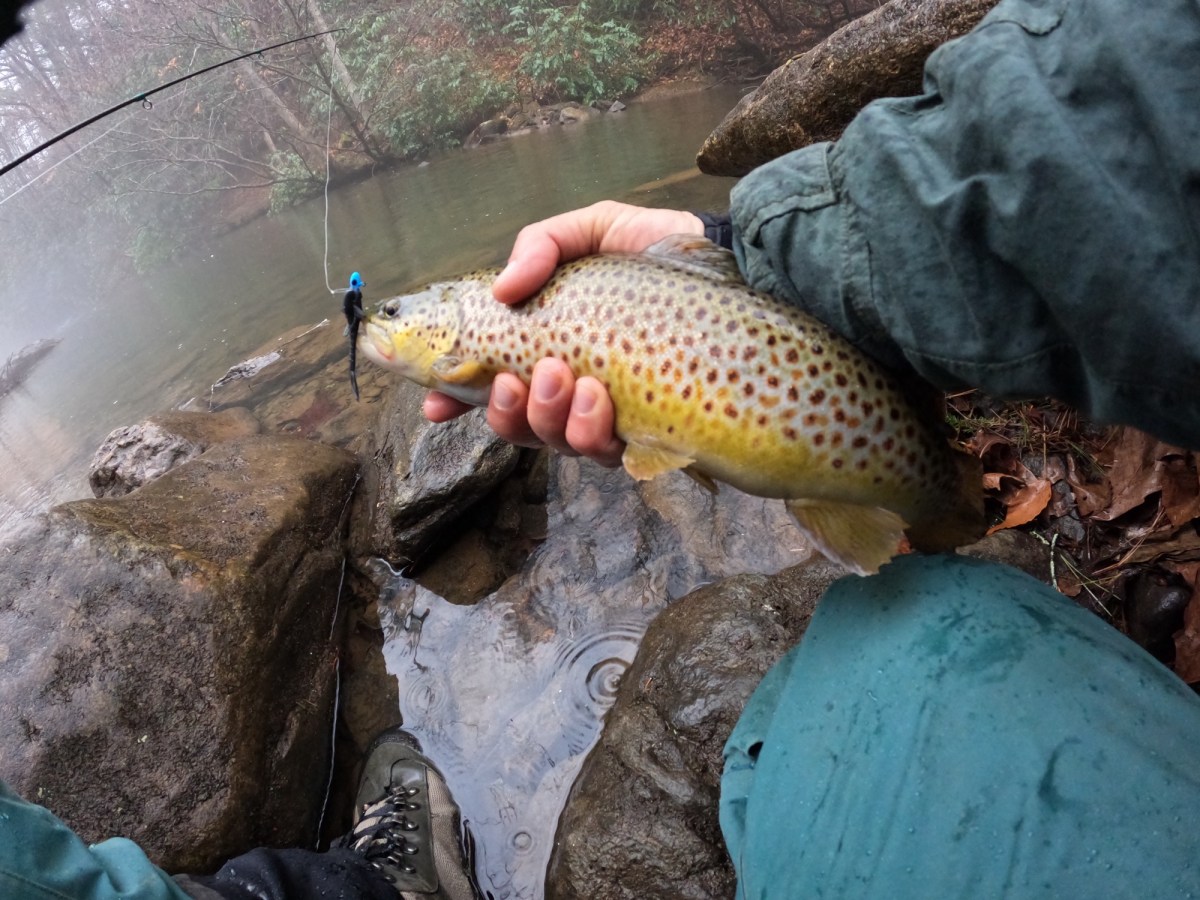
Waking up to a modest rain that had been falling a few hours and was forecast to gradually lessen, I couldn’t resist a quick creek outing.
I figured rainfall and continued cloudiness might make the brown trout a bit more active. More importantly, it was likely to lessen the number of other anglers at a popular creek I had wanted to visit.
Both were true, although in retrospect I wish I had mentally committed to a plan the night prior, gathered stuff at that time and gotten out the door before daylight. When I recognized conditions seemed right and started readying myself is when I really should have been out there in order to take advantage of the best bite window and enjoy a greater opportunity to fish with less company.
I did catch fish, and there were only a few cars when I arrived. The rain had already dropped back to a drizzle, though, and would soon taper off. As raindrops lessened, other anglers began arriving. I ended up making it a fairly short outing.
Creek Solitude
Some fishing is social in nature, and the sense of community can even add value, from my perspective. Coastal piers, marina docks, surf zones during gamefish runs and some popular ice fishing spots have that quality. It’s a shared quest, and as long as there is space to set up and fish, having other anglers around can add to the experience.
That’s seldom (maybe never) my mindset with trout fishing. Excepting the company of friends I might go with any given day, I prefer solitude when I’m wading a trout stream.
I do fish popular stream sections by choice for the same reasons they are popular — easy access to good trout-catching opportunities. I do so despite other anglers, though, and do my best to choose the less popular times. I’ll also gladly walk farther to access less crowded sections.
In part it’s the total experience aspect. One of my favorite things about trout is the beauty of the places they live — and I like to at least pretend I’m a bit away from things when I’m wading a mountain stream.
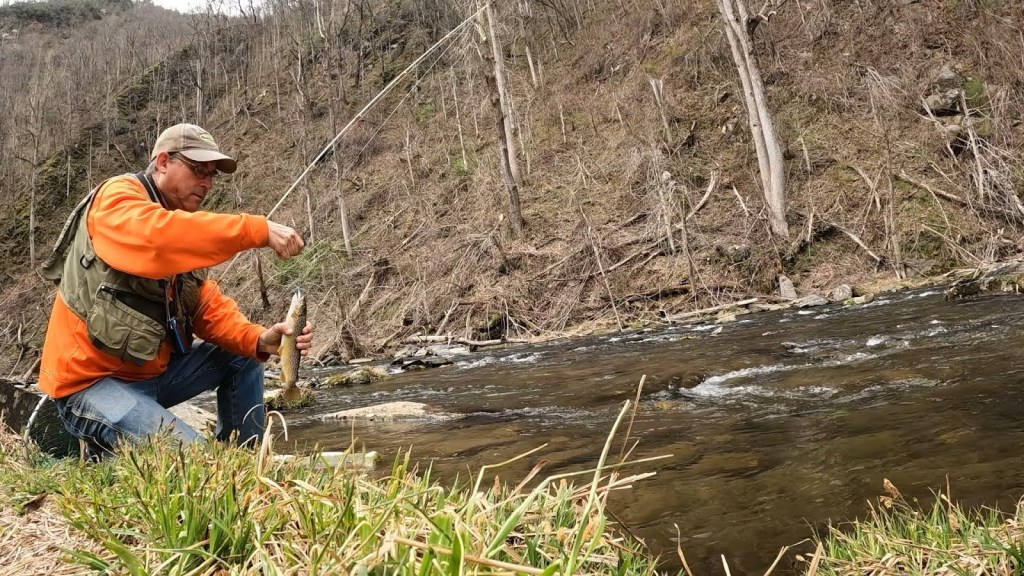
It’s also a matter of how I prefer to fish. I’m a pretty mobile trout fisherman. I tend to stay on the go and explore a section of stream, more so than claiming a spot and continuing to work it. And when I keep turning bends only to find someone else, it just isn’t as fun for me.
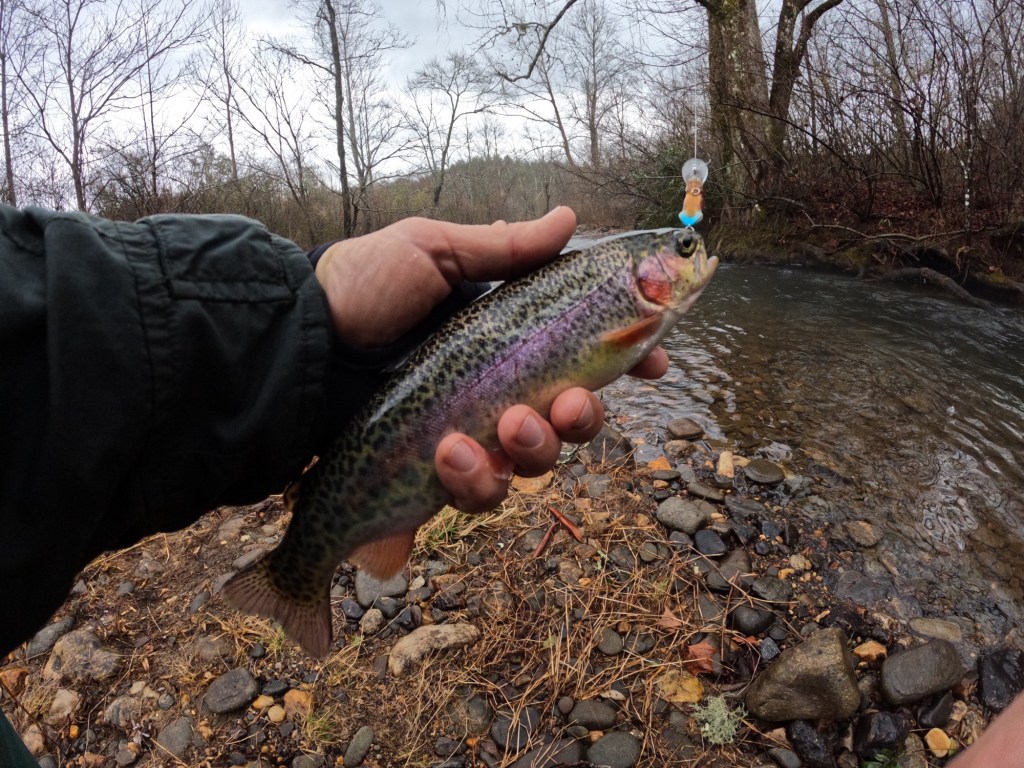
So when that occurred the other day, I decided to head for the house. Well, that was the intent anyway. I did make one more brief stop at a less popular spot on the way home and added one more trout!
 Fishing on Foot