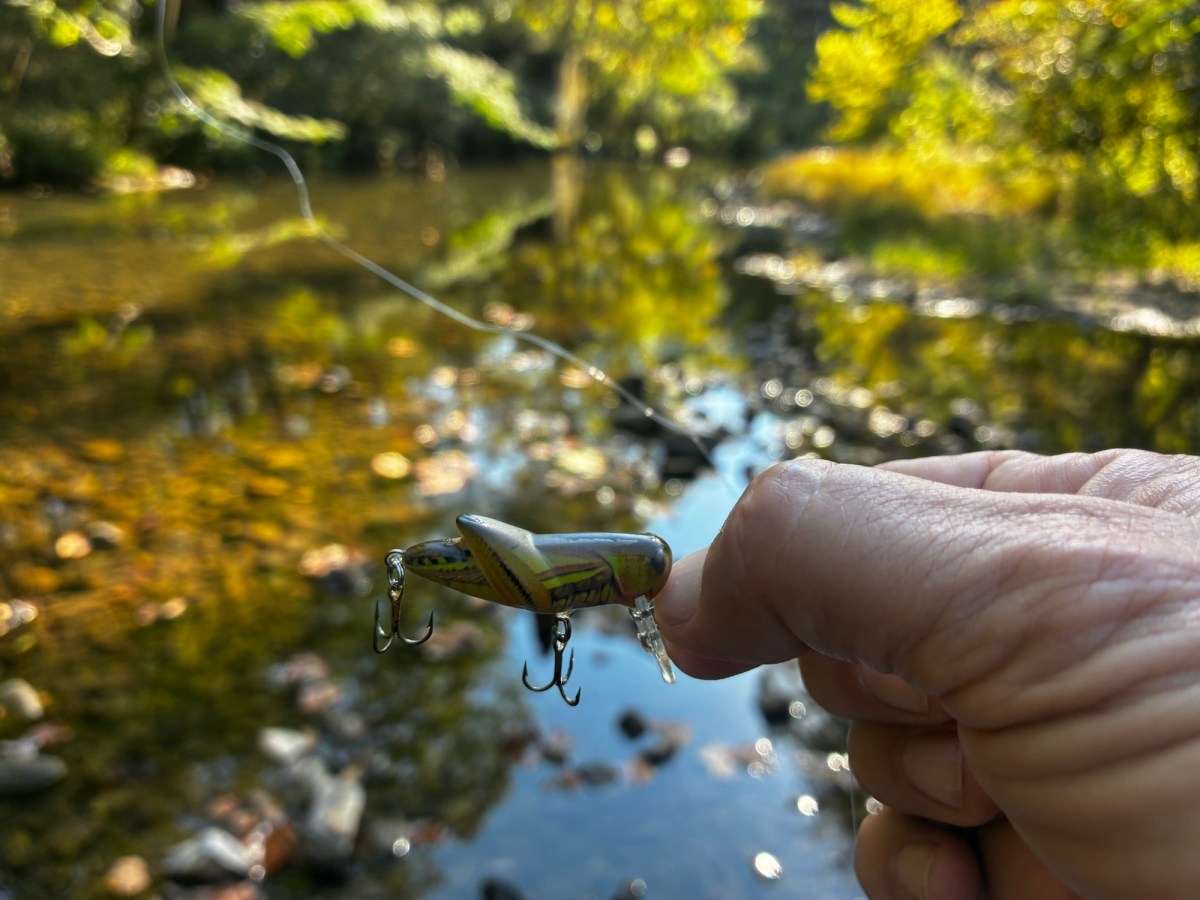
Wading Staff Opens Access & Adds Safety

Discussing the virtues of a wading staff and detailing the staff I carry.

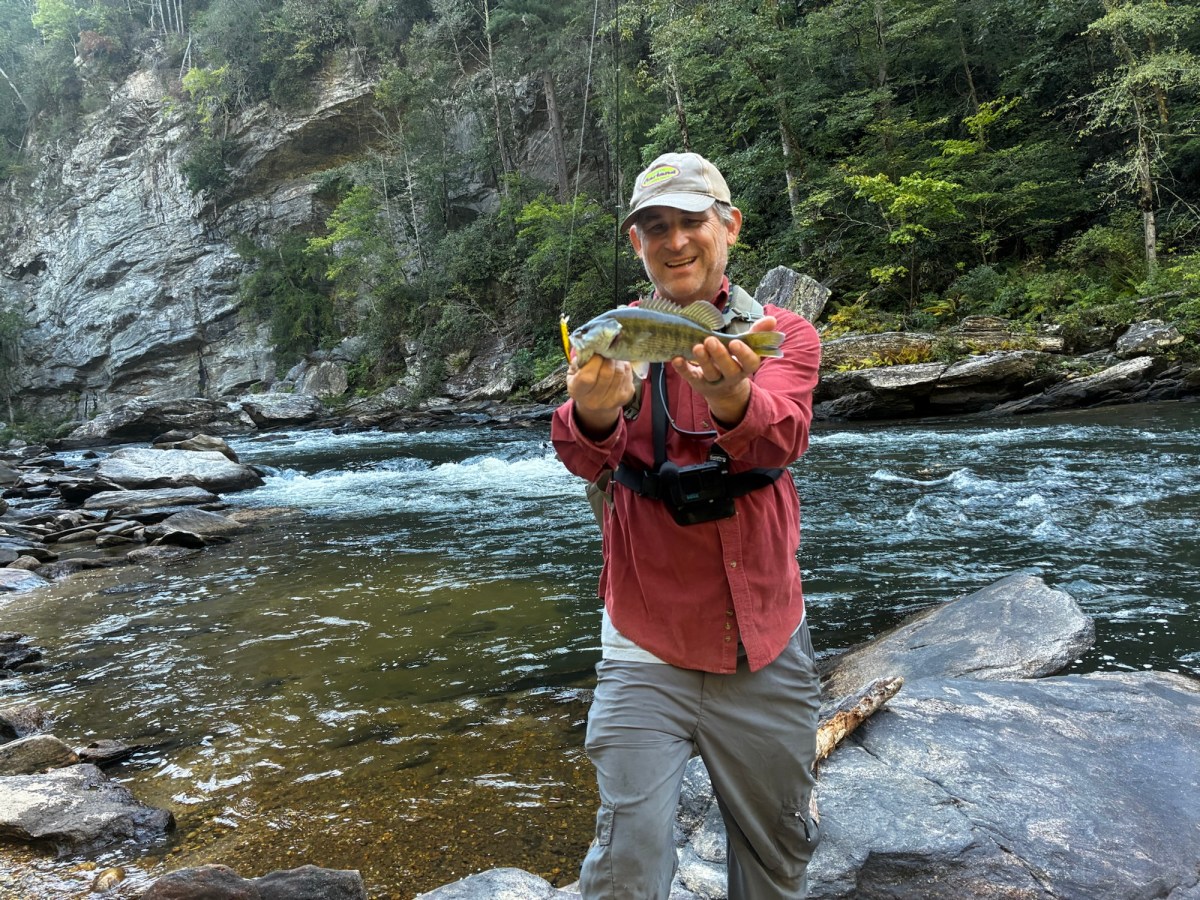
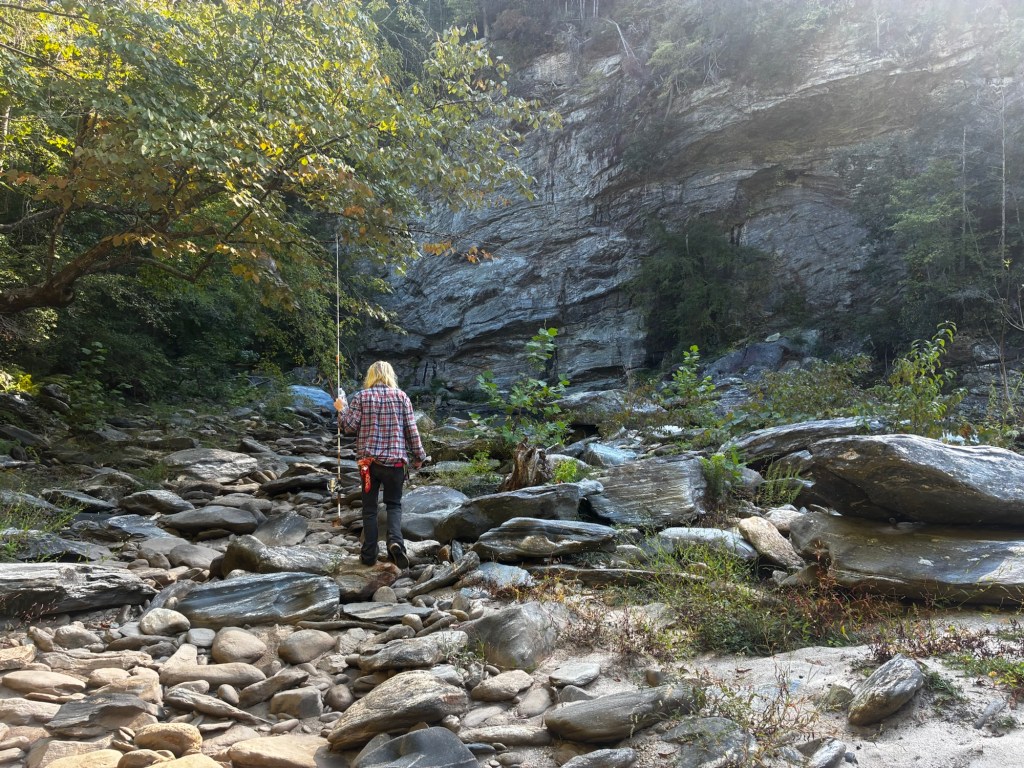
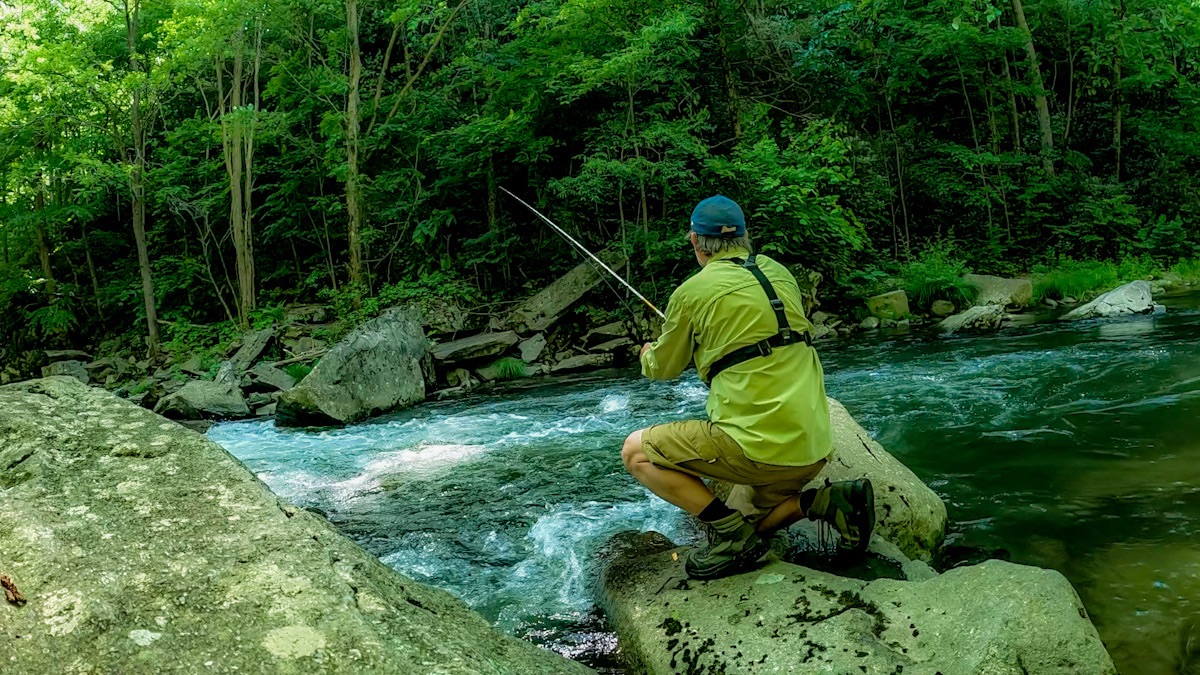
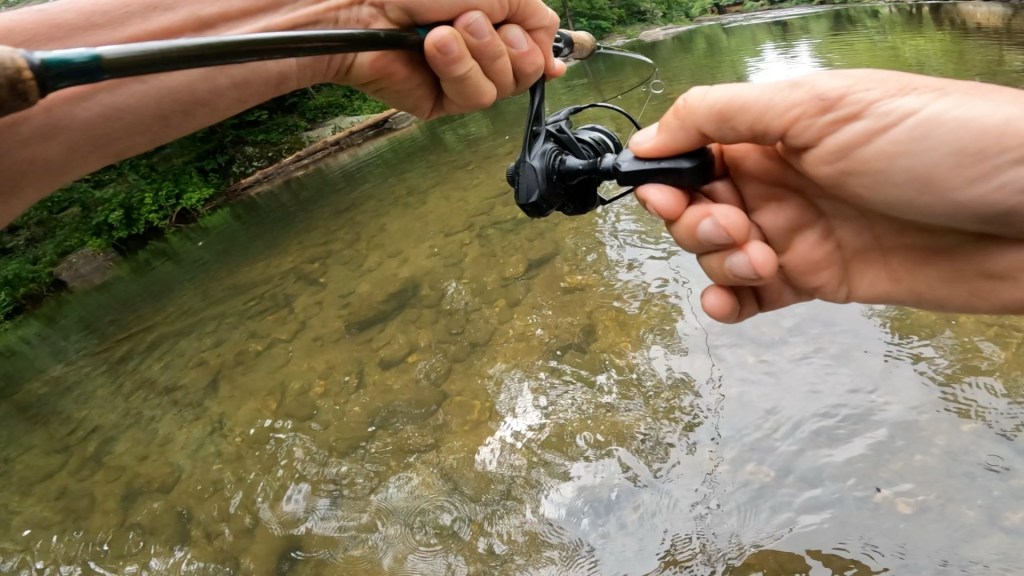
A few times while fishing the Chattooga River last week I thought about how thankful I was to have a wading staff in hand to test the depth of the next step or provide a “third leg” of stability while crossing the the river in significant current.

It was actually a previous trip to the same river with the same friend that prompted me to finally add a wading staff to my stream gear. Very early that day, we came to a spot where we had to cross to continue upstream, and I was apprehensive because of the depth, amount of current, and uneven bottom. My friend, Eric, had brought a wading staff, as he typically does. He ended up crossing easily, with aid of the staff, and then tossed it back to me so I could find my way across.

Eric actually forgot his wading staff at home last week. After realizing that as we geared up by my car before hiking to the river, he went into search mode along the trail and found himself a stick that was a good length and sufficiently sturdy for the job.

I should have picked up a wading staff long ago, and I’m still working on remembering to bring it (and use it when I have it). Having a probe to test the bottom depth and makeup and a third point of support makes it SO much easier and safer to wade anywhere depth, current and/or an uneven bottom make-up add wading challenges.

My Wading Staff

Aventik Foldable Wading Staff

My wading staff is made by Aventik. I’ve been happy with its functionality through several uses.

It’s a four-piece design, with elastic through the center, so it can be folded small but extends and snaps together like a tent pole. It’s 55 inches long and has a tungsten pointed tip and an EVA foam grip.

A coiled leash allows you to tether the staff to a belt loop or vest. It also has a camera mount on the handle to use the staff as a monopod, but I haven’t experimented with that application.

An included neoprene sheath is designed to hold the folded-up staff when not in use. I found the sheath tended to twist, and the pole would fall out. That’s not an issue for me, though. I keep the staff folded in the sheath at home and in the car, but wouldn’t want to keep folding and re-extending it astream anyway and would prefer to just let it drag behind me.

I like the light weight of an aluminum staff and definitely prefer something I can attach because I don’t like carrying extra things that I have to set down and remember to pick back up whenever I move. That said, a simple wooden hiking stick or even a stick you find by the trail or the river can do the job and is far better than not having a wading staff when you need one!

First Cast Blues

Fish on the first cast, then nothing else!

For starters, I’m not superstitious. I don’t believe that catching a fish on the first cast has any “jinxing” effect. Occasionally the only fish that bites just happens to be on the first cast.

That’s exactly what happened to me this week while doing some photo work and fishing on the Georgia coast. I caught a fish on the first cast I made after arriving at St Simons Island, and then I didn’t catch another fish (or get another bite that I detected) the rest of that day or the next day.

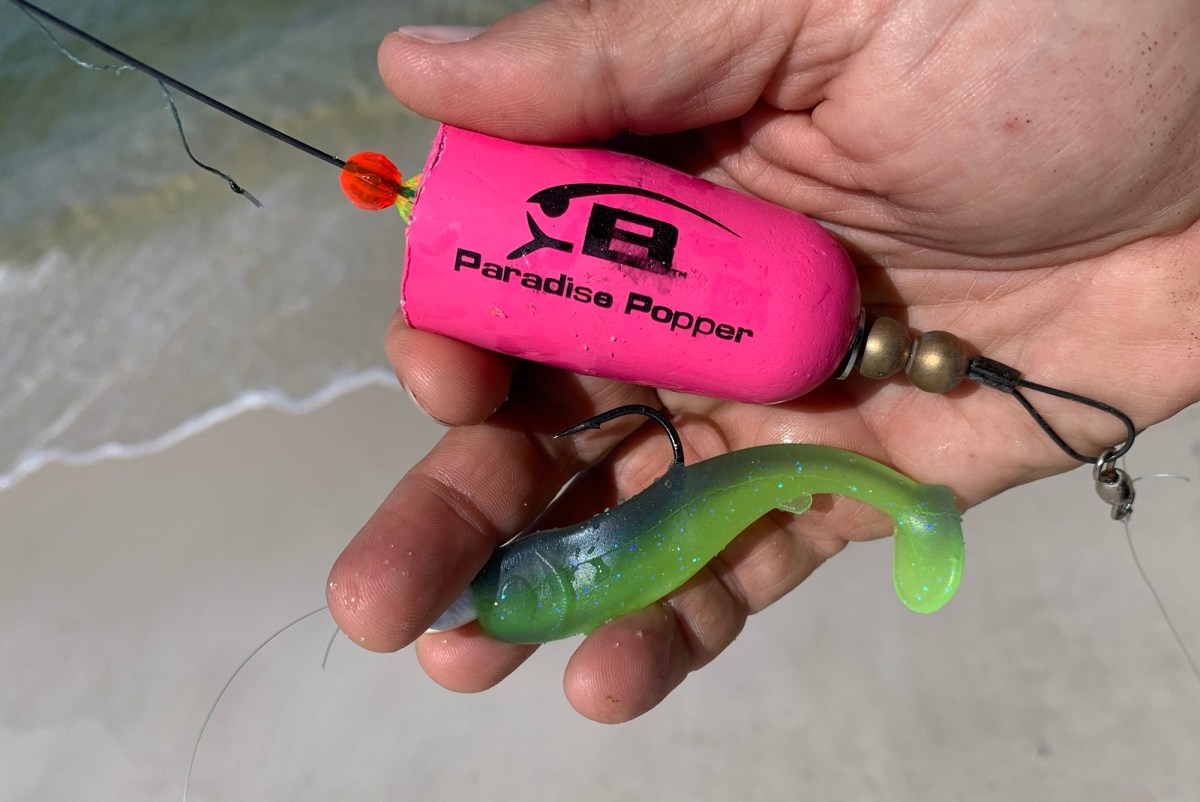
The lone fish, a small bluefish, ate a YUM FF Sonar Minnow fished beneath a Paradise Popper popping cork, cast from the beach near the St Simons Pier. Bluefish aren’t usually alone, so I had high hopes of catching more, and I even tried a couple of flashier, faster-moving lures that tend to prompt bluefish attacks. To no avail.

I will say that I didn’t fish an enormous amount on those days. Shooting lure photos was the main objective and my time priority. I fished some in various spots with hopes of getting some lure-in-mouth photos, I think with some quality presentations in good spots. Nothing else obliged, though.

The bluefish did give me my first saltwater catch of 2026, and one fish is certainly better than no fish!

BIG One that Got Away

My hardest and most memorable big fish that got away.

Broken line. Broken heart. No going back to undo my error. I knelt on the sand staring blankly at the water before walking back to my bridge spot to grab my gear and head for home.

I was alone and had driven myself, so I was at least 16 at the time. I don’t think I was much older, though, and it was probably one of my first solo outings to the bridge from Clearwater Beach to Sand Key.

I don’t recall much that preceded the big fish, but I’m certain I was fishing with live shrimp from Bonnie’s Bait Shop, and there’s a reasonable chance I had caught a few whiting, hardheads, pinfish, grunt, specks or puppy drum.

I remember far too clearly the block of what I’d guess to have been about 45 minutes between setting the hook into what I’d soon learn was a fabulous bull redfish and the moment my line and heart broke simultaneously.

With no opportunity to weigh or measure the fish, I could only estimate its size, and more than four decades have passed since that day, but I’d guess it was between 25 and 30 pounds. Through the latter part of the fight I got very good looks at the thick-bodied, golden-sided fish, which had a half a dozen or so spots on each side.

I didn’t own any saltwater tackle at the time, so I was fishing with my bass-sized baitcaster, which I’m sure was spooled with 12- or 14-pound test. The first run after I set the hook took almost all my line. I could see my spool when I finally persuaded the fish to turn.

At least two similar runs occurred before I could even think about trying to start working toward the end of the bridge, where I would need to climb the rail, hop down to the ground and ease toward the water’s edge. I had neither a pier net, nor help, so a beach landing would be the only possibility.

Without recapping every moment, it was a back and forth affair, and I had to reach around several streetlight poles, most of them more than once when the fish would surge again.

Eventually the fish wore down enough to be more easily influenced and then dragged along at the surface. That allowed me to get down to the sand and keep the line tight as I moved into landing position.

It seemed like I had won as I pulled the fish closer, and I dropped my guard. I was thumbing the spool with the big fish almost within arm’s reach. I don’t know if the fish saw me or felt the bottom, but it suddenly surged, easily snapped my short line and slipped out of sight.

It still makes me a little sad, both because it would have been such an amazing catch for me at that time and because I’ve always wondered if the fish survived. There were no special regulations for large redfish at that time, and I would have kept it simply because of the likelihood of it not surviving after such an extended battle.

It wasn’t the biggest fish I’ve ever lost while Fishing on Foot. That’s another story for another day. However, it definitely was my hardest and most memorable “big one that got away.”

4 Advantages of Fishing From the Bank

Learn about the distinct advantages afforded by an on-foot angling approach.

Fishing from the bank of a river, lake, creek or pond offers distinct advantages over the boating approach. Among the most significant advantages are reduced cost, convenience for easy outings, access to many areas, and fixed positioning. The same advantages apply to wade fishing.

Reduced Fishing Cost

This advantage is pretty straightforward and so obvious it almost doesn’t seem worth mentioning. It’s too important to ignore, though. Simply put, shoes are cheaper than boats.

This is true at the most basic level. Even renting a simple boat for a few hours costs more than walking the bank of a waterway, which might involve some parking or area access fee, but that is usually it.

When you’re taking about owning any kind of boat, the cost difference is much more extreme, and any boat owner will tell you that the cost doesn’t end with the purchase! Fuel, repairs, insurance…

Increased Convenience

One of my favorite things about Fishing on Foot is that quick spontaneous outings are so simple. I can grab a few things from my basement (or even just go with the travel rod and a bit of tackle that’s always in my car hatch), drive to a nearby park or river access and be fishing almost immediately.

Many days, when I only have a short window, I wouldn’t end up fishing if I had to hook up a trailer or load a kayak on top of my car, load the boat at water’s edge and then get to my fishing spot — and then do all the same steps the other way when I’m done fishing. I like to maximize my fishing time with the simplicity of the bank or wading approach.

Similarly, I’ll commonly use the gear in the back of my car or tote a specific rod and reel and lures when I know I’ll be passing an interesting access area or be near a fishing spot when I’m doing completely different activities. The simplicity of bank fishing makes those bonus fishing stops practical.

Exclusive Access

It might sound strange hailing the unique fishing access afforded by fishing from the bank. Without question, a boat allows you to reach far bigger portions of many bodies of water, and I’m certainly not suggesting otherwise.

That said, there are many small streams, shallow flats and waters protected by shoals or sandbars that most boats simply can’t get to, and many of these areas are accessible by bank or by wading and provide excellent fishing opportunities.

Additionally, some entire waterways have no place to launch but can be fished from the bank.

Fixed Positioning

A final highly practical advantage of an on-foot approach to fishing is complete control of your positioning for fishing the shallow zone where so many fish feed.

From solid ground you can work the shallow zone thoroughly with no concern of drifting out of casting range or over the fish, which is sometimes a real challenge from a boat.

The same control of positioning makes it easy to work every piece of cover from exactly the right angle and to repeat casts that produce fish. Sometimes the exact cast that produces a fish will produce more fish, and repeating a cast is far earlier when your position is unchanged.

Fishing on Foot has its advantages.

Qualifying Shoal Bass

I recently blogged about getting my Georgia Bass Slam started for 2026 with a Bartrams bass and ended the blog wondering what species would be next.

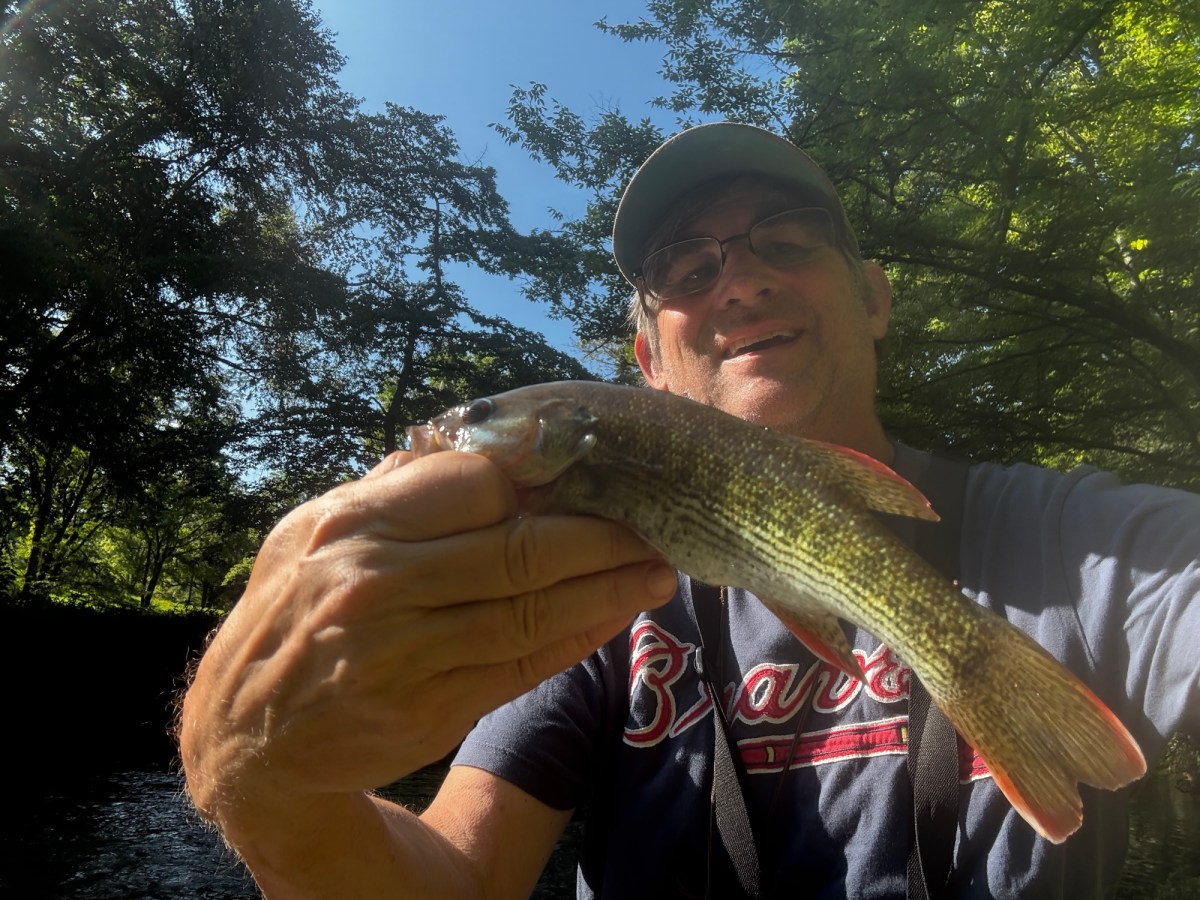
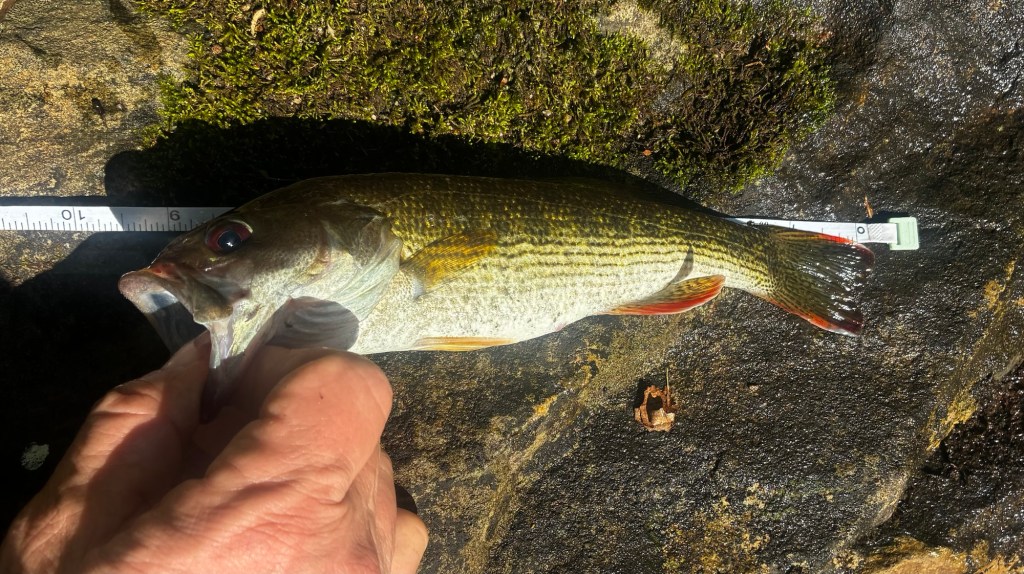
The answer came a couple of days ago in the form of a chunky shoal bass. That was an extra good one to notch from my standpoint because of the statewide minimum size for the species. Bass must be of legal size, if a minimum size exists, for bass slam qualification, and the minimum size for shoal bass is 15 inches. That’s not a giant, but it’s a quality fish and not always simple to come by.

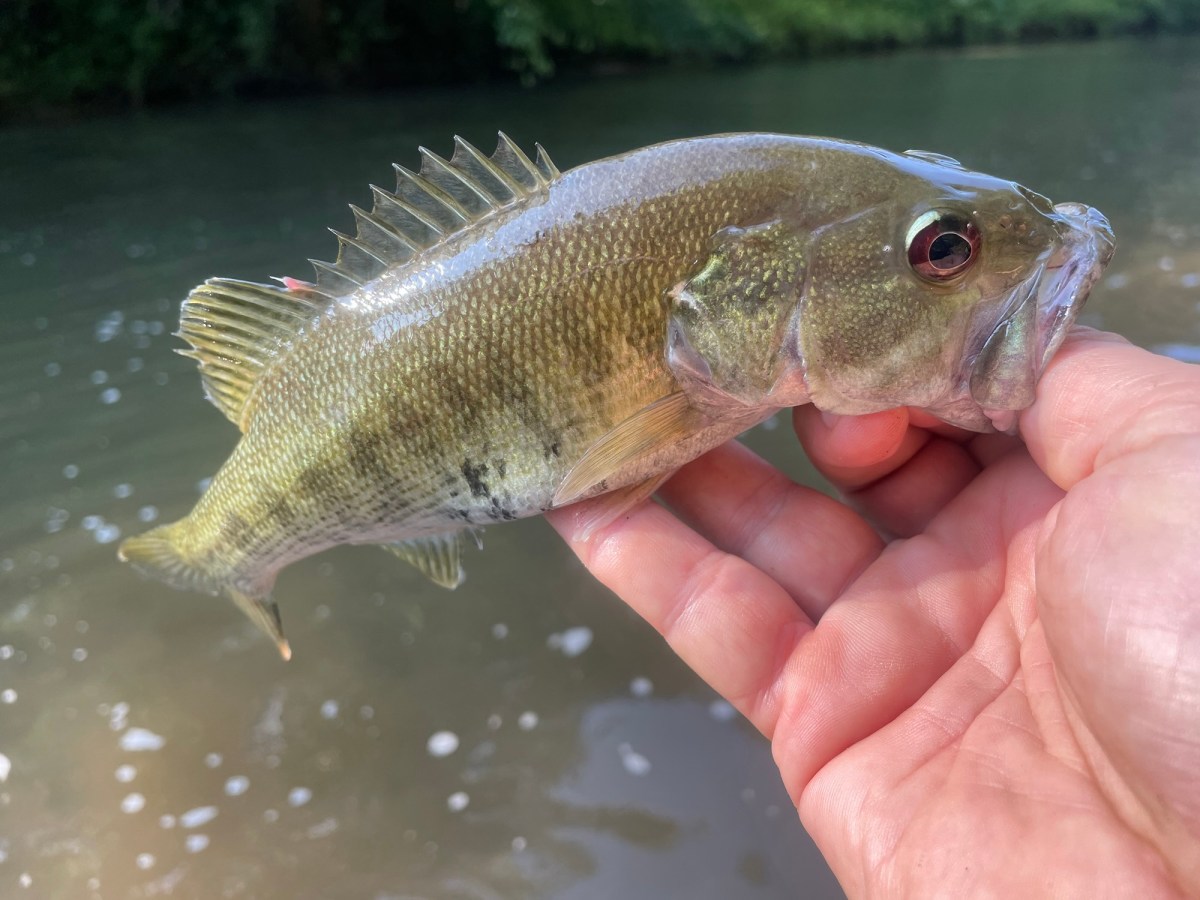
My qualifying shoal bass was 16 inches long and probably weighed around 2 1/2 pounds. I also caught a smaller one of maybe 13 inches from the same area. I was fishing a creek in the Upper Chattahoochee River watershed and actually thought I might find a Chattahoochee bass.

Interestingly, I caught the first shoal bass on a tiny crappie jig. I was still rigged up from an earlier crappie trip when I arrived and had a tandem rig of a Bobby Garland Mayfly and Itty Bit Mayfly. The fish hit the Itty Bit version, which is only 1.25 inches long.

Ironically, the smaller shoal bass was on the same rig, but it hit the larger of the two jigs!

Watch for a short video from that afternoon on Fishing on Foot YouTube!

New Ultra-Finesse Jig from Rebel Lures

New jigs are a great fit for multi-species creek fishing.

My most recent post focused on a few recent catches, but I failed to note that I caught the Bartrams bass, redbreast and shoal bass on the same kind of jig — the new Ultra-Finesse Jig from Rebel Lures.

The purpose of both short afternoon fishing trips was to get photos of the new jigs for my job. Of course I had to try them out, though, and I was impressed by the results of my short test runs — not just because I caught fish, either. I fished a few versions and was super impressed with how they looked and moved in the water.

The Ultra-Finesse Jig is built with a Keg Head Jig with a small collar added to help secure a silicone finesse skirt, and comes pre-rigged with a LIVEflex soft plastic body.

The buoyant trailers, when combined with the Keg Head design, really stand up nicely, helping fish find the bait. The same buoyancy slows the jig’s sink rate, adding an extra measure of finesse.

The jigs come in “Snack Packs,” with two jigs rigged with different LIVEflex baits and a spare of each of the soft plastics. All include one jig rigged with a Creek Craw. The second is either a Cata Crawler, which is a small Ned-style worm, or a Shore Shiner, which is a small, narrow swimbait.

I’ve been fishing with LIVEflex baits since the first samples came out, and they play an important role in my creek game. The Ultra-Finesse Jig is a natural progression for me, and having fished them just a tiny bit now, I’m eager to do a lot more!

Bartrams bass on Rebel Ultra-Finesse Jig

Start of 2026 Georgia Bass Slam

Species No 1 for this year’s Georgia Bass Slam was a Bartrams bass.

This afternoon I caught my first fish of this year that will qualify toward the Georgia Bass Slam: a 10 1/2-inch Bartrams bass. Of course, I caught it Fishing on Foot.

Last year I set a goal on New Year’s Day to achieve the Slam — all Fishing on Foot and on public land. The minimum number of species for achieving the Georgia Bass Slam is five, and I ended up catching seven in 2025.

I hadn’t stated that goal this year, and I still might not plan fishing trips around Slam needs as much this time around. I probably knew I’d end up seeking it, though, and I am pretty excited to have one species notched.

The Bartrams is admittedly among the easiest for me. I pursue them and catch some pretty much every year without any thought of the Bass Slam. It’s still fun to get this year’s effort underway.

Looking at all species caught — not just Georgia Bass Slam qualifying fish, today’s Bartrams bass was species seven for me, and a redbreast sunfish was number eight. I’ve actually caught largemouth, smallmouth and spotted bass this years, but they came from Alabama and Tennessee, so I still need all of those for the Slam.

What bass species will come next?

Bartrams bass from Northeast Georgia.

First Topwater Bass

Remembering my first topwater bass from around 50 years ago. Of course, I was Fishing on Foot at the time!

My first topwater bass occurred while I was Fishing on Foot. And like a lot of young fishermen in the 70s, I caught it on a Hula Popper.

Specifically, it was a smallish black Hula Popper, similar to the one in the photo. I don’t still have that one (unfortunately), but Hula Poppers haven’t changed much in the past 50 years, and it was new at the time, so it probably looked a lot like that one.

My family took part at a campout with our church at the Fort Wilderness Campground, which is part of DisneyWorld, and were in a rented camper. A creek with pond-like sections winds through the campground. Upon arrival the evening before, I’d scouted a section behind the camp store that had a nice open bank.

I arose from sleeplessness the moment my mom told me I could get up, which was right at daylight. I had been awaiting her word because I’d already gotten up once when I was certain it was looking lighter through the camper window. She had heard me, pointed out that it was 2 a.m., and told me she would let me know when I could go.

I’m not sure I slept any that night.

The moment I got word I could go, I popped up, fully dressed and ready, and grabbed my tackle box and my rod, which was by the camper door and already rigged with a Hula Popper. I followed the campground road to the store and scurried down the water’s edge.

I recall the surface being completely slick with just a bit of fog hanging over it, but I don’t know for certain that I haven’t romanticized that part in my mind over the years.

The first catch, which came on my first cast, went the way it would have been scripted. I cast out, waited for the rings to spread — just like the package instructions said — and then snapped my wrist to make the lure pop. Immediately a bass attacked, and I set the hook.

I don’t recall if there was much fight. I just remember I successfully landed it. I think it weighed about 3 pounds. No photos, of course, and no scale. But thats my best guess.

I don’t think I caught any other fish that morning. If I did, they were far less memorable. That one was more than enough, though, and was easily the highlight of the camping trip.

The Fish Won

Typically when I don’t catch any fish, I have a solid guess as to why they didn’t bite— which might just mean I’m good at making excuses.

Today was different. I fished a couple of hours without a bite and really don’t know why. Everything seemed right. I just didn’t see any sign of the fish.

This week was warm for February, following an unusually cold snap. Each day has been warmer than the one before, and it didn’t even get cold overnight last night.

The water was clear, but not too clear, and a very good level. No one else was fishing, so I can’t claim the fish had been beaten up, and I had my choice of spots.

Time wasn’t an issue either. I had a set of lure photos I needed for work, which I accomplished, but adding fish to the equation would have added significant value. So I worked the area thoroughly, and would have stayed longer had then fish given me reason to.

And while I don’t have a ton of experience where I was fishing and don’t really know how it fishes through the seasons, I’ve enjoyed good days there, and the habitat definitely is good.

Like I said, no excuses. The simple truth is that the fish won today.

Drizzly Morning Creek Stop

Waking up to a modest rain that had been falling a few hours and was forecast to gradually lessen, I couldn’t resist a quick creek outing.

I figured rainfall and continued cloudiness might make the brown trout a bit more active. More importantly, it was likely to lessen the number of other anglers at a popular creek I had wanted to visit.

Both were true, although in retrospect I wish I had mentally committed to a plan the night prior, gathered stuff at that time and gotten out the door before daylight. When I recognized conditions seemed right and started readying myself is when I really should have been out there in order to take advantage of the best bite window and enjoy a greater opportunity to fish with less company.

I did catch fish, and there were only a few cars when I arrived. The rain had already dropped back to a drizzle, though, and would soon taper off. As raindrops lessened, other anglers began arriving. I ended up making it a fairly short outing.

Creek Solitude

Mountain creek rainbow trout

Some fishing is social in nature, and the sense of community can even add value, from my perspective. Coastal piers, marina docks, surf zones during gamefish runs and some popular ice fishing spots have that quality. It’s a shared quest, and as long as there is space to set up and fish, having other anglers around can add to the experience.

That’s seldom (maybe never) my mindset with trout fishing. Excepting the company of friends I might go with any given day, I prefer solitude when I’m wading a trout stream.

I do fish popular stream sections by choice for the same reasons they are popular — easy access to good trout-catching opportunities. I do so despite other anglers, though, and do my best to choose the less popular times. I’ll also gladly walk farther to access less crowded sections.

In part it’s the total experience aspect. One of my favorite things about trout is the beauty of the places they live — and I like to at least pretend I’m a bit away from things when I’m wading a mountain stream.

It’s also a matter of how I prefer to fish. I’m a pretty mobile trout fisherman. I tend to stay on the go and explore a section of stream, more so than claiming a spot and continuing to work it. And when I keep turning bends only to find someone else, it just isn’t as fun for me.

So when that occurred the other day, I decided to head for the house. Well, that was the intent anyway. I did make one more brief stop at a less popular spot on the way home and added one more trout!