Steps Toward Better Fishing Experiences

A few extra steps can go a long way toward tapping into a better fishing experience.

Boating anglers commonly race right past good spots that are near the boat launch. Anglers Fishing on Foot too frequently do the opposite — selecting a spot to fish based on little more than its convenience to a parking area.

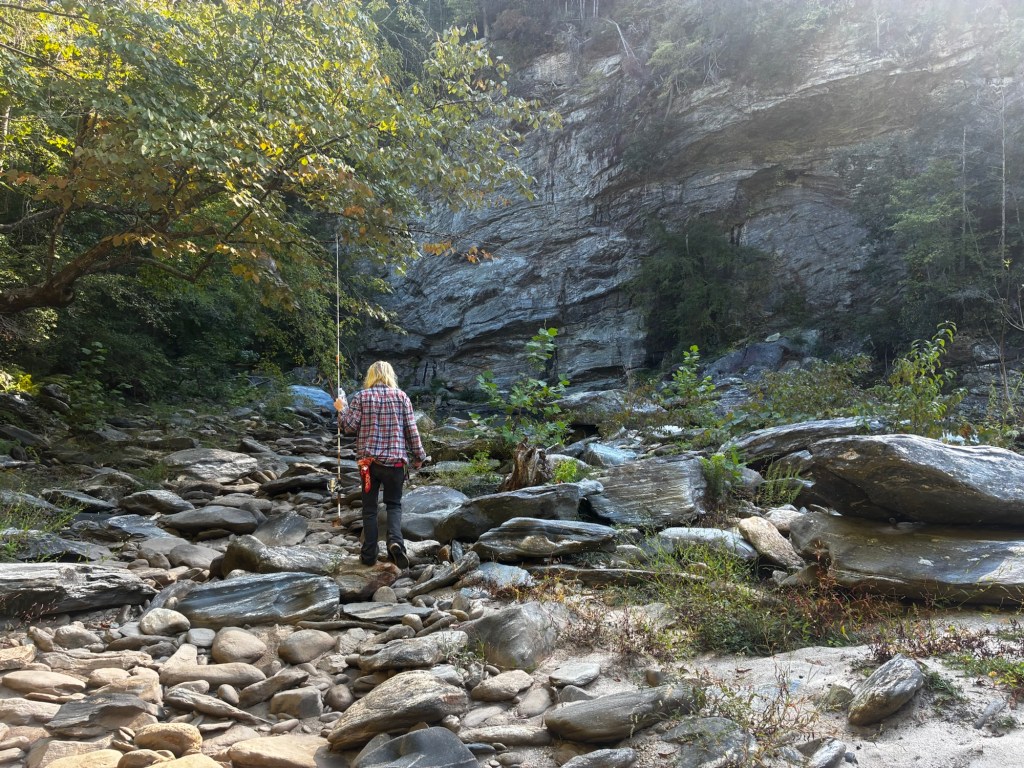
Granted, the first easy access spot at any given waterway could happen to be a good spot — even a great one. That said, the most convenient spots almost invariably get the most fishing pressure, and my experience suggests that walking a few extra steps can go a long way toward tapping into a better fishing experience.

Fewer people fishing naturally equates to less pressured fish and in cases of fish that people commonly keep, more fish available. Beyond starting with less-fished waters, a willingness to walk lets you try more spots to search for active fish.

Even beyond fish-catching prospects, for most types of fishing, I simply prefer a little less company. I’m not anti-social overall, and there are a few settings — like a popular public pier — where the community aspect even adds to the experience.

Typically, though, I like to at least feel like I have an area to myself when I’m fishing. That’s extra true for any fishing that has me standing in a stream.

The nice thing is that most people don’t like to walk and don’t equip themselves well for a mobile approach. From my experience, you don’t have to walk far up a creek or along a lake’s bank to have spots to yourself. Even in popular trout streams that have regular pull offs along them, simply wading the stretches between pull offs instead of fishing next to them can make it feel like you’ve stepped into wilderness.

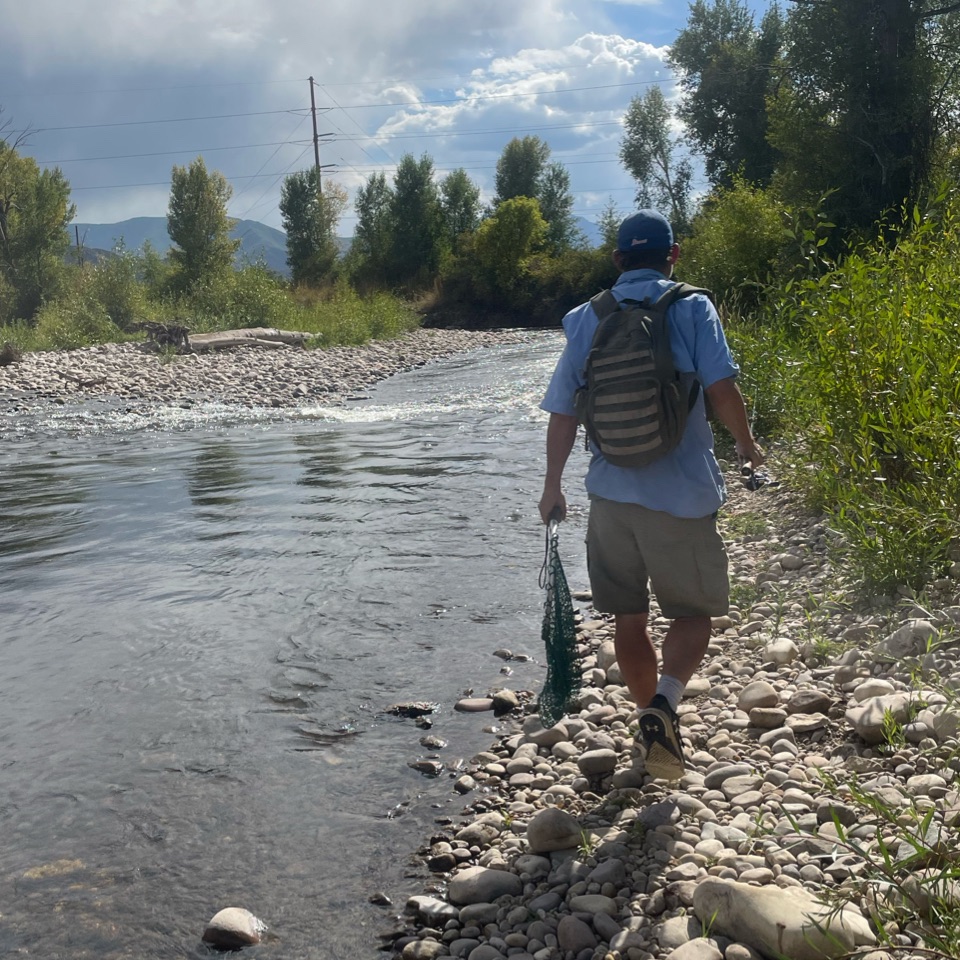
Because I like to start away from the easiest access and to work a section of bank or wade up a creek, I tend to pack light, and I carry only stuff I can put in a backpack or clip to a loop. With less total weight and nothing I need to set down and pick back up, I’m far freer to walk more steps to find the best fishing experience!

Chattahoochee Bass

Never heard of a Chattahoochee bass? Here are a few things I’ve learned about these pretty little river bass.

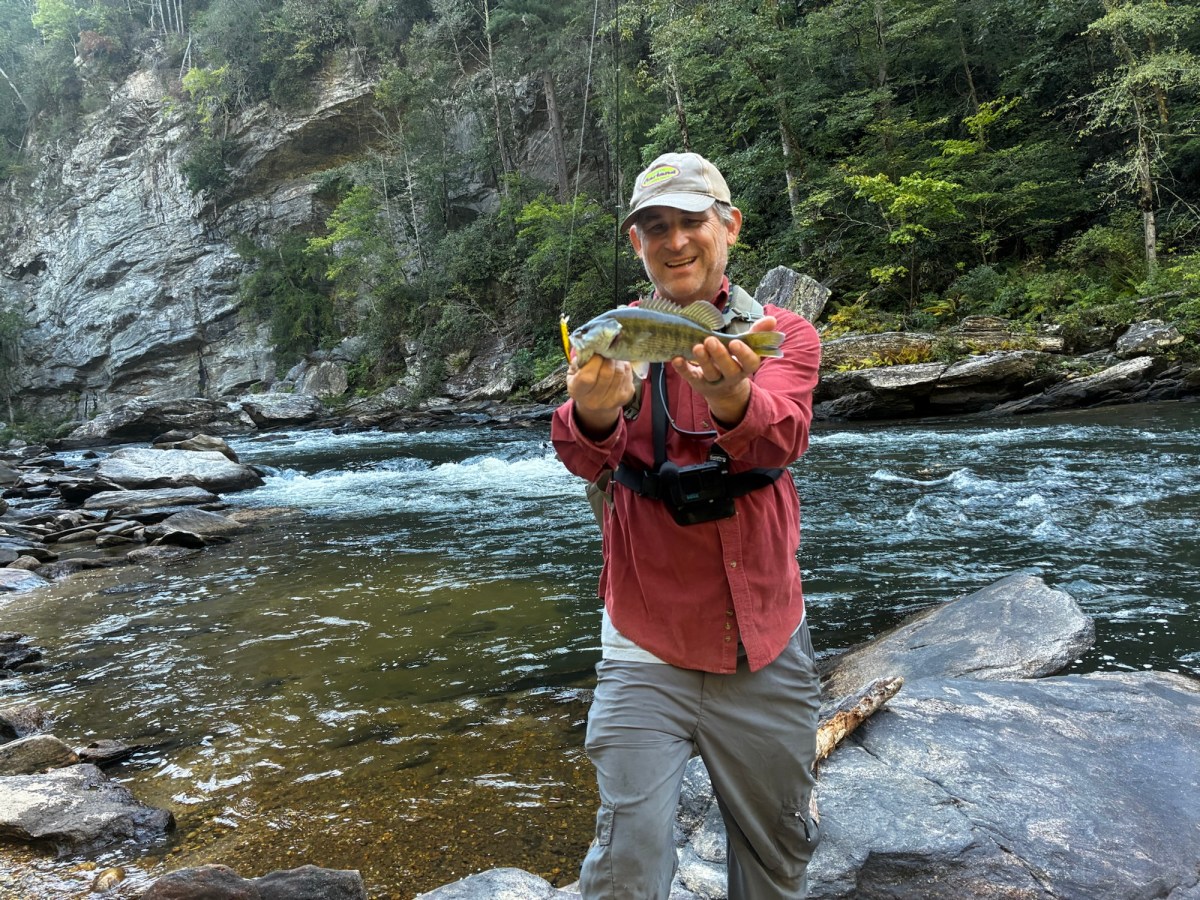
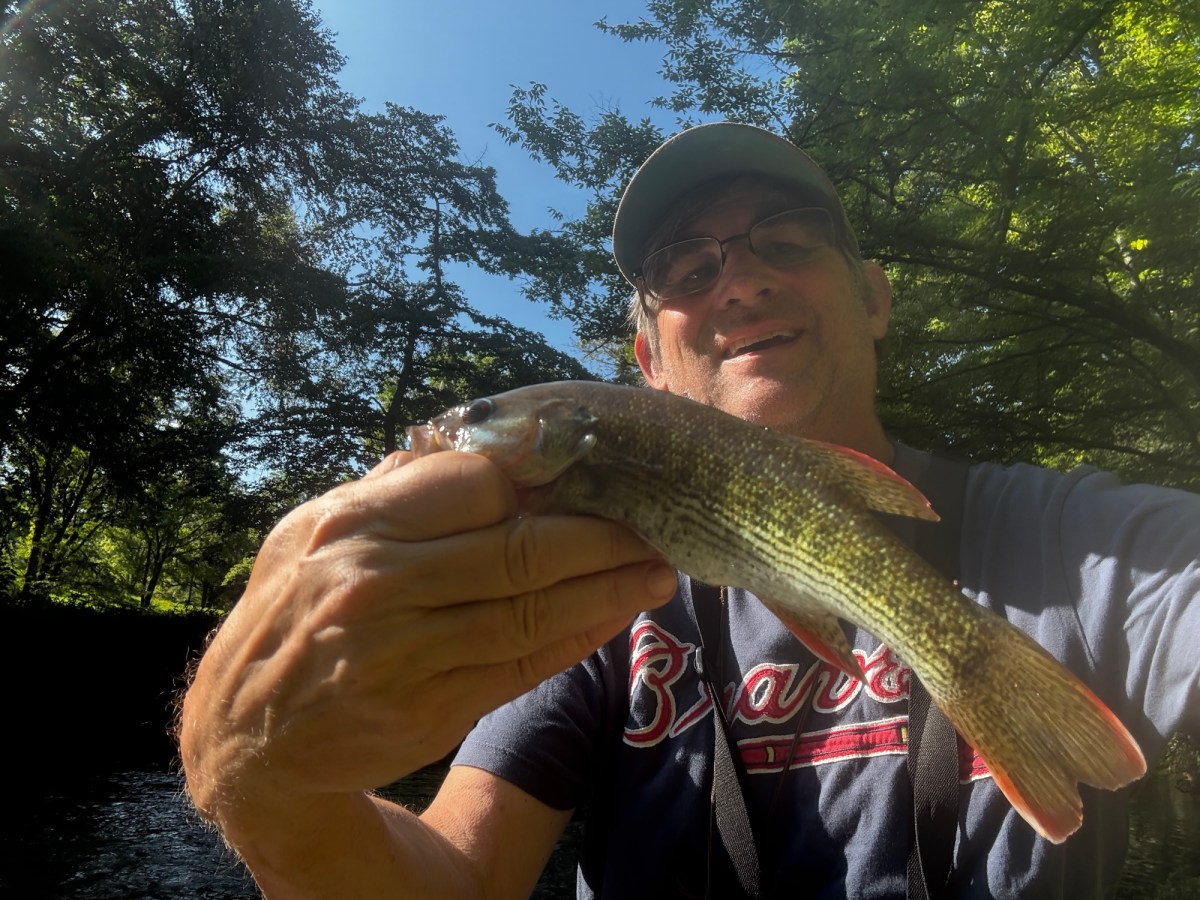
Last weekend I managed to catch a couple of Chattahoochee bass, and one was large enough that I will be able to add it to my 2026 Georgia Bass Slam qualifying fish.

If you’ve never heard of a Chattahoochee bass, you’re far from alone. Their range is limited to upland streams in the Chattahoochee River watershed, and biologists have only recognized them as a distinctive black bass species for a little more than a decade.

I only became aware of the Chattahoochee bass’ existence five or six years ago, and I didn’t catch my first one until last summer. In fact, although the river stretch that produced my first Chattahoochee bass last year is less than a half hour from my house and on public land, I’d never tried fishing there prior to last year.

Beautiful Little Bass

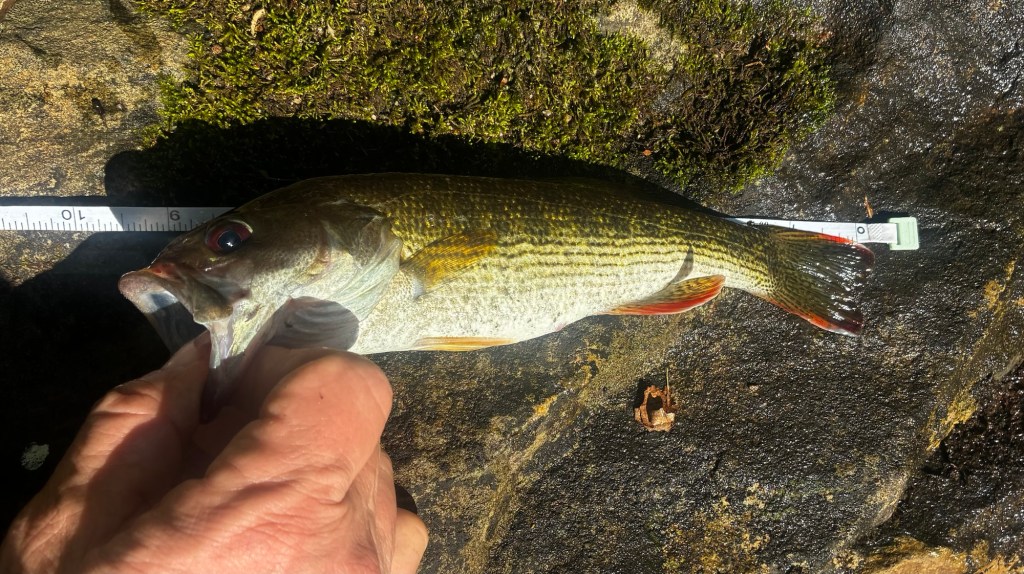
Chattahoochee bass

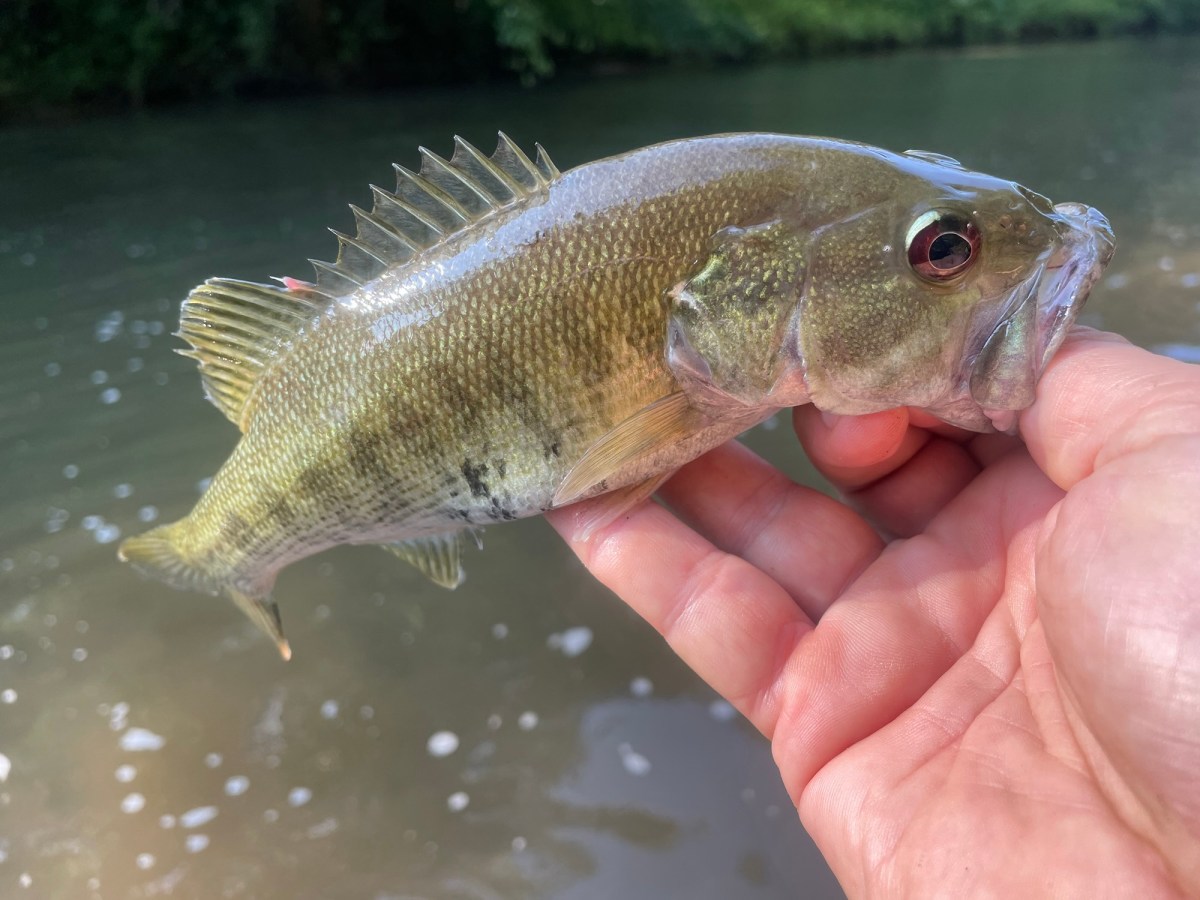
Chattahoochee bass don’t grow very large. One that hits the 8-inch minimum for the Georgia Bass Slam qualification is a quality fish. They are among the prettiest of the black bass species, though, with distinctive side makings and brilliant orange margins on the tail and fins that really set them apart from other kinds of bass.

Like a few other upland bass species that are found in North Georgia, the Chattahoochee bass face significant challenges, both from loss of habitat and from other bass species — especially non-native bass — which often outcompete Chattahoochee bass within their native range, along with cross-breeding and taking away the genetic integrity.

Chattahoochee bass are currently only found well up the Chattahoochee and Chestatee rivers and in tributaries that offer good rocky habitat and are on the small side to be of as much interest to larger shoal bass, spotted bass and Alabama bass.

They also get crunched from the top end because if you go very far up the same streams, the water stays too cool most of the year, and they must compete with rainbow and brown trout for habitat and food.

For now, some in-between waters exist where Chattahoochee bass can still be caught. I’m glad I’m familiar with them now because they are a lot of fun to catch! I’m thankful that the Georgia Bass Slam has prompted me to learn about other black bass species and discover different waters.

Practice Stealth for Better Summer Trout Fishing

An easily controllable aspect of your trout fishing approach that can help you catch more fish.

“The fly you use doesn’t much matter,” an old timer responded when I asked about the best flies for a wild trout river he regularly fished. “More important is that the trout sees your fly before it sees you.”

Talking more, I realized “before it sees you” implied “before the trout senses your presence in any way.” He also assumed a natural, drag-free drift. The crux was that while wild Appalachian trout tend to be very opportunistic about meal opportunities, they also spook very easily, and stream stealth often is more important than matching any kind of hatch.

Of course the virtue of stream stealth doesn’t only apply to fly fishing — nor does it only apply to wild Appalachian trout. Adding a bit of sneakiness to your approach will improve your odds of success in most stream trout fishing situations, and that becomes even truer during mid-summer, when creeks and rivers tend to run low and clear.

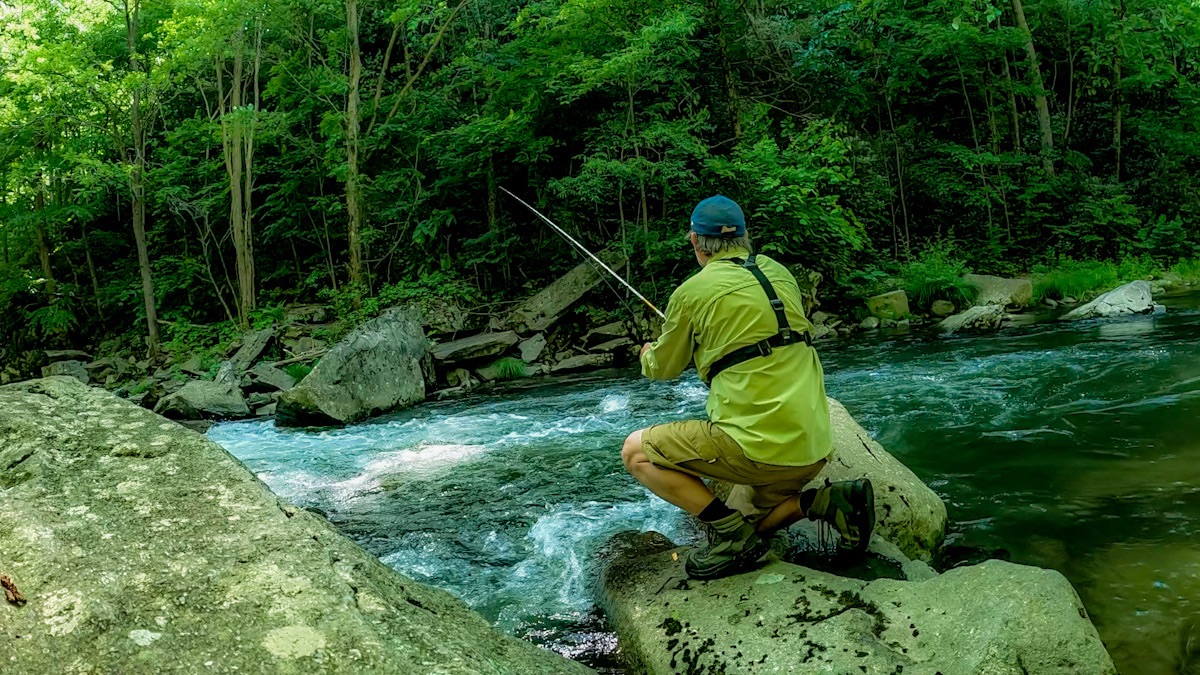
As much as many trout fishermen love putting those waders to use and getting out in the middle of the stream, if you watch veteran anglers you’ll notice they stay along the edges and even out of the water as much as possible. And for small streams and slick pools, especially, they’ll commonly position themselves well back from the water’s edge.

Stealth doesn’t mean going in full stalking mode — not necessarily, anyway. It’s simply means things like staying back a little, avoiding splashing and moving too abruptly, using natural features for concealment, working from downstream of fish when possible, and dressing in natural tones.

The degree of stealth needed depends on many factors, including whether fish are stocked or wild, the amount of fishing pressure, the color of the water and the size and character of the streams. No matter those answers, added stealth never hurts, and it’s an easily controllable thing that can help you catch more trout.

The Bridge

A little footbridge in Clearwater, Florida helped shape me as an angler.

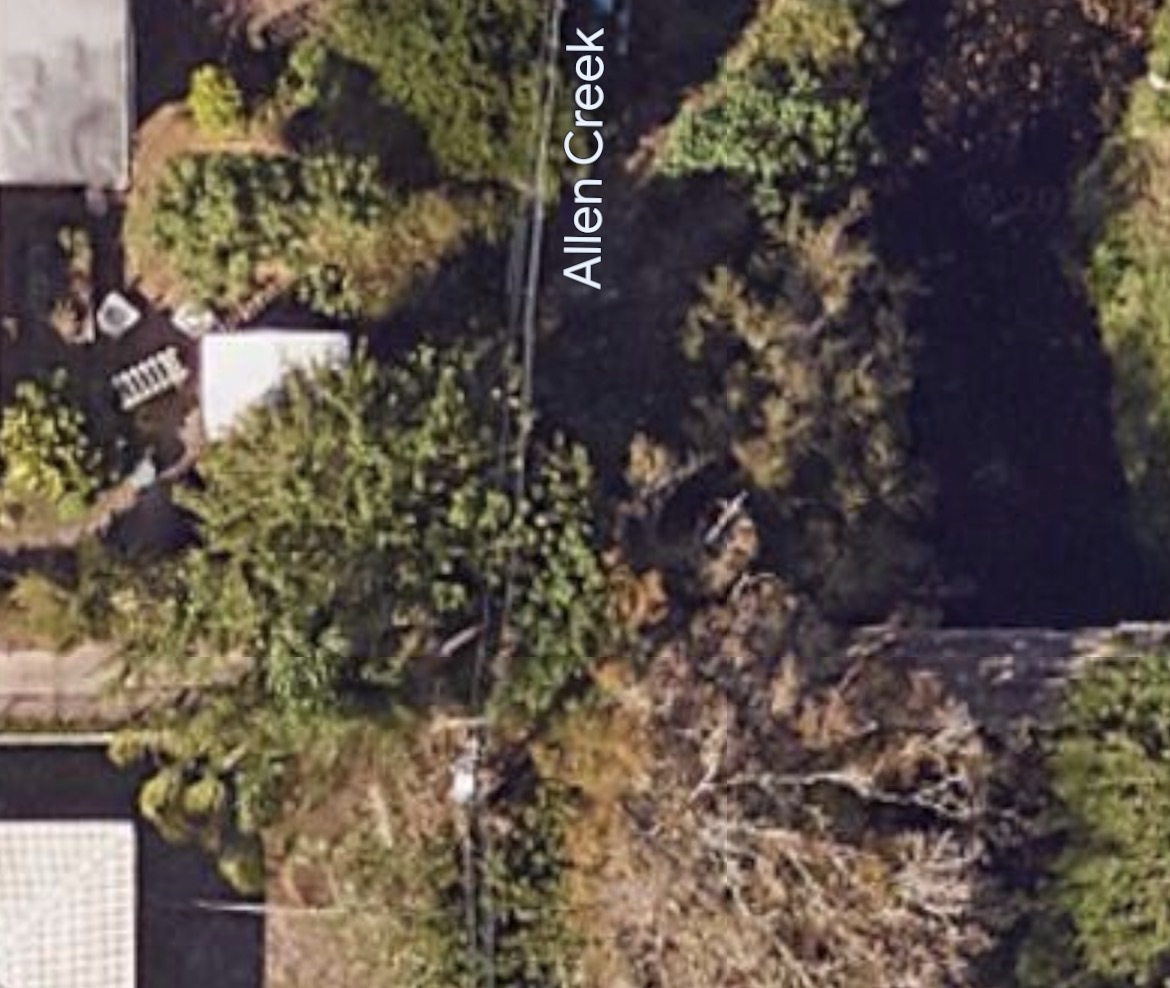
The bridge spanned Allen Creek about a quarter mile from the home I grew up in and was just wide enough for two-way bike or pedestrian traffic. I spent hundreds of hours either on the bridge or standing on a little grassy spot beside it where I was permitted to fish.

Within view of Imperial Park, the neighborhood I grew up in, and Oak Grove Middle School, the bridge provided a safe place for a very small angler to walk to and fish. Sometimes I went with buddies. Occasionally with my brother, although fishing never has had the same appeal to him. Usually I’d fish alone, often standing in the same spot for hours.

I seldom fished for a specific species. Whatever would bite suited me. Usually I caught golden shiners and bluegill. Occasionally, a largemouth bass or something else.

My most common tackle selection was quite complex: a package of long-shank No. 16 hooks, some split shot and a few little round bobbers. For bait, I’d carry about three slices of white bread, kept in a sandwich bag so it wouldn’t dry out and could be made into nice little balls.

Often I didn’t use the shot or bobbers. I’d just put a tiny bread ball on the point of my hook, drop it straight down and watch carefully as it slowly sank into the dark but clear water. Little fish would bat it back and forth. When it disappeared, I knew to set the hook.

Of course, over the years, I tried fishing with various lures I would come across, and at times I would trap minnows or dig worms.

Occasionally, I’d bring a second, slightly bigger rod with a No. 1 or 2 hook tied on, and if I caught a small shiner, I would rehook it and try to catch a bass. I can still envision bass darting out from under the hyacinths and opening their big mouths to engulf my shiner!

Because of the overhead vantage, I learned a tremendous amount about fish movements and behavior and how they used various habitats, and I suspect fishing from the bridge did more than I can fully understand to shape my fishing preferences toward simple gear, a multi-species approach and, of course, Fishing on Foot.

Simple Rig for Saltwater Shore-Fishing Success

A popping cork matched with a soft plastic minnow or shrimp imitation is the closest thing there is to a cheat code for shore fishing or wade fishing on the coast.

If I could pick only one rig for inshore saltwater fishing with artificial lures, my clear choice would be a rattling popping cork matched with a soft-plastic minnow imitation on a jighead. Whether I’m wading in the surf, walking a seawall, standing on riprap beneath a bridge or fishing from a pier, this rig is tough to top for catching redfish, speckled trout, flounder and more.

I frequently tie on a popping cork first for exploring coastal waters, and it’s always high on my recommendations list when friends are heading to the beach and want to know what types of lures to use.

Popping Cork Rig

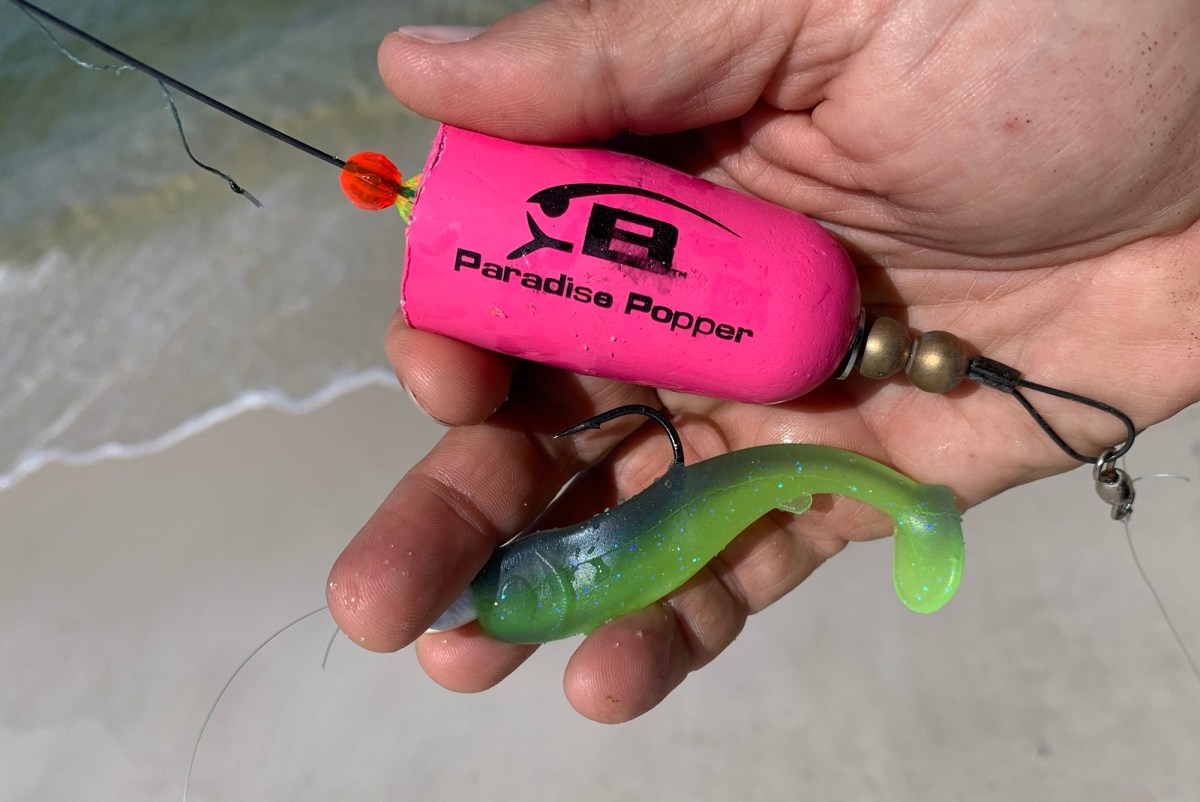
My preferred rig is simple and consists of a Bomber Paradise Popper X-Treme, 2 or 3 feet of leader, and a 1/8- to 1/4-ounce jighead matched with a YUM Pulse or YUM Scottsboro Swimbait. If shrimp are extra prevalent, I might instead use a YUM Spine Craw, which is an excellent shrimp imitation.

The Paradise Popper comes in oval and popping shapes, and I almost always choose the popping version. Some anglers favor the subtlety of the oval and rely on built-in rattles to do the fish attracting.

To rig, tie on the rigged jighead first and then cut the line a few feet above the jig to form your leader. The Paradise Popper comes with swivels at both ends. Orient the popping face toward the main line and tie that end to your main line and the other to your leader.

Popping Cork Fishing

The popping cork offers the same simplicity as bobber fishing in a pond. It provides weight for easy casting, keeps an enticing bait suspended in a key zone, and makes it obvious when a fish bites by darting under. As importantly, a Paradise Popper attracts fish.

Popping the cork attracts feeding fish in the same way a topwater lure does. The splash suggests the sounds of another predator fish feeding, and gamefish come to investigate. The Paradise Popper is also equipped with rattles that engage with each snap of the rod tip, and the rattling sound also helps attract fish and trigger strikes.

When fish investigate the sound, they find what looks like an easy meal just waiting to be enjoyed. Many fish that would not quite commit to striking a topwater lure cannot resist nabbing a vulnerable-looking soft plastic offering.

Fishing this rig is wonderfully simple. Cast, allow the rig to settle for a few seconds and then work it by alternating rod sweeps that make the popper pop and pauses and watch for the cork to dart under or begin moving swiftly sideways.

Experiment with the sharpness and length of your rod movements and with your cadence. Some days plenty of pops and only short pauses work best. Other days you only want to pop the rig occasionally, and most fish will bite when only the wave action is moving the lure.

Usually it’s, somewhere in between. Pay attention, and the fish will let you know!

Summer Creek Bass Fishing

Mid-summer making lake-fishing tough? Head for a creek for hot bass action.

Mid-summer fishing can create challenges, especially for fishing without a boat. Many fish in lakes and ponds move to deeper areas, often well out of reach. At the same time, lake shores and pond banks commonly get more overgrown, creating challenges for accessing spots and casting.

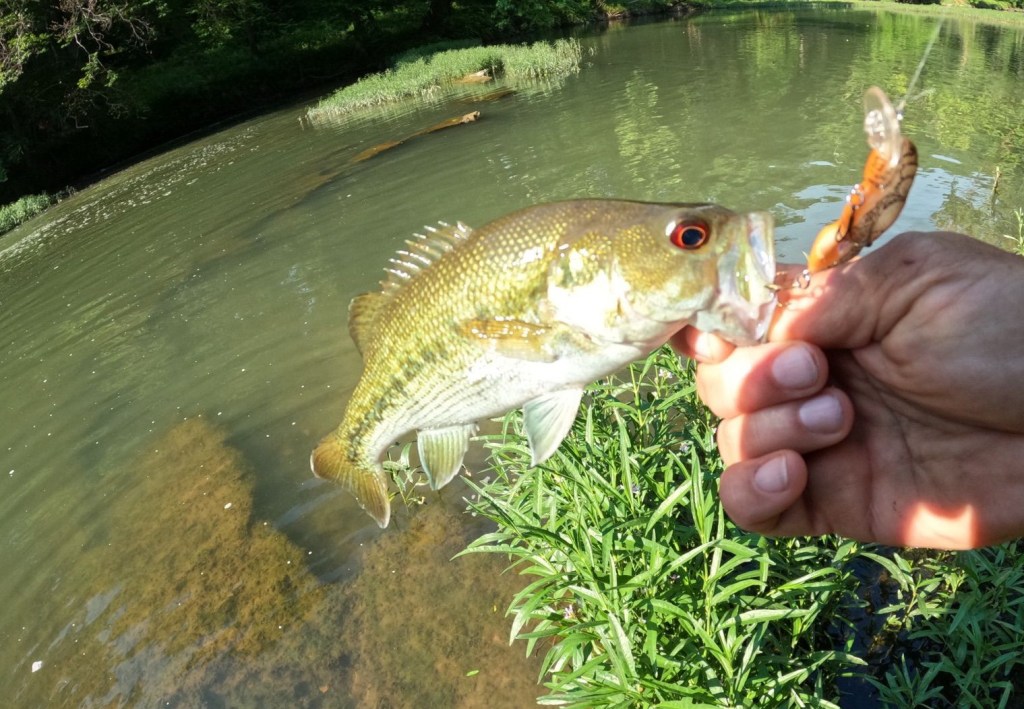
Don’t despair or put away your fishing gear, though. Mid-summer can be a fabulous time to wade creeks and small rivers to fish for various black bass species, plus whatever else bites. The cooler water feels great on a hot day, and the fish tend to feed actively and remain in easy reach for Fishing on Foot.

I’ve paid extra attention to stream opportunities over the past couple of summers because I have been pursuing the Georgia Bass Slam, and several species I’ve been after mostly live in creeks and small rivers. An example is the Bartram’s bass in the picture above.

Depending on where you live, streams might hold smallmouth bass, spotted bass, largemouth bass or regional species like shoal bass or Guadalupe bass. Unless you live in pure trout country, (or in a coastal area where silty bottoms, alligators or other factors take wading out of the equation), smaller streams around you probably provide opportunities for wading and bass fishing.

Rivers & Creek Access

Because I like to wade-fish during summer, I mostly look for creeks and small rivers that have shallow sections. North Georgia, where I live, has a lot of rocky tumbling streams , so that makes it easy.

Several of Georgia’s bass species only live in parts of specific watersheds, so that has caused me to do a lot of Google Maps searching, following stream paths and looking for parks, greenways, canoe launches, national forests areas, etc. that provide public access and then switching to the satellite view to see what the stream looks like.

A few areas are busts. The bank is steeper and more overgrown than I could tell; it’s all too deep to wade; or it simply doesn’t look like good fish habitat. That said, I’ve been impressed by the number of quality fishing spots I’ve found, including some that aren’t far from home and that I hadn’t even thought about trying on the past.

It’s worth noting than in addition to legitimate, indisputable creeks, some waterways that would be better described as ditches can provide surprising opportunities. From the bank of a roadside ditch, try throwing out a little topwater lure and see what happens.

Creek Lures

I keep my lure selection small for this type of fishing, carrying a box or two that can go in a shirt pocket and maybe a few packages of soft plastic lures.

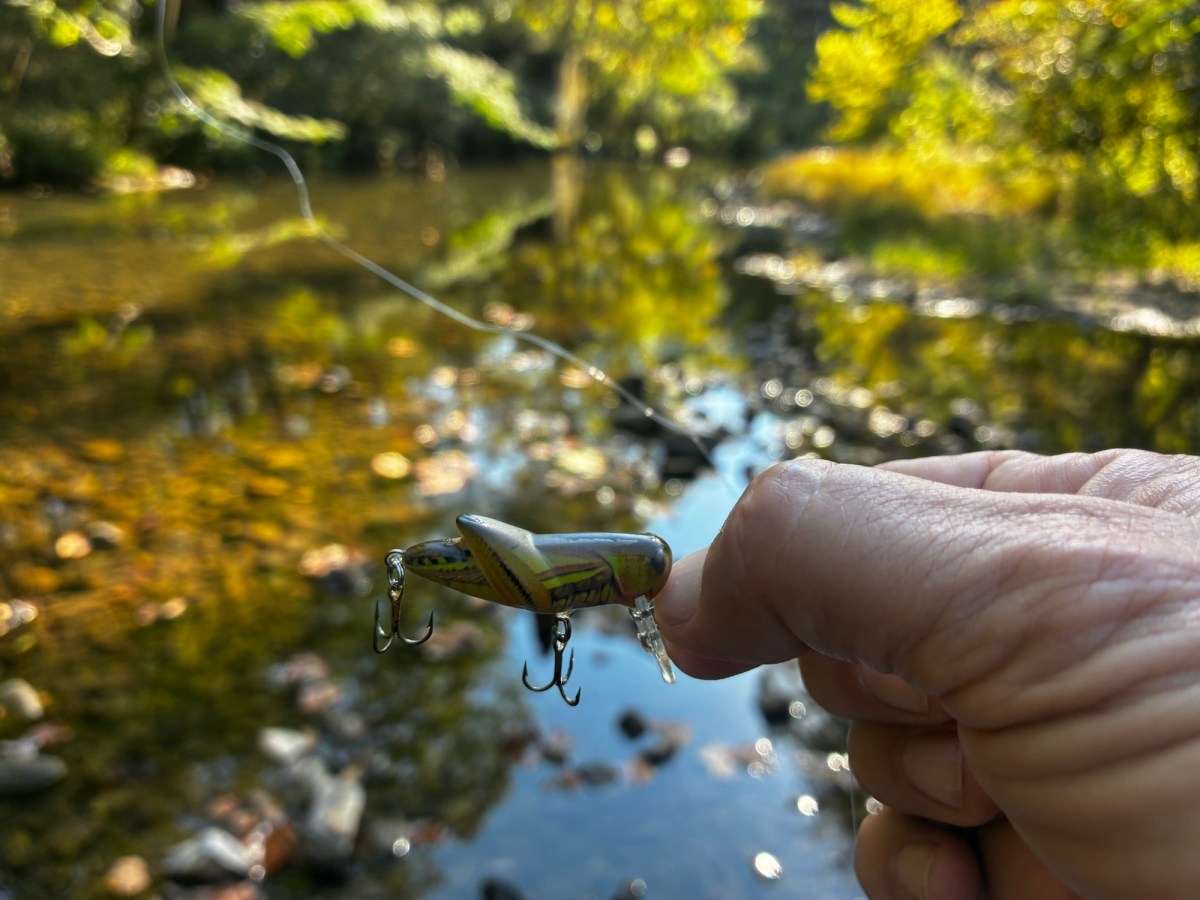
Small topwater lures, like Tiny Torpedoes, Zara Puppies and Crickhopper Poppers, are always in the mix and usually my starting lures. I’ll also carry a few small crankbaits, usually including a Rebel Crawfish or two, and a couple of minnow lures.

For plastics, I like to carry some small natural craw imitations like a Rebel LIVEflex Creek Craw and at a package of 4-inch YUM Dingers.

With that simple selection, I have everything I need for some fun and productive summer fishing.

On-Foot Outing Ease

The simpler I keep my gear and angling approaches, the more likely I am to go fishing when I only have limited time.

Among my favorite things about an on-foot angling approach is how quick and simple a fishing plan can be. I can easily scoot over to a nearby creek or lake shore after work or in the morning before a day really gets going.

Unless you live on the water and keep a boat docked, virtually any boat-based fishing trip requires some extra steps that take time and require more effort. I’m more likely to slip a fishing trip onto a limited time window if I can just hop in the car and go and actually be fishing just minutes after arriving.

I’ve mentioned in other posts that I keep a little fishing kit in my car, with a travel rod, a light spinning reel and a little selection of lures and terminal gear in an ice cream bucket. That makes those quick plans extra simple, and at times I’ll do nothing more that put the rod and reel together and put a little lure box and a few packets of baits in shirt pockets.

Even when the car kit doesn’t have quite the right stuff for where I’m going or how I want to fish, it’s easy to go in my basement, where I keep my fishing gear, grab the right rod and put a small tackle selection in a backpack.

I have a handful of little boxes assembled already that have suitable selections for trout streams, bass ponds, crappie fishing docks… With one of those boxes and a few packets of soft plastics and accompanying terminal tackle, I can be well set for a modest outing.

I definitely err on the simple side as an angler. I seldom carry an extra rod for bank fishing or wade fishing, and I keep my lure selections small. I like to be as mobile as possible, and if I carry too much stuff I just get indecisive, and I end up spending too much time changing lures instead of just fishing!

Sarah’s First Trout

My daughter’s first trout was admittedly somewhat of an accident.

I’d like to take guide credit. After all, I had told my daughter Sarah where to stand and cast when her first rainbow trout bit. That’s not the whole story, though.

The truth is that I’d been picking promising looking runs and suggesting casts for a few hours, and had basically given up hope on connecting her with a trout that day. We were fishing a heavily stocked section of the Tallulah River, so I’d begun the morning with high hopes, but the trout didn’t seem as plentiful or willing as they sometimes are.

Sarah didn’t mind. She was having a grand time exploring the river gorge and was at least as interested in wildflowers and ferns as she was in catching fish. And as much as I wanted her to experience a trout catch, I tried not to dwell on that because I didn’t want to take away from her experience.

The cast that finally produced was an afterthought, and a fish was not the objective. We were about to call it a day when I noticed that the run beside us was pretty. As an outdoor writer, I wanted a photo of Sarah casting there. So I pointed to the cast that would be good for my photo and stepped up onto a higher rock for a better vantage.

Sarah cast a Rebel Crawfish right where I’d pointed and started reeling and immediately hooked up! A moment later she was lifting a rainbow trout out of the river and swinging it over the rock she was standing on.

The trout flopped out of my hands and back into the river when I unhooked it, so we didn’t get a good photo, and I completely forgot about the photo I had in mind.

She caught her first trout, though, and I did at least get an unspectacular photo of her fighting it. After that, we really did pack it up for the day. That day was more than 20 years ago, but I think I remember it all fairly accurately!

No Itty Bits in Car Kit!

I always have micro jigs in the back of my car. Well — almost always!

One of my sons has a pond on the property of the home he recently bought. Of course, I can’t visit without he and I making at least a few casts.

Last weekend we started out trying to catch bass. Me with topwater and him with a YUM Dinger. He had one fish on but didn’t land it. Nothing for me. We both had bluegills and green sunfish pecking at our bass lures, though, and we wanted to catch something, so we decided to downsize.

My car “fishing kit,” which consists of a pack rod, a light spinning reel and an ice cream bucket with miscellaneous lures and terminal tackle in it, always includes at least a couple of packages of Bobby Garland Itty Bit baits. Or at least it is supposed to. To my surprise and dismay, there were zero Itty Bit packets in the bucket that day!

The kit doesn’t have a formula, and its contents change a lot. I’m often throwing things in and grabbing things from it, and if I grab something from the bucket and put it in a vest pocket one day, it might end up getting put away in the basement instead of going back in the bucket. So I can see how it happened. Still, there are usually multiple Itty Bit packets. That’s the closest thing there is to a standard item.

There was one packet of 1/48-ounce Itty Bit Jigheads, and my son found a single Itty Bit Slab Hunt’R loose in the bottom of the bucket. He tied that on and and I rigged one of the little jigheads with just the tail section of a Bobby Garland Mayfly.

Those did the job fine, and we managed to catch several bream and one shiner. I felt very ill equipped with no Itty Bits packages in my bucket, though.

That has since been fixed!

Along-the-Way Fishing Stops

I’m always on the lookout for stops along travel routes that allow for simple fishing breaks.

I spend more than a little time staring at Google Maps on my phone or a computer — searching for parks, greenways, canoe launches and rights-of-way that front a creek or river or maybe have a pond or two on the property. And that searching revs up whenever I’ll be traveling by car and suspect I might have a bit of extra time.

If a spot seems to have potential, I pull up the satellite view and zoom close to see what I can discern about the character of the waterway and the quality of the access. I’ll also look at reviews to see what happens to be mentioned about fishing, but unless something credible seeming mentions fishing not being permitted, a lack of good reports definitely doesn’t keep me from stopping.

Some stops work out great, and I find myself wishing I had more time but am glad to have more knowledge about them for the next time. Others are very quick because they don’t turn out to be that interesting or possibly because the access area is small and other anglers are already fishing. Most fall in between.

I made three stops during a recent drive. One was to a spot I’d visited before so I knew what was there. It’s a canoe access with no other developed facilities, but it offers a couple hundred yards of river access, with easily waded shoals and bank access to big pools.

I caught two spotted bass, including one solid fish that hit a Pop-R, got some lure photos I needed for work, and enjoyed a nice little driving break.

The second and third stops were pure scouting. One was a linear city park along a river. It has ballfields, a playground, picnics tables, a walking trail, etc. No mention of fishing online, but there were obvious fishermen’s trails to shoal areas, and one other angler I spoke with said he catches trout and bass there at times.

I just fished one spot, and not for too long, but I caught one little redeye bass and got a few hits — I think from panfish. I was impressed by my findings and definitely will stop there again when I have more time.

The third was a Greenway trail along a creek. The creek was too small to see much on the satellite. As it turned out it was ditch-like and a bit muddy, with high banks and only a few gaps in trees to provide casting vantages. I didn’t stay long at all and probably won’t return to that one.

Interestingly, although it isn’t listed as a fishing spot and didn’t look that great, I saw three other fishermen in a short visit. All had backpacks and a couple of rods and looked like fairly dedicated bass anglers. I spoke to one angler who said it had good fish in it, but they could be challenging to catch, and he hadn’t caught any that day.

Of course, to me it’s less about what I find at any given spot and more about the value or searching out stops and keeping a bit of gear handy in my car and the fun of discovery.