
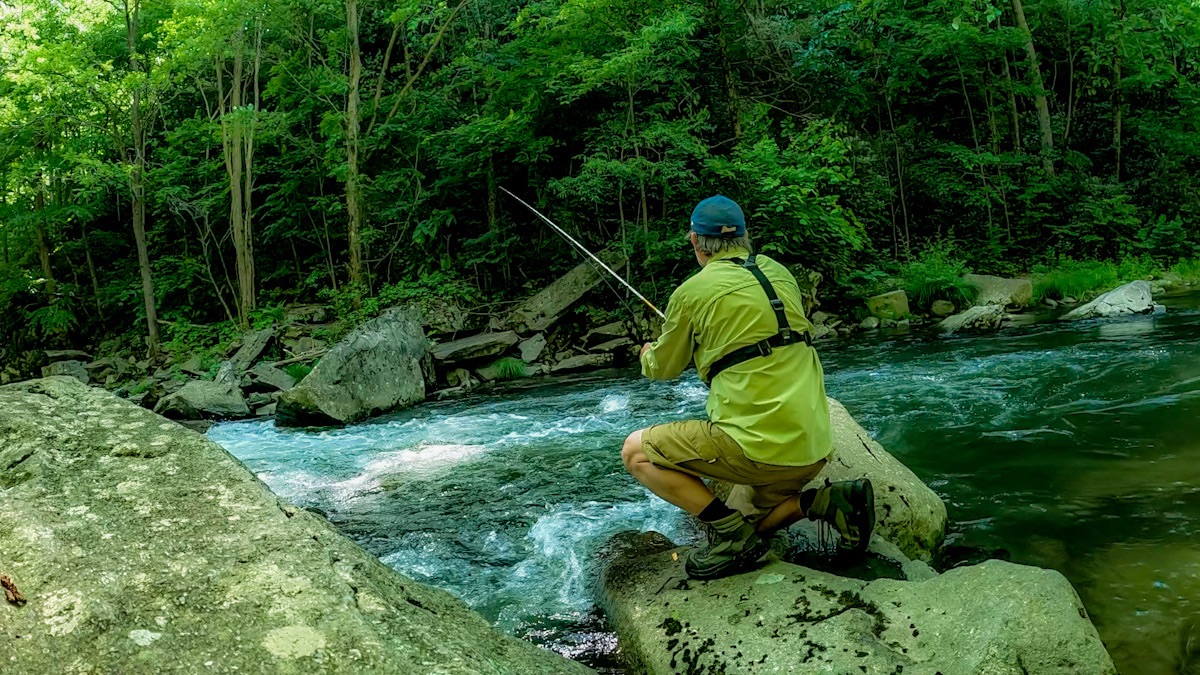
“The fly you use doesn’t much matter,” an old timer responded when I asked about the best flies for a wild trout river he regularly fished. “More important is that the trout sees your fly before it sees you.”
Talking more, I realized “before it sees you” implied “before the trout senses your presence in any way.” He also assumed a natural, drag-free drift. The crux was that while wild Appalachian trout tend to be very opportunistic about meal opportunities, they also spook very easily, and stream stealth often is more important than matching any kind of hatch.
Of course the virtue of stream stealth doesn’t only apply to fly fishing — nor does it only apply to wild Appalachian trout. Adding a bit of sneakiness to your approach will improve your odds of success in most stream trout fishing situations, and that becomes even truer during mid-summer, when creeks and rivers tend to run low and clear.
As much as many trout fishermen love putting those waders to use and getting out in the middle of the stream, if you watch veteran anglers you’ll notice they stay along the edges and even out of the water as much as possible. And for small streams and slick pools, especially, they’ll commonly position themselves well back from the water’s edge.
Stealth doesn’t mean going in full stalking mode — not necessarily, anyway. It’s simply means things like staying back a little, avoiding splashing and moving too abruptly, using natural features for concealment, working from downstream of fish when possible, and dressing in natural tones.
The degree of stealth needed depends on many factors, including whether fish are stocked or wild, the amount of fishing pressure, the color of the water and the size and character of the streams. No matter those answers, added stealth never hurts, and it’s an easily controllable thing that can help you catch more trout.
 Fishing on Foot