Georgia Bass Slam Challenge

The Georgia Bass Slam provides a great opportunity to explore Georgia’s diverse bass fisheries and lends itself nicely to Fishing on Foot.

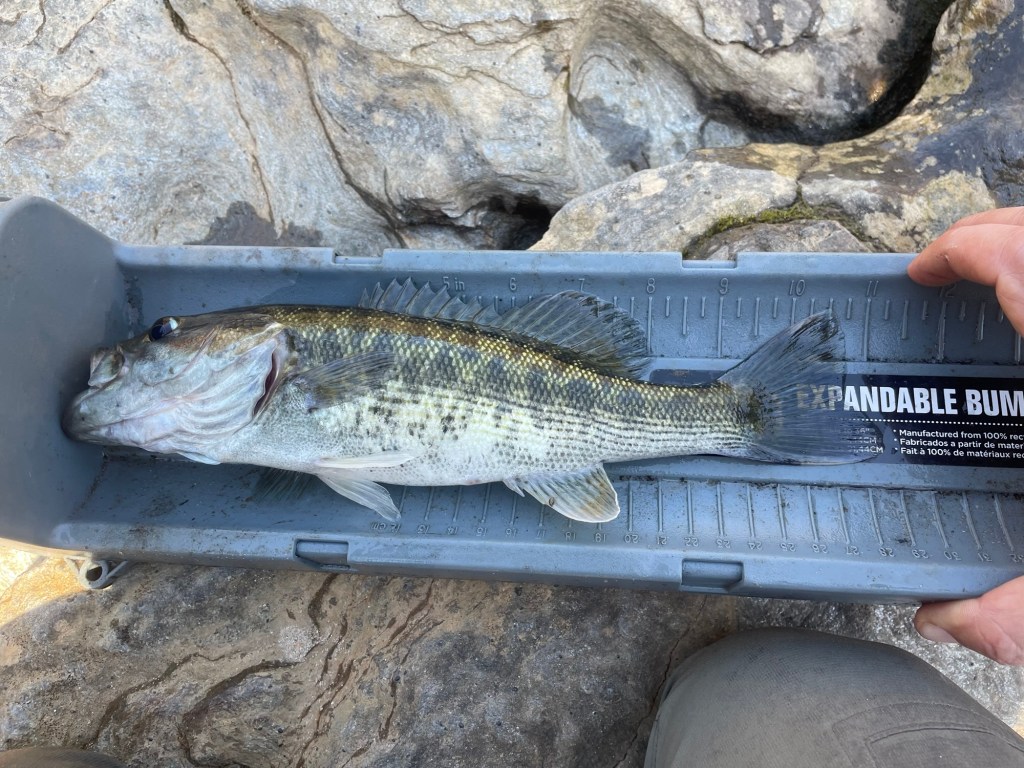
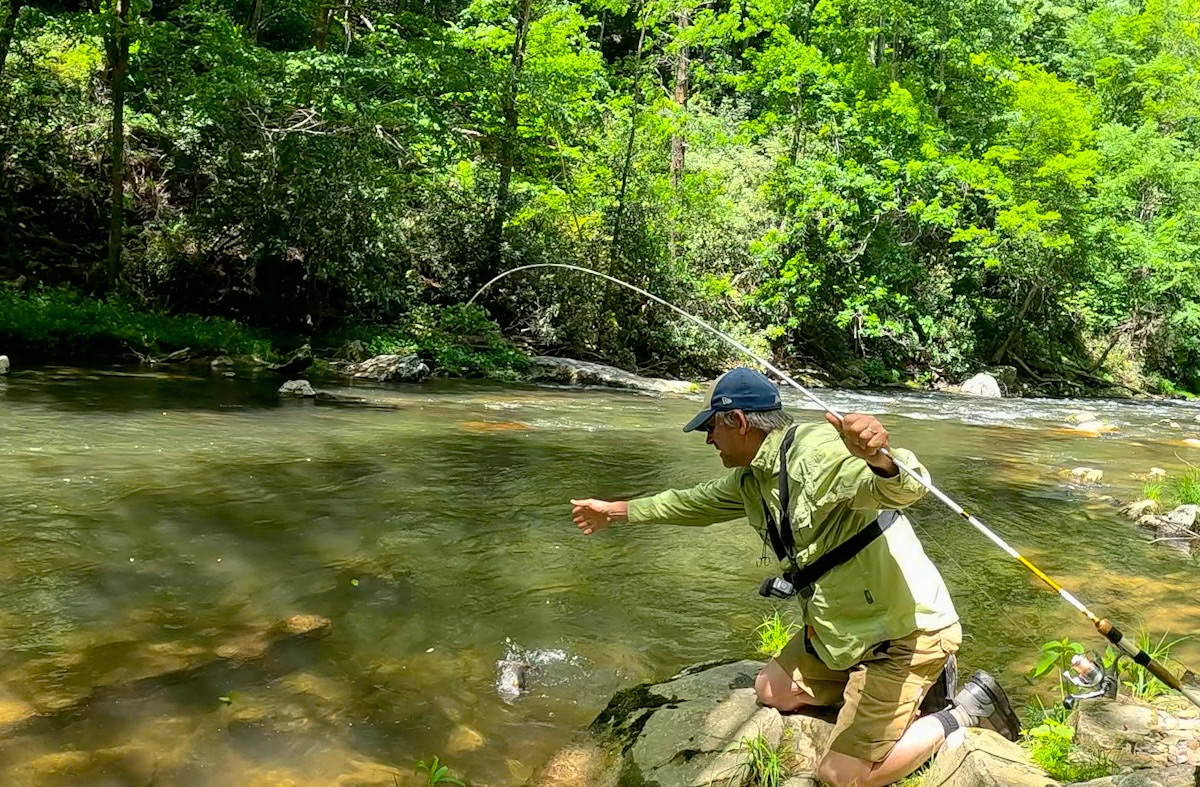
At the start of this year I set myself the challenge of trying to achieve the Georgia Bass Slam. Earning the slam requires catching at least five of 10 black bass species, all in Georgia waters where you have permission to fish and with a minimum size of 8 inches or the legal minimum size for the waters fished. I also self imposed the challenge of achieving the slam by Fishing on Foot, whether wading or walking the bank.

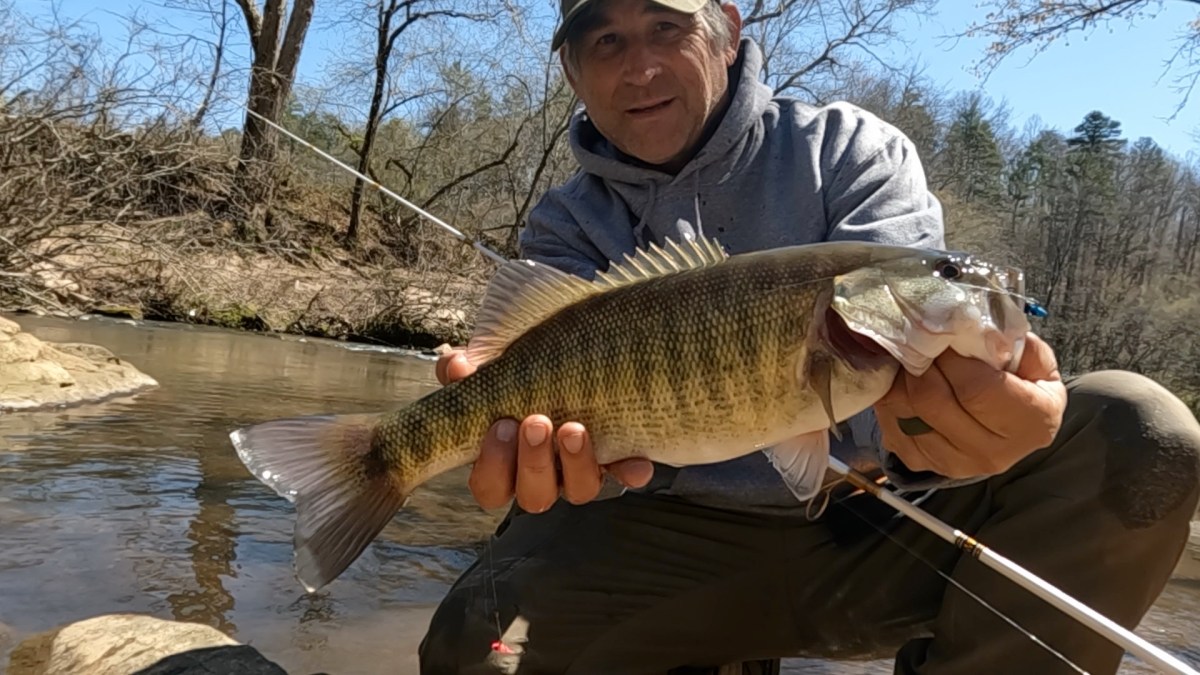
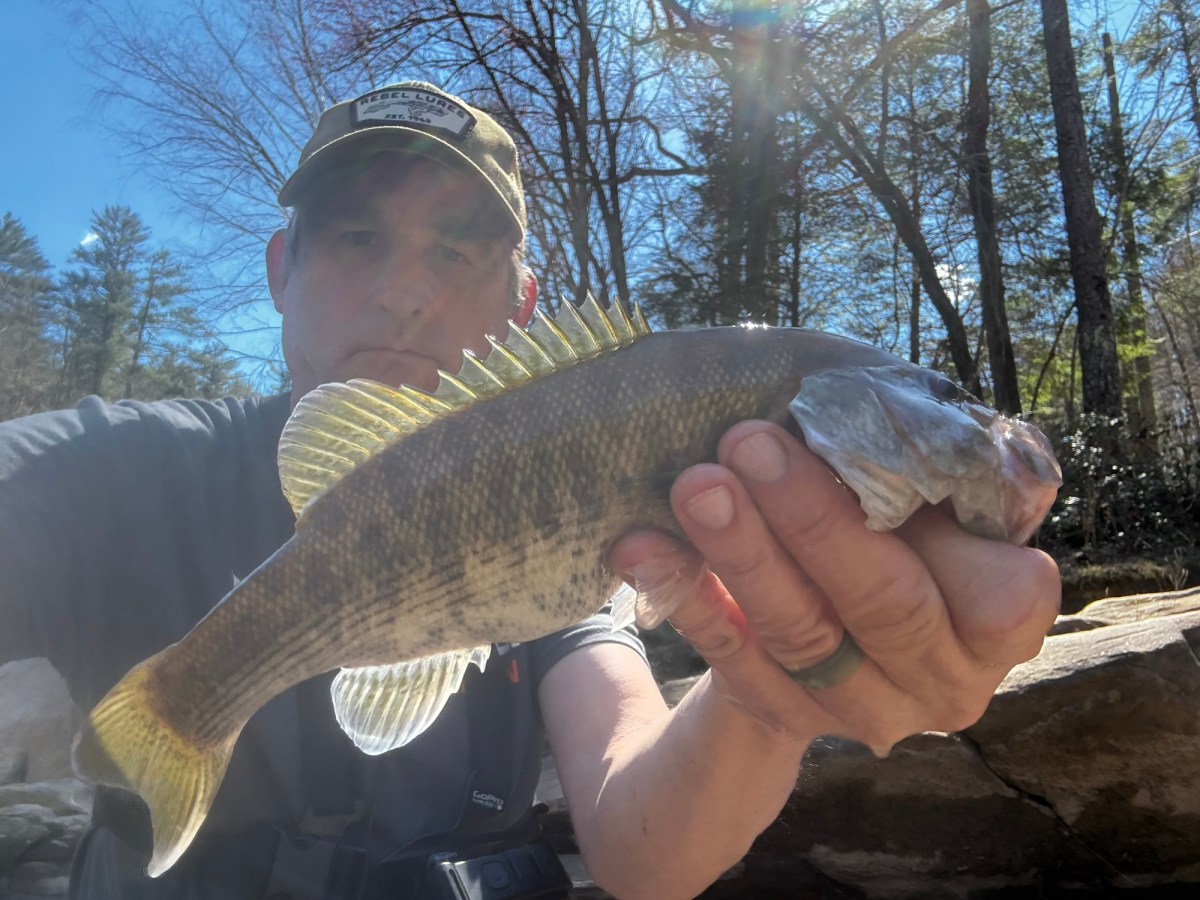
Mission accomplished. I ended up catching qualifying fish of seven bass species.

  • largemouth bass
  • Bartams bass
  • shoal bass
  • spotted bass
  • Chattahoochee bass
  • smallmouth bass
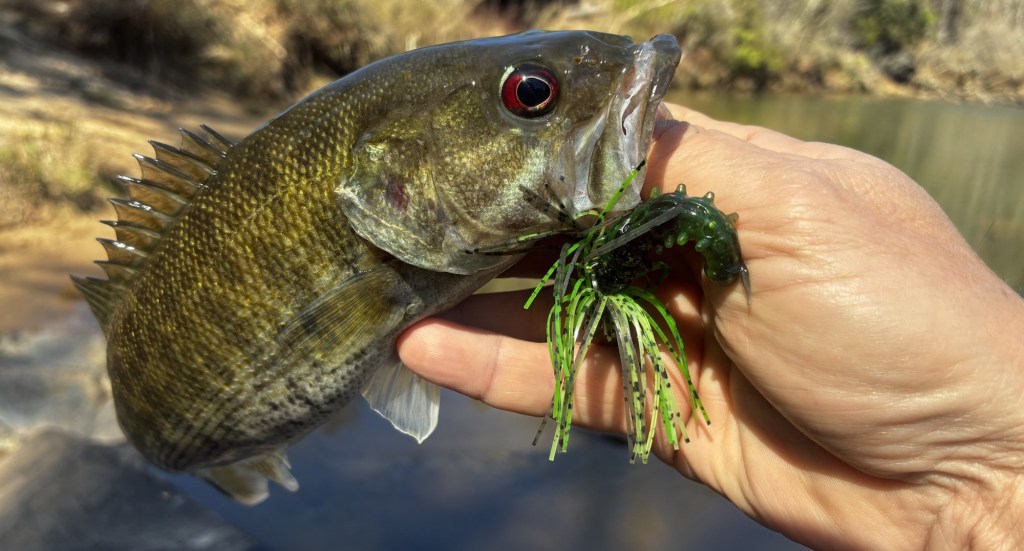
  • Coosa redeye bass

The three I didn’t get were the Tallapoosa bass, Altamaha bass and Suwannee bass. I did catch one Tallapoosa bass, but it was less than 8 inches in length. I never found my way to waters where the other species live.

About the Georgia Bass Slam

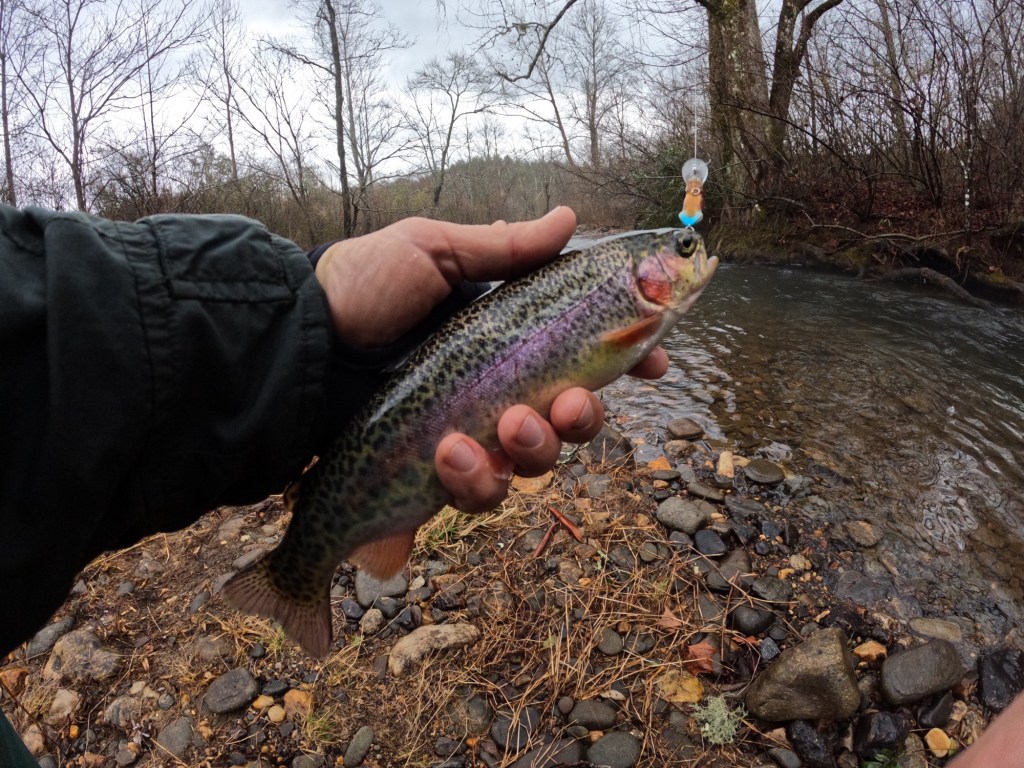
Coosa redeye bass

The Georgia Bass Slam was established to create a fun challenge for anglers and to raise awareness about Georgia’s diverse black bass fisheries.

Georgia has 12 distinct black bass species. Two pairs of species are looked at together for the purpose of the slam, both because of the difficulty of field identification and because of extensive hybridization outside native range. Largemouth bass and Florida bass are treated as one species for the slam, as are spotted bass and Alabama bass.

To certify qualifying fish, you simply submit a photos of the fish on a measuring tape and one of you with the fish and list the species, county it was caught from, length and your name and fishing license number.

Anglers who achieve the slam receive a prize packet and have their names listed on the Georgia Bass Slam page of the Wildlife Resource Division website and at the GO Fish Education Center.

Georgia Bass Slam Page

My Bass Slam Experience

For me the bass slam was a fun challenge, and I certain I’ll try it again and see if I can notch any of the other species. You’ll find videos about all of this year’s catches on my Fishing on Foot YouTube channel.

I really enjoyed learning about the different species and their behavior and studying the range and habitat of each to figure out where I might be able to find and catch them. A few of the species I’d never targeted before.

It was also fun exploring new waters, including some really good spots that were pretty close to home that I had never fished before.

Speckled Trout Nights on Big Pier 60

Overnight pier outings in my late teens and early 20s will forever remain some of my all-time favorite fishing trips.

Most evenings I’d arrive at Big Pier 60 a bit before sunset, toting an already rigged medium-weight spinning outfit and carrying nothing else, except one spare lure packet in a pocket. I’d roam back to the car to head home just after sunrise, carrying the same stuff, possibly minus the spare lure packet.

No bucket, tackle box, stringer, cooler or anything else. I’d fish all night with the same lures, never keeping any fish – although occasionally I’d give trout to other pier anglers who were nearby and wanting fish to take home.

Most outings were solo. Kind of, anyway. Pier fishing is a community experience. When someone hooks a good fish, a flash mob of coaches and assistants forms, and when a really big fish finds its way onto the pier, everyone grabs at least a little ownership in their own minds.

That was extra true on Pier 60 if anyone ever landed a snook, but that’s another topic for another time.

My Trout Rig

My lures never varied. Hot pink, straight-tailed Love’s Lures, which were small grub-like baits that were sold tandem rigged on jigheads.

Love’s Lures was a Florida brand. It went away years ago, but the baits were once quite popular in the Tampa Bay Area and worked very well, especially for trout. I’m pretty sure some Florida anglers still generically refer to tandem grub rigs as love lures.

I hadn’t thought about it before, but I’m sure my extreme fondness for tandem jig rigs began to form on Big Pier 60.

Pier Night Plan

The trout would feed at night beneath lights that were aimed at the water on both sides of the pier for the purpose of concentrating feeding fish. I would move from light to light, looking for trout and for baitfish, and trying a few casts, at least, whether or not I saw fish.

Depending on where I found fish and how they bit, I might hop from light to light throughout the night or end up mostly camped in one spot. That’s partly why I traveled light. I wanted to remain mobile!

Sometimes I’d vertical jig right in front of a visible fish to coax a strike. More often I’d make an underhand cast across the lit area or parallel to its edge, let the lures sink a few seconds and then dance them by twitching the rod tip as I reeled slowly. It was a pattering game. No switching lures. Just changing cadences, depths and rod movements and figuring out how the fish were positioned and how they wanted the lures moving that night.

Some nights shallow lights produced the best action. Other nights, deep ones. Likewise, the fish could be mostly on the left or right side or evenly distributed. Overall action also varied. I always caught fish, but some nights I caught LOTS of fish.

I’m certain those variances related to conditions, season, tide stages and other factors that probably made sense. I didn’t think much about such things, though. I went whenever I could, stayed all night and searched till I found the fish.

Pier Trout

I sought and mostly caught speckled trout, but also a mix of other species, like ladyfish and butterfish. The trout were seldom large, with most in the 10- to 14-inch range.

The fish in the photo on top was the best one I ever caught on a pier outing. I think it was 17 or 18 inches long and weighed about 3 pounds. Someone from the pier crowd ran and got the attendant, who wanted a photo for the bulletin board. He snapped a second one and gave it to me.

I won’t deny I was pretty proud of my fish and mug making the bragging board. It remains one my favorite photos of me with a fish, but not because of that specific fish. It reminds me of magical pier nights that were far more formative than I realized for a long time.

Brown Trout Aren’t Like Other Trout

Understanding how brown trout differ from other trout species allows you to fish for them more effectively.

If you want to be successful catching brown trout, the first step is to recognize that browns are different from other trout. Understanding their unique “personality” can help you fish for them more efficiently.

From the onset I should acknowledge that I’m not a biologist, so this isn’t a scientific life science breakdown. That said, I’ve had the opportunity to spend substantial time with top trout anglers and have spent quite a bit of time reading about brown trout and interviewing biologists for magazine stories.

More importantly, I’ve invested my share of hours in creeks and rivers across the country and have seen for myself where brown trout lurk and how they behave.

Brown Trout Distinctives

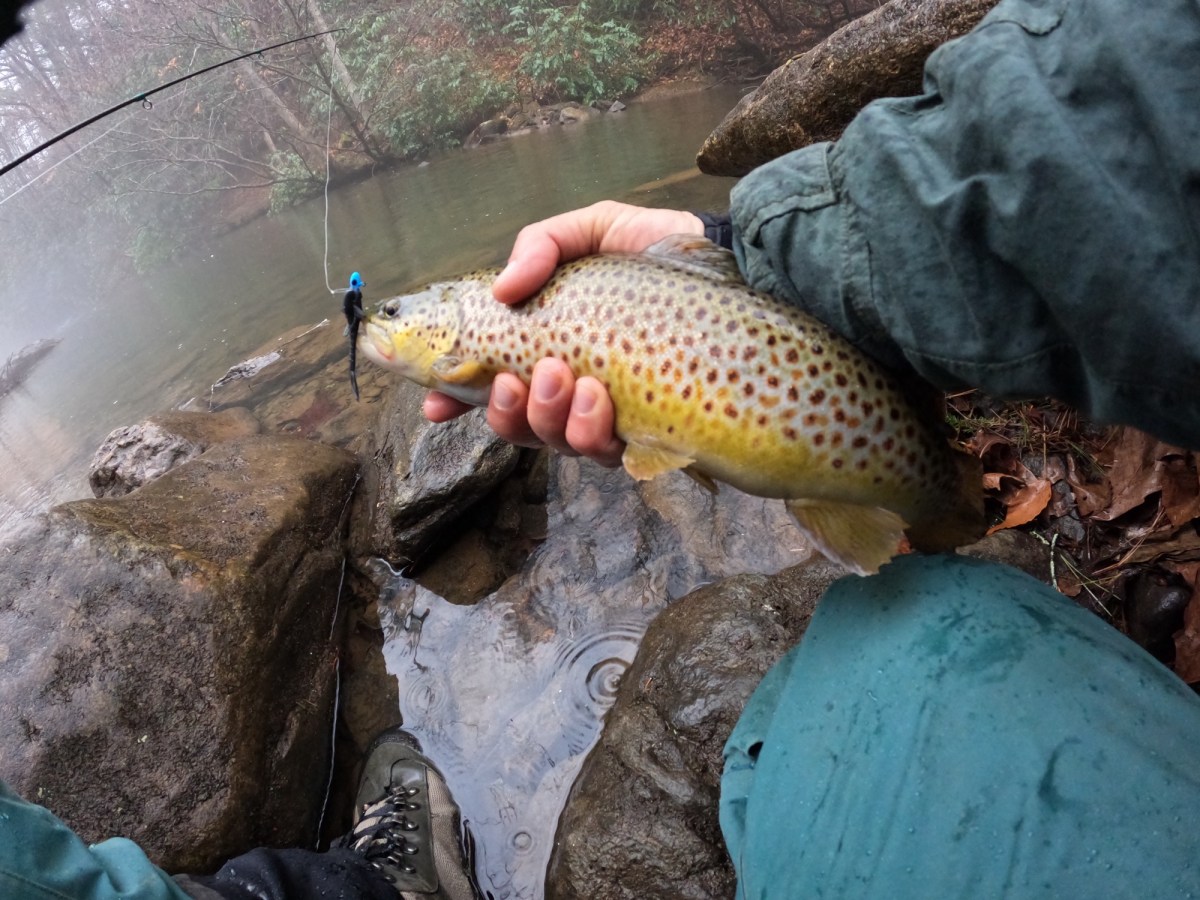
Brown trout from an Appalachian stream.

More so than other trout, brown trout avoid current. They’ll often hold near current, within ambush range, but in a hard eddy. They relate heavily to cover, whether that’s a boulder or a downed tree, and tend to hold in the toughest place for making good presentations and getting them out of one does bite.

They also avoid bright light when possible, lurking in shady undercuts and feeding best early and late and on dreary days. Mature browns are actually largely nocturnal. They can be coaxed into biting by day but do most of their hunting under the stars.

Brown trout also favor larger meals than most other trout, feeding heavily on minnows, sculpins and other fish along with crawfish and large aquatic and terrestrial insects.

Browns also seem to be the most wary of the trout, and that only increases with age. If a mature brown becomes aware of you, the chance to catch it diminishes dramatically.

As a final note, larger browns, especially, tend to be loners. Unlike rainbows, which will stack up in a good feeding lane, a big brown is apt to own a dark undercut bluff hole or might be a part of a small, loose group in a major pool in a large river.

I’ll save fishing tactics for future posts, but if you intentionally consider how browns differ from other trout in their behavior, the spots to target and best tactics become far more intuitive. I will list a few of my favorite brown trout lures below.

Brown trout caught from the bank from the White River in Arkansas.

5 Top Brown Trout Lures

Brown trout on a Rebel Tracdown Ghost Minnow
  • Smithwick Suspending Rogue
  • Tasmanian Devil
  • Rebel Wee-Crawfish
  • Rebel Tracdown Ghost Monnow
  • Great Lakes Finesse Juicy Hellgrammite

Use the code FOF15 for 15 percent off your entire order at Lurenet.com.

Daydreaming About Ice Fishing

A Facebook memory popped up today, with a photo of an ice fishing graph as an airplane carry-on, and I can’t deny I’m a little envious of myself that year.

I’m a BIG fan of ice fishing. Walking across the top of a lake is true Fishing on Foot! Living in Georgia and having other fishing priorities for work, I don’t find my way to ice country nearly as often as I’d like.

Odd for a Georgia angler, I suppose, I do own ice rods, electronics, lures and clothes, and even an auger and simple sled for dragging stuff across the ice. I just don’t find enough opportunities to use my ice gear.

Simple Ice Fishing

Bluegill make great targets for simple ice fishing excursions.

My favorite ice excursions are the simplest sorts — when fish are close enough to the shore or a lake is small enough that you can simply walk to a fishing spot, carrying gear in a bucket or pulling a small shed.

I’m not opposed to fishing from a shelter when it’s needed. If it’s bearable, though, I’d rather fish in the open and stay mobile, carrying only a rod or two and hopping from hole to hole to search for fish.

Trout are my favorite winter targets — maybe because they are cold oriented and tend to be turbo charged when other species are a bit slower than normal. That said, I really like catching bluegill and crappie through the ice, and there’s no species I wouldn’t enjoy catching.

No ice plans for this winter, as of now, which I guess is why the picture makes me jealous of myself. I certainly wouldn’t pass on the right opportunity, though, so I’m not yet ready to give up on this winter!

My all time favorite ice catch was this lake trout from the Black Hills of South Dakota that was part of a marvelous winter trip to Deadwood.

Double Mayfly Rig for Crappie, Trout & More

Tandem jig rigs provide a host of advantages for many fishing situations, so I use them quite a bit, including a variety of configurations. Recently, I’ve made extra heavy use of a specific double Mayfly combination, especially when I’m wading a trout stream or walking a riprap bank or dock to fish for crappie.

The specific combination is a Bobby Garland Mayfly, which is 2.25 inches long, and Itty Bit Mayfly, which is 1.25 inches long. The bigger one goes in front and is on a slightly heavier jighead. It sinks first, often getting fish’s attention, with the irresistible tiny one then falling into the zone.

I like big/little combinations with the same shape of bait because they move the same ways in the water, and in trout streams or around crappie cover I especially like the Mayfly shape because aquatic insect nymphs are often prevalent forage that the fish are used to seeing and eating.

Rigging Specifics

I tie both jigs on using loop knots to free the action and get the bait away from the line and typically space them about 18 inches apart.

I’ll rig the larger front one on a 1/16- to 1/32 ounce jighead, with depth and current dictating the specific weight, and the smaller on a 1/48-ounce Itty Bits Jighead.

Often I’ll match the colors, but at times I’ll mix them up, and if one far outperforms the other, I’ll switch the color of the other to match to try to determine whether size or color has been the difference maker.

Fishing the Double Mayfly

In trout streams, I fish mostly near the bottom and let the current do the bulk of the delivery work to match what the fish are used to seeing. I’ll orient casts upstream, let the rig sink as it drifts, and then reel and use gentle upward lifts of the rod tip. I lift just enough to keep the bait from dragging and hanging and to add a bit of wavering action.

For crappie (and other lake fish), I’ll either pitch the rig and let it swing down, or suspend it straight beneath the rod tip and experiment with different movements and with holding the rod tip completely still.

The best presentation varies daily, but as a rule, adding less action produces best. Both Mayfly baits have a natural shape and very enticing subtle wavering action when held still or barely twitched.

Bobby Garland Mayflies and Itty Bit Mayflies are available from many outdoors retailers, including Lurenet. Use the code FOF15 at checkout for 15 percent of your entire order at Lurenet.

What are Delayed Harvest Trout Streams?

If you spend time around trout fishermen in the South, you’ll eventually hear talk about Delayed Harvest or DH trout waters and the fine fishing they offer, especially during the catch-and-release season, which occurs throughout the cooler months.

I always spend at least a few days fishing Delayed Harvest waters in Georgia or North Carolina between October and May.

Delayed Harvest regulations, which were popularized in North Carolina in the early 1990s, maximize fishing opportunities in waters that offer quality trout habitat from fall through spring but lose trout habitat when the water warms. They also effectively serve the interests of very different user groups among trout anglers.

Most Delayed Harvest stream sections have little to no natural reproduction and most were managed as nominal put-and-take fisheries, with only spring stocking, prior to the development of this management concept.

How Delayed Harvest Works

All trout fishing is catch-and-release during the “delay” part of delayed harvest trout management.

The way DH streams work is that they are heavily stocked through the cooler part of the year and open only to catch-and-release fishing with tackle restrictions from fall through late spring (Oct 1 through the first Saturday in June in North Carolina). This is when the habitat is best and these waters can support a high density of trout. The tackle restrictions (only single-hook artificial lures in North Carolina) allow for easier fish releases.

About the time the habitat quality would start diminishing, the regulations change, allowing for a limit of trout to be taken home and for fishing with bait and with treble hooks.

Without the harvest, not nearly as many fish could be put on these streams during the catch-and-release period because the habitat would not support the large numbers when the water started warming.

Specific regulations vary by state, but the concept is always the same. Waters in the program range from small creeks to big tailwater flows and vary dramatically in character.

Common denominators are that the fish tend to be plentiful during the release season (albeit increasingly educated at the season progresses), and opportunities to bring home a limit tend to be very good early in the harvest season.

For those reasons delayed harvest streams tend to be quite popular, so expect company and plan strategists accordingly.

First Fishing Trips

Details remain fuzzy. I’m the littler guy on the right — 4 or 5 years old — and I can’t claim any actual recollection. However, that outing started my fishing journey and the core of my career path.

I’m pretty sure it’s the only time my family ever went fishing together. I don’t even know where we got fishing tackle, and I assume the camper that’s hooked up to Dad’s Charger was a rental.

We were somewhere around Bemidji, Minnesota. I know that because pictures from the same trip include shots of us with Paul Bunyan and Babe in Paul Bunyan Park beside Lake Bemidji.

It’s also uncertain who actually caught the perch in the picture. I always assume it was me because I was the fisherman in the family. My brother Scott assumes it was him because he was older and more able. Maybe it was a team effort.

Subsequent Fishing Trips

What I do know is that this trip created a spark. The spark grew to a flame on visits to friends and a great aunt and uncle who had cabins in Northern Wisconsin, where I would spend every minute I could catching sunfish from docks while the rest of my family did whatever people do when they spend days visiting family and friends.

Then there was the small footbridge over a creek that was a short walk from our house in Clearwater, Florida. I spent countless hours leaning over the rail of that bridge and standing on a lone cleared bank spot beside the bridge, fishing for golden shiners, bluegill and occasional largemouth bass.

Eventually I began riding my bike to neighborhood lakes and getting rides to park lakes and to bridges and piers on Tampa Bay, the Gulf and the Intracoastal Waterway. Sometimes buddies would join me. Often I fished alone. Didn’t matter to me. I was fishing, so I was happy.

And I toted my rod & reel and tackle box to any event that was near water, if I was allowed to do so. Youth Group, Scouts, family picnic, vacation… anywhere I could.

Learning to Fish

My family moved from Minnesota to Florida when I was 6, and my grandfather followed a year or two later. He was a lifelong fisherman and taught me some fundamentals and helped my parents pick out early tackle for me. I don’t specifically remember fishing together, except for one day on a 1/2-day deep sea fishing trip.

I mostly learned by doing. I watched Bill Dance, Jimmy Houston, Roland Martin and Orlando Wilson, read Florida Sportsman and Bassmaster magazines, and soaked up all I could from anyone I met who ever fished. But mostly I leaned by trial and error.

Every now and then a Scoutmaster, a buddy’s dad or some family friend would take me out in a boat for bass or inshore saltwater species. Mostly, though, it was Fishing on Foot, so I suppose that’s why that style of fishing resonates so strongly in me and why I’m glad for the opportunity to share things I’ve learned in this blog.

Change Hooks for Special Regulations Streams

Switching hooks on small crankbaits and minnow baits opens a lot of options for fishing special regulations trout waters.

Many of my favorite trout streams, including delayed harvest waters in and a few Southern states and wild trout waters in North Carolina, can only be fished with single-hook artificial lures. Fly-fishing is the most popular approach on most of these waters, and spin-fishermen typically fish wish small jigs or they clip two of three points from the trebles of spoons or inline spinners.

My preferred approach much of the time — and one that often seems overlooked for special regs waters — is to fish with a small crankbait or minnow bait with a single hook rigged on the back split ring. Trout in these waters typically see a lot of the same fly patterns and small jigs and spoons with similar profiles, so a more aggressive imitation of a minnow or crawfish often prompts strikes and can be especially good for larger trout.

A few of my favorite specific baits for special regulations trout streams are a Rebel Teeny Wee-Craw, Deep Teeny Wee-Craw and Tracdown Ghost Minnow. The craws and minnows have very different profiles and actions, and the most productive one really varies with the fish’s moods from one day to the next.

All of these baits come with stock trebles that work great as trebles but would leave too little hook if trimmed to a single point. I like to remove both treble hooks and replace the back one with a short-shanked hook that is two or three sizes larger than the original treble hook. I do likewise with my favorite trout spoon – the Lindy Rattl’n Quiver Spoon, which comes with a single small treble hook.

I also like micro jigs for trout, especially when the water is extra low and clear. However, having several minnows and crawfish crankbaits rigged for single hook regular opens far more opportunities to fish the way I like to and to catch more fish.

How to Catch Crappie from Docks

Docks provide great places to fish for crappie without a boat. Here’s how to fish docks effectively.

Docks commonly offer great opportunities for crappie fishing without a boat because they bring together fishing access and crappie habitat. Light spinning tackle and small jigs are all you need to catch these fish.

Whether it’s a boat or marina dock that you have permission to fish from or a fishing pier in a park or other recreation area, this kind of structure provides shade for the fish, cover of various sorts (often including brush that that has been placed nearby to attract fish), and forage in the form of minnows and aquatics insect nymphs, which are drawn to the dock for the same reasons.

The dock puts you within easy casting or pitching range of the crappie, and in many cases, directly above them, making controlled, accurate presentations easy.

Dock Presentations for Crappie

Docks allow for very controlled presentations of crappie jigs.

A 1/16-ounce or smaller crappie jig is tough to beat for crappie fishing from docks. Often the best way to fish a jig from a dock is also the simplest. Drop the bait straight down and suspend it beside a dock support or over a brushpile, either holding the rod tip completely still, twitching it slightly or slowly lifting and letting the bait fall again.

Experiment with different depths and try various spots, giving extra attention to corners and crossbars on that connect dock supports.

Sometimes the crappie prefer a moving jig. Two great techniques are casting parallel to the dock, letting the bait sink and then reeling, and making a short pitch parallel to the dock, closing the bail and letting the jig pendulum to straight below your rod tip.

Dock Crappie Fishing Tips

Minimizing noise can help you catch more crappie from docks.
  • Tread Lightly – Sound resonates. Walking lightly and minimizing banging when you set down gear helps keep the crappie unaware of your presence.
  • Soften bait movements – Sharp jigging is more apt to spook crappie than to prompt strikes. Less is more!
  • Double Up – A tandem rig, with jigs spaced 2 feet apart, allows you to work two slightly different zones and experiment more efficiently with bait shapes and colors
  • Do Not Touch – When you hook a fish with a vertical presentation, if possible land the fish without touching the reel handle. This allows you to drop the bait back to the exact same spot for the next presentation.

4 Top Baits for Dock Crappie

Itty Bit Baby Shad

Use the code FOF15 for 15 percent off your entire order at Lurenet.com

Fishing on Foot Blog

Fishing on Foot began as a YouTube channel in September 2023 but its origin goes much farther back. I’m a lifelong, all-species angler and have always had an extra fondness for fishing that could be done on foot, whether wading or walking the bank.

I grew up in a non-fishing family, but was fortunate to be in the Tampa Bay area and had plenty of places where I could fish without a boat. First, ponds and creeks I could walk to or ride my bike to and then piers, bridges and wadeable saltwater areas.

As a fishing writer I’ve had opportunities to fish all over the United States and in a few other countries, at times with guides and pro anglers. However, many of my favorite outings are the ones I do on my own two feet, whether wading a trout stream, standing on the surf, walking a pond bank or even walking on a frozen lake.

Through my YouTube channel and this blog, I want to share great angling opportunities that don’t require a boat, blogging about specific outings and providing details on destinations, fishing techniques, gear and more.

Thank you for reading. Please check out Fishing on Foot on YouTube!

-Jeff Samsel