A tiny Arkansas creek yielded a couple of hours of big fun.
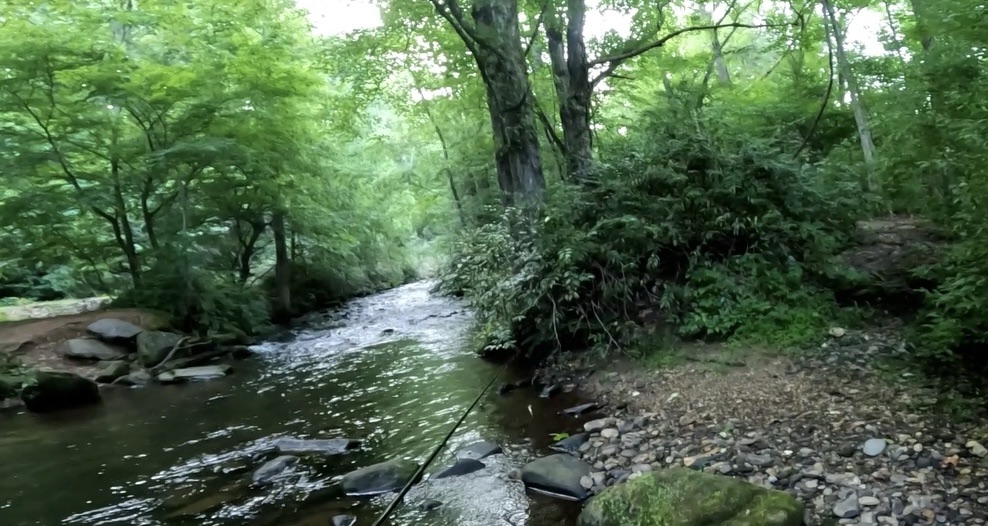
A tiny creek in a recreation area in the Ouachita National Forest has caught my eye and raised my curiosity more than once. It’s near an area in Arkansas I occasionally travel to for work.
People visit this site to picnic, camp and play in the creek, including swimming in one pooled section that is formed by a small dam. And while I’m sure a few folks fish the creek when they camp, few would regard it specifically as a fishing spot.
I really enjoy fishing little creeks, though, and I knew the curiosity factor would only continue to grow until learned for myself what was in the creek’s runs. I ended up with a short afternoon window during last week’s Arkansas travels and decided I needed to check it out.
I’m glad I did.
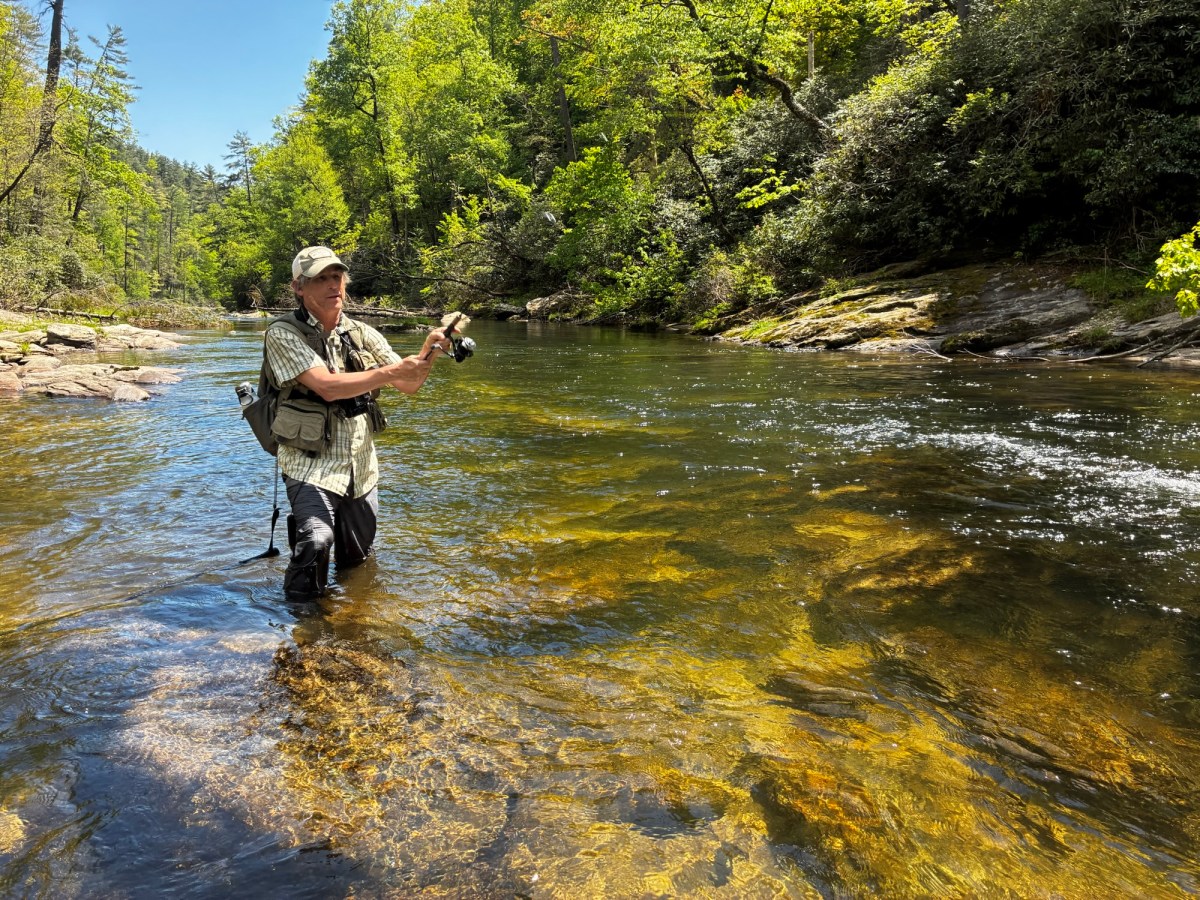
While I didn’t catch anything large, I probably caught 30 or so fish, including five different species, in a couple of hours, and some of the creek’s runs were very pretty.
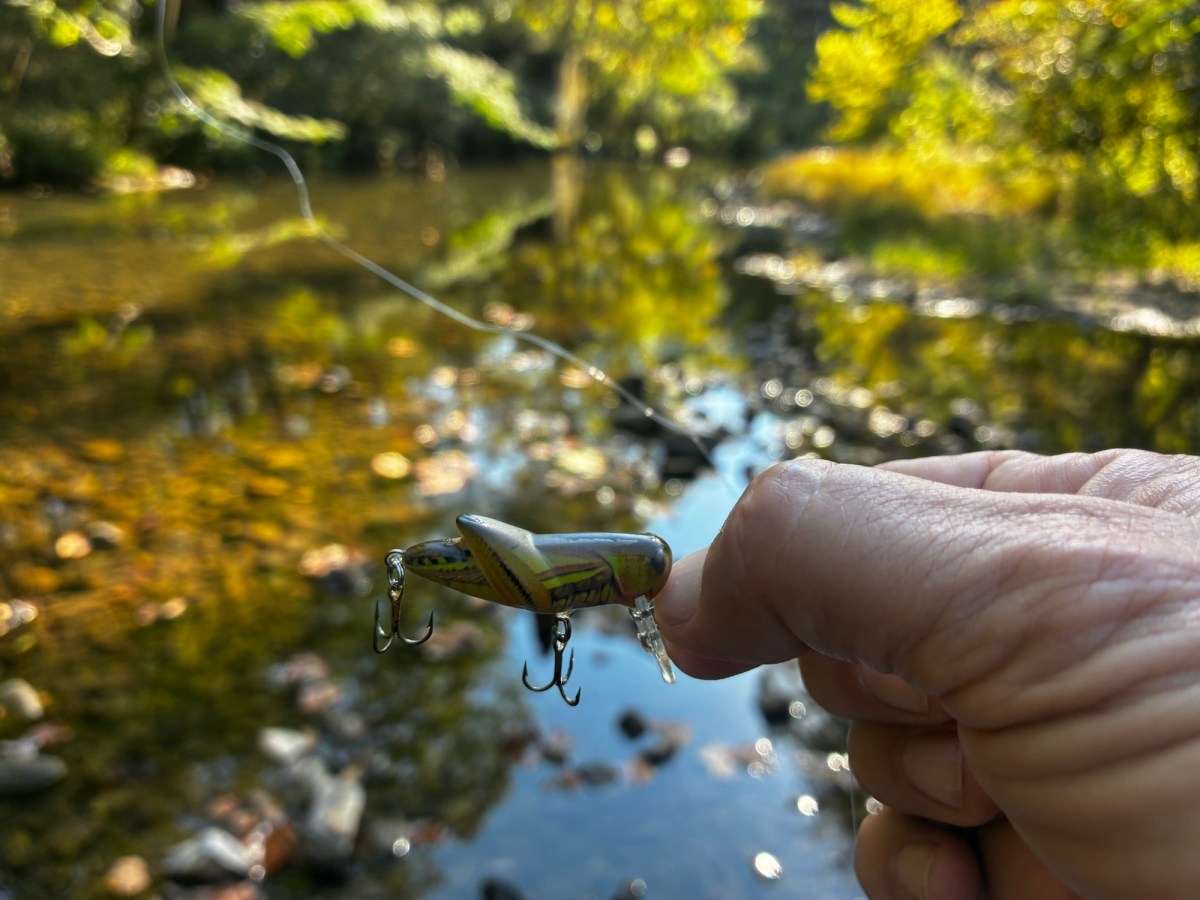
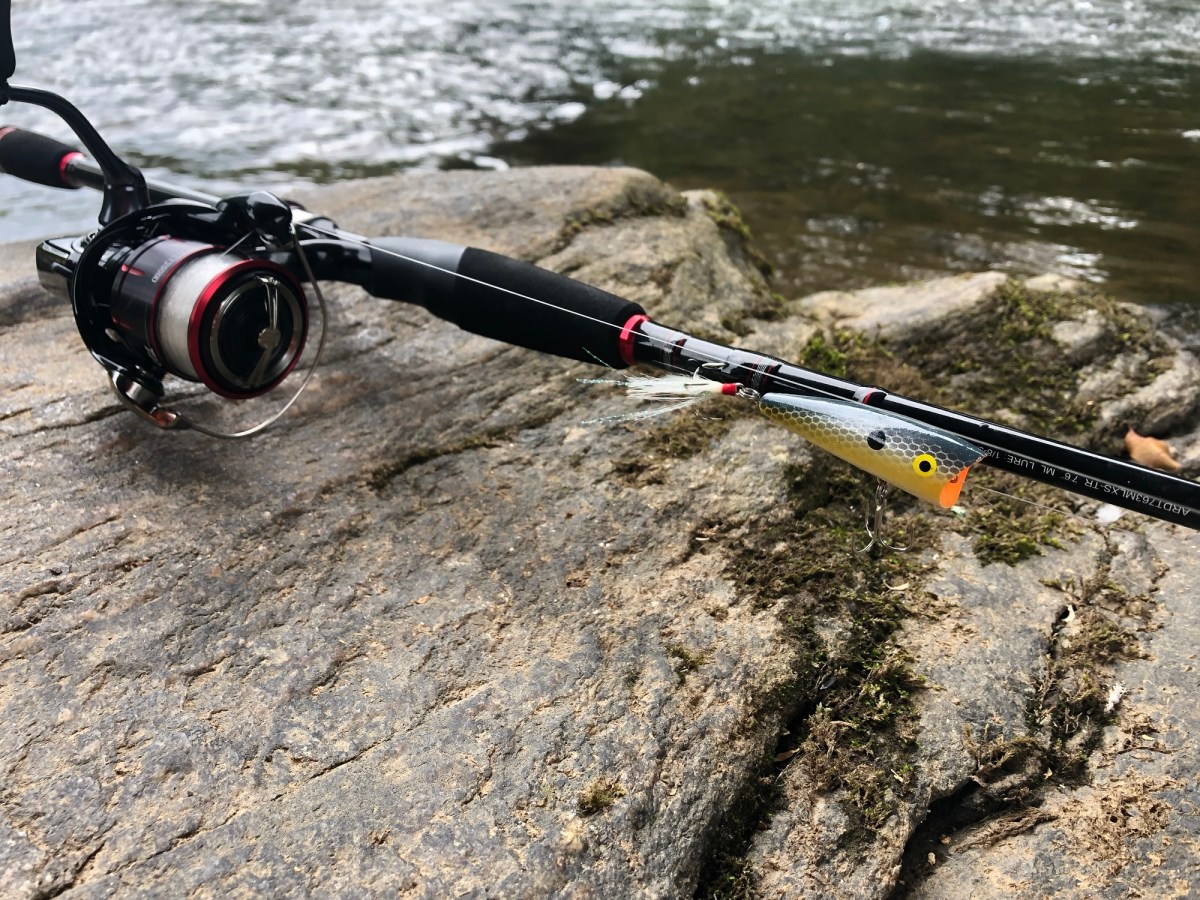
I fished very simply, with an ultralight rod and reel and a Rebel Crickhopper. I carried a handful of other lures in a little lure wallet that clips to a belt loop, but never had reason to change lures.
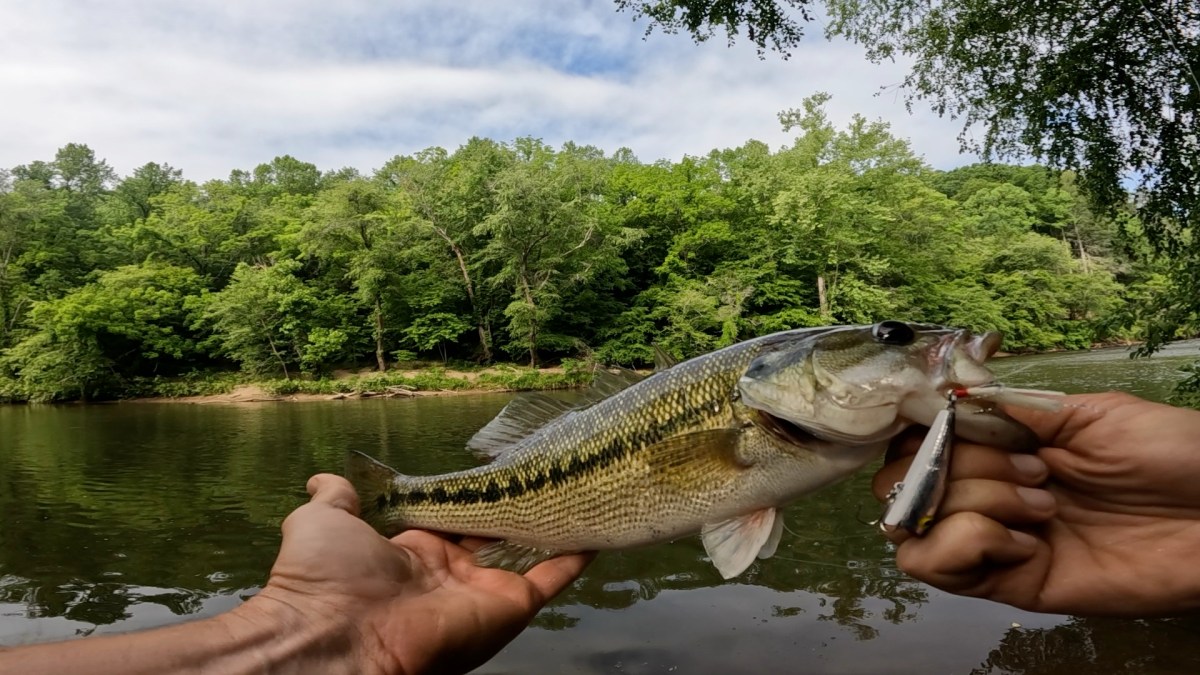
While I caught multiple species, I only caught one or two of most species. The bulk of my fish were green sunfish, which are more commonly called black perch in that part of Arkansas. Whatever you call them, they hit lures with vigor on the surface and are a bundle of fun.
I also had the creek to myself. A handful of people drove in and out of the day-use area, roamed down to the swimming area, or were set up in the campground, but no one was using the same part of the creek as me, fishing or otherwise.
I’ll most likely be back at some point, but it’s hard to say for sure because I’m not in that region very often, and a couple of other creek runs also have caught my eye and might need exploring first!
Sometime soon there should be a video from my outing on Fishing on Foot YouTube. I hope you will check it out.
The simpler I keep my gear and angling approaches, the more likely I am to go fishing when I only have limited time.
Among my favorite things about an on-foot angling approach is how quick and simple a fishing plan can be. I can easily scoot over to a nearby creek or lake shore after work or in the morning before a day really gets going.
Unless you live on the water and keep a boat docked, virtually any boat-based fishing trip requires some extra steps that take time and require more effort. I’m more likely to slip a fishing trip onto a limited time window if I can just hop in the car and go and actually be fishing just minutes after arriving.
I’ve mentioned in other posts that I keep a little fishing kit in my car, with a travel rod, a light spinning reel and a little selection of lures and terminal gear in an ice cream bucket. That makes those quick plans extra simple, and at times I’ll do nothing more that put the rod and reel together and put a little lure box and a few packets of baits in shirt pockets.
Even when the car kit doesn’t have quite the right stuff for where I’m going or how I want to fish, it’s easy to go in my basement, where I keep my fishing gear, grab the right rod and put a small tackle selection in a backpack.
I have a handful of little boxes assembled already that have suitable selections for trout streams, bass ponds, crappie fishing docks… With one of those boxes and a few packets of soft plastics and accompanying terminal tackle, I can be well set for a modest outing.
I definitely err on the simple side as an angler. I seldom carry an extra rod for bank fishing or wade fishing, and I keep my lure selections small. I like to be as mobile as possible, and if I carry too much stuff I just get indecisive, and I end up spending too much time changing lures instead of just fishing!
I’m always on the lookout for stops along travel routes that allow for simple fishing breaks.
I spend more than a little time staring at Google Maps on my phone or a computer — searching for parks, greenways, canoe launches and rights-of-way that front a creek or river or maybe have a pond or two on the property. And that searching revs up whenever I’ll be traveling by car and suspect I might have a bit of extra time.
If a spot seems to have potential, I pull up the satellite view and zoom close to see what I can discern about the character of the waterway and the quality of the access. I’ll also look at reviews to see what happens to be mentioned about fishing, but unless something credible seeming mentions fishing not being permitted, a lack of good reports definitely doesn’t keep me from stopping.
Some stops work out great, and I find myself wishing I had more time but am glad to have more knowledge about them for the next time. Others are very quick because they don’t turn out to be that interesting or possibly because the access area is small and other anglers are already fishing. Most fall in between.
I made three stops during a recent drive. One was to a spot I’d visited before so I knew what was there. It’s a canoe access with no other developed facilities, but it offers a couple hundred yards of river access, with easily waded shoals and bank access to big pools.
I caught two spotted bass, including one solid fish that hit a Pop-R, got some lure photos I needed for work, and enjoyed a nice little driving break.
The second and third stops were pure scouting. One was a linear city park along a river. It has ballfields, a playground, picnics tables, a walking trail, etc. No mention of fishing online, but there were obvious fishermen’s trails to shoal areas, and one other angler I spoke with said he catches trout and bass there at times.
I just fished one spot, and not for too long, but I caught one little redeye bass and got a few hits — I think from panfish. I was impressed by my findings and definitely will stop there again when I have more time.
The third was a Greenway trail along a creek. The creek was too small to see much on the satellite. As it turned out it was ditch-like and a bit muddy, with high banks and only a few gaps in trees to provide casting vantages. I didn’t stay long at all and probably won’t return to that one.
Interestingly, although it isn’t listed as a fishing spot and didn’t look that great, I saw three other fishermen in a short visit. All had backpacks and a couple of rods and looked like fairly dedicated bass anglers. I spoke to one angler who said it had good fish in it, but they could be challenging to catch, and he hadn’t caught any that day.
Of course, to me it’s less about what I find at any given spot and more about the value or searching out stops and keeping a bit of gear handy in my car and the fun of discovery.
Discussing the virtues of a wading staff and detailing the staff I carry.
A few times while fishing the Chattooga River last week I thought about how thankful I was to have a wading staff in hand to test the depth of the next step or provide a “third leg” of stability while crossing the the river in significant current.
It was actually a previous trip to the same river with the same friend that prompted me to finally add a wading staff to my stream gear. Very early that day, we came to a spot where we had to cross to continue upstream, and I was apprehensive because of the depth, amount of current, and uneven bottom. My friend, Eric, had brought a wading staff, as he typically does. He ended up crossing easily, with aid of the staff, and then tossed it back to me so I could find my way across.
Eric actually forgot his wading staff at home last week. After realizing that as we geared up by my car before hiking to the river, he went into search mode along the trail and found himself a stick that was a good length and sufficiently sturdy for the job.
I should have picked up a wading staff long ago, and I’m still working on remembering to bring it (and use it when I have it). Having a probe to test the bottom depth and makeup and a third point of support makes it SO much easier and safer to wade anywhere depth, current and/or an uneven bottom make-up add wading challenges.
My Wading Staff
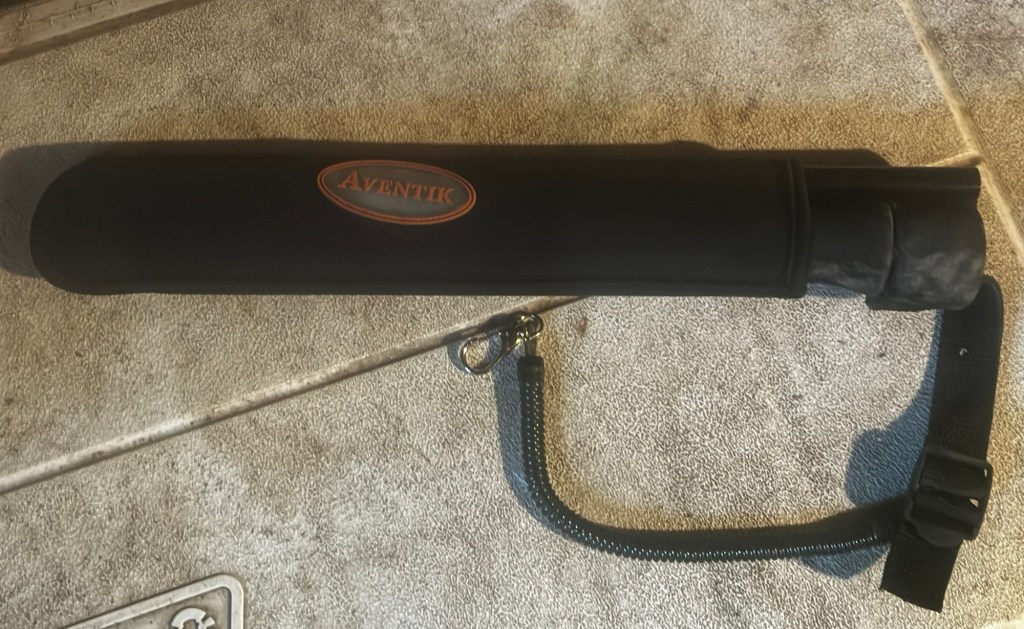
Aventik Foldable Wading Staff
My wading staff is made by Aventik. I’ve been happy with its functionality through several uses.
It’s a four-piece design, with elastic through the center, so it can be folded small but extends and snaps together like a tent pole. It’s 55 inches long and has a tungsten pointed tip and an EVA foam grip.
A coiled leash allows you to tether the staff to a belt loop or vest. It also has a camera mount on the handle to use the staff as a monopod, but I haven’t experimented with that application.
An included neoprene sheath is designed to hold the folded-up staff when not in use. I found the sheath tended to twist, and the pole would fall out. That’s not an issue for me, though. I keep the staff folded in the sheath at home and in the car, but wouldn’t want to keep folding and re-extending it astream anyway and would prefer to just let it drag behind me.
I like the light weight of an aluminum staff and definitely prefer something I can attach because I don’t like carrying extra things that I have to set down and remember to pick back up whenever I move. That said, a simple wooden hiking stick or even a stick you find by the trail or the river can do the job and is far better than not having a wading staff when you need one!
For starters, I’m not superstitious. I don’t believe that catching a fish on the first cast has any “jinxing” effect. Occasionally the only fish that bites just happens to be on the first cast.
That’s exactly what happened to me this week while doing some photo work and fishing on the Georgia coast. I caught a fish on the first cast I made after arriving at St Simons Island, and then I didn’t catch another fish (or get another bite that I detected) the rest of that day or the next day.
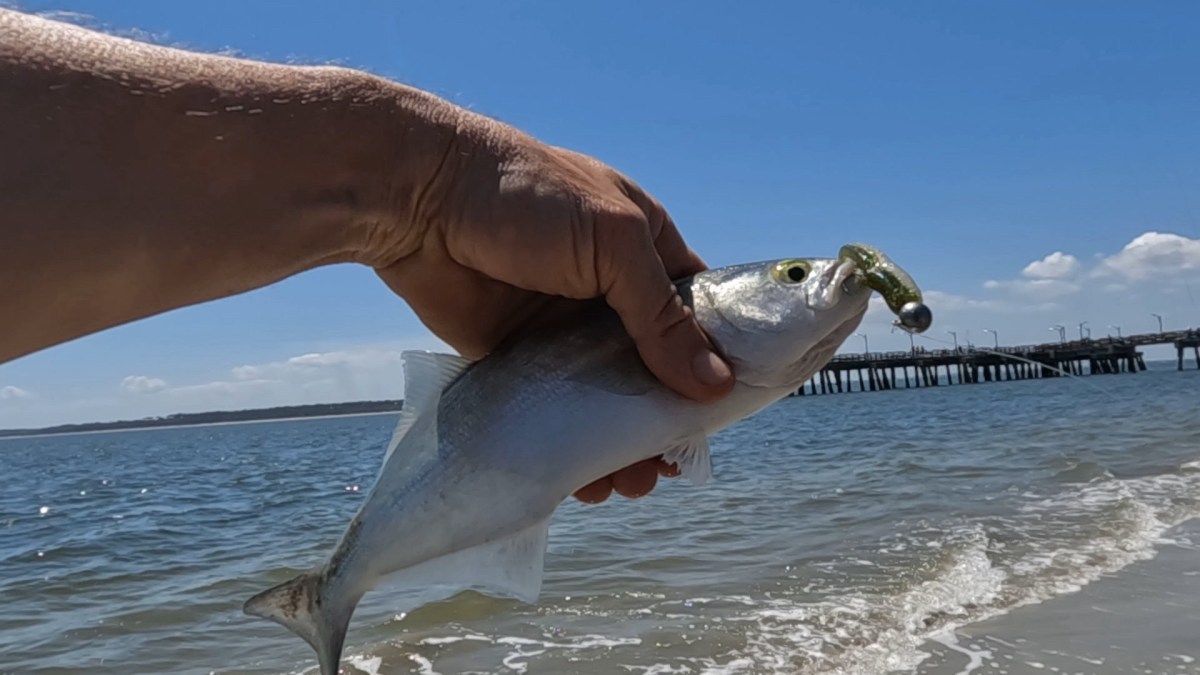
The lone fish, a small bluefish, ate a YUM FF Sonar Minnow fished beneath a Paradise Popper popping cork, cast from the beach near the St Simons Pier. Bluefish aren’t usually alone, so I had high hopes of catching more, and I even tried a couple of flashier, faster-moving lures that tend to prompt bluefish attacks. To no avail.
I will say that I didn’t fish an enormous amount on those days. Shooting lure photos was the main objective and my time priority. I fished some in various spots with hopes of getting some lure-in-mouth photos, I think with some quality presentations in good spots. Nothing else obliged, though.
The bluefish did give me my first saltwater catch of 2026, and one fish is certainly better than no fish!
Remembering my first topwater bass from around 50 years ago. Of course, I was Fishing on Foot at the time!
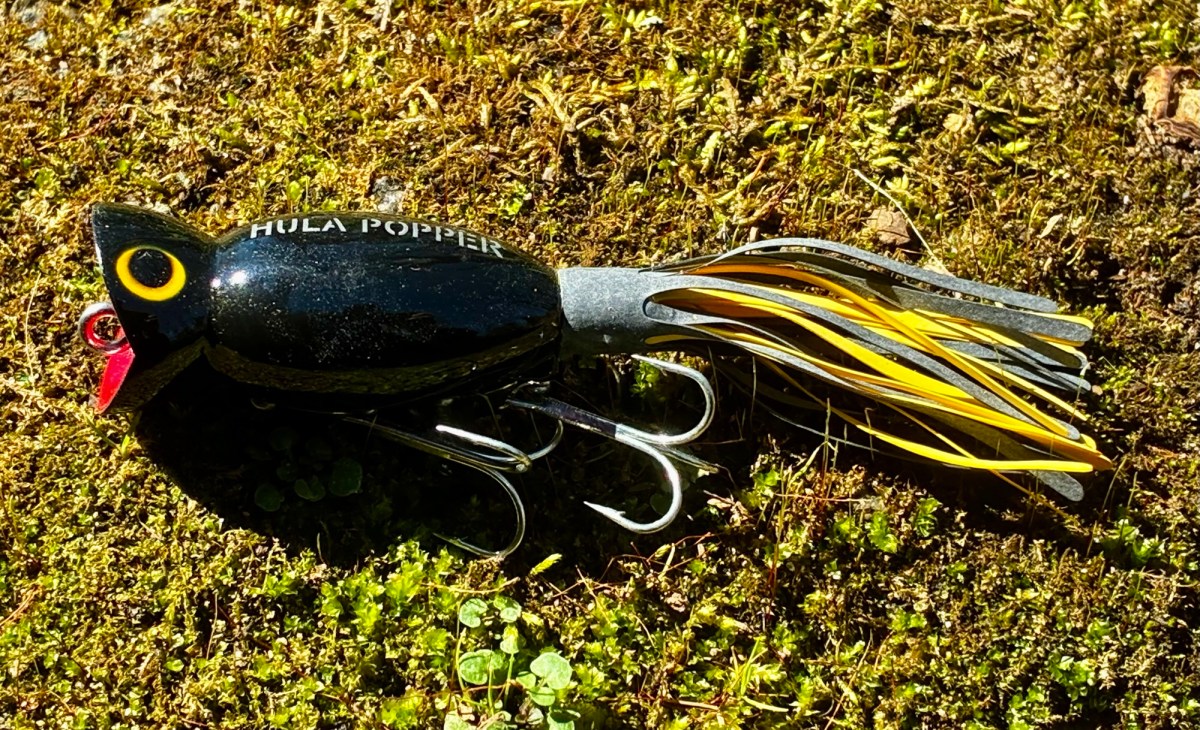
My first topwater bass occurred while I was Fishing on Foot. And like a lot of young fishermen in the 70s, I caught it on a Hula Popper.
Specifically, it was a smallish black Hula Popper, similar to the one in the photo. I don’t still have that one (unfortunately), but Hula Poppers haven’t changed much in the past 50 years, and it was new at the time, so it probably looked a lot like that one.
My family took part at a campout with our church at the Fort Wilderness Campground, which is part of DisneyWorld, and were in a rented camper. A creek with pond-like sections winds through the campground. Upon arrival the evening before, I’d scouted a section behind the camp store that had a nice open bank.
I arose from sleeplessness the moment my mom told me I could get up, which was right at daylight. I had been awaiting her word because I’d already gotten up once when I was certain it was looking lighter through the camper window. She had heard me, pointed out that it was 2 a.m., and told me she would let me know when I could go.
I’m not sure I slept any that night.
The moment I got word I could go, I popped up, fully dressed and ready, and grabbed my tackle box and my rod, which was by the camper door and already rigged with a Hula Popper. I followed the campground road to the store and scurried down the water’s edge.
I recall the surface being completely slick with just a bit of fog hanging over it, but I don’t know for certain that I haven’t romanticized that part in my mind over the years.
The first catch, which came on my first cast, went the way it would have been scripted. I cast out, waited for the rings to spread — just like the package instructions said — and then snapped my wrist to make the lure pop. Immediately a bass attacked, and I set the hook.
I don’t recall if there was much fight. I just remember I successfully landed it. I think it weighed about 3 pounds. No photos, of course, and no scale. But thats my best guess.
I don’t think I caught any other fish that morning. If I did, they were far less memorable. That one was more than enough, though, and was easily the highlight of the camping trip.
When you don’t know what a fishing day will hold, sometimes you have to tote a little bit of everything!
Tomorrow is a travel day, and part of my work plan is to do some bank fishing and shoot lure photos (hopefully some with lures on fish’s mouths). That sort of plan can make for tough car packing because I really don’t know what the day will end up looking like or how I’ll be fishing.
I have several idea for places I might stop. They differ notably in character and are diverse in their offerings, so I’m not sure of the lures I’ll end up using or even the size rod and reel, and all of that might change from stop to stop or even within any given stop.
Complicating things more, a few of tomorrow’s most likely stops are access points I’ve never actually visited, and they are big-river spots that vary dramatically in character based on the amount of water flowing.
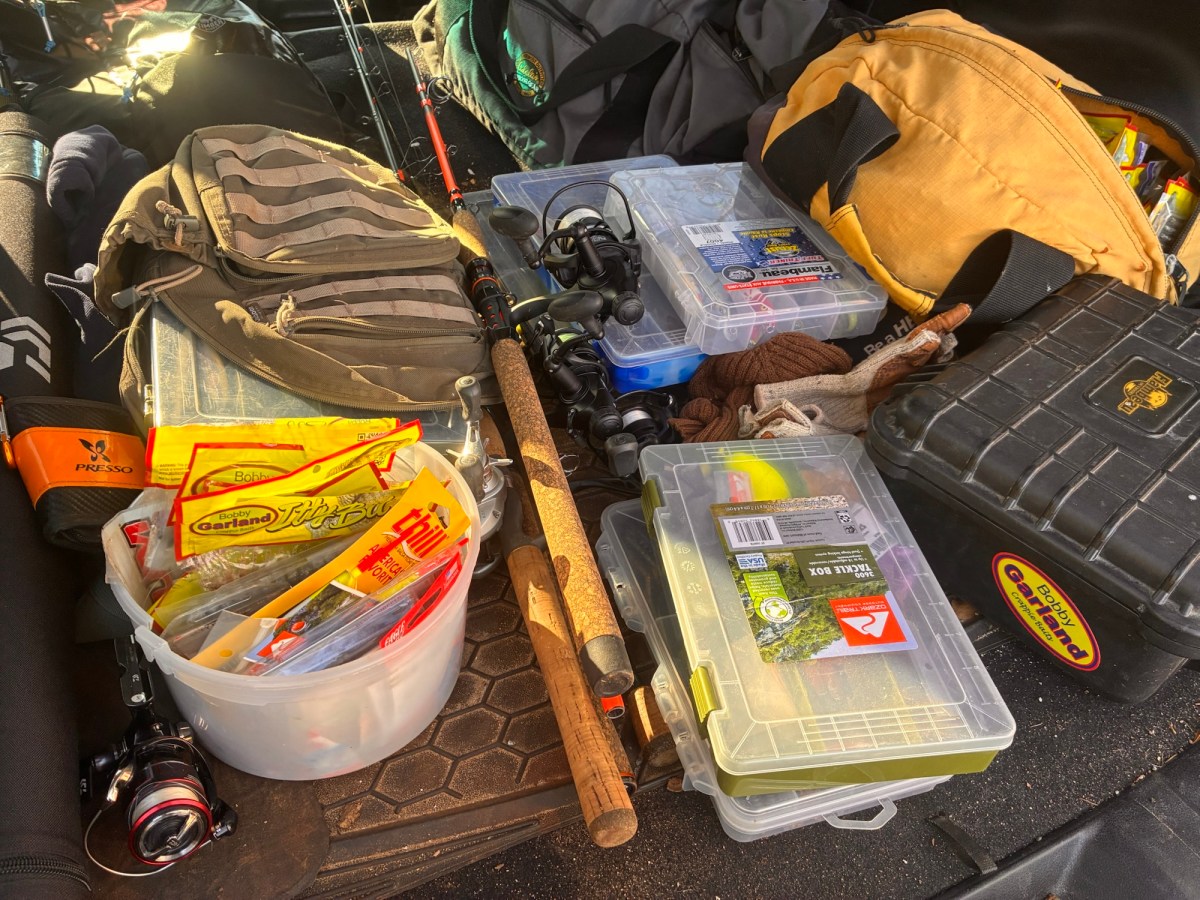
What that means from a practical standpoint is that I’m toting a fair amount of fishing gear (along with the usual array of cameras and accessories) for what might not amount to a ton of actual fishing time. Some stuff, almost undoubtedly, will never leave the car hatch. I want it available, though, just in case.
Hoping my next post affirms that I packed the right stuff and includes catch photos and a success story.
Earlier this year, I added a pack rod combo to the stuff I always carry in my car, and now I can’t imagine ever not having a “car rod.”
For the past six months, I’ve immensely enjoyed keeping a quality travel rod in back of my car — all the time. In part due to the convenience and in part because it fits so much of the fishing I do, I’ve used my car rod combo extensively for the amount of time I’ve owned it.
I had previously carried a cheap telescopic rod combo in my car — just in case opportunities arose — but it didn’t cast well and wasn’t great for working lures or landing fish. So, what I found was that I was just driving it around. I always grabbed a different rod for a trip, and even if some chance to fish came up, it generally wasn’t suited for the task.
I’ve also tried just keeping a regular fishing rod handy in my car, but even a two-piece rod gets in the way and always seems like it’s just waiting to be broken.
My Travel Rod & Reel
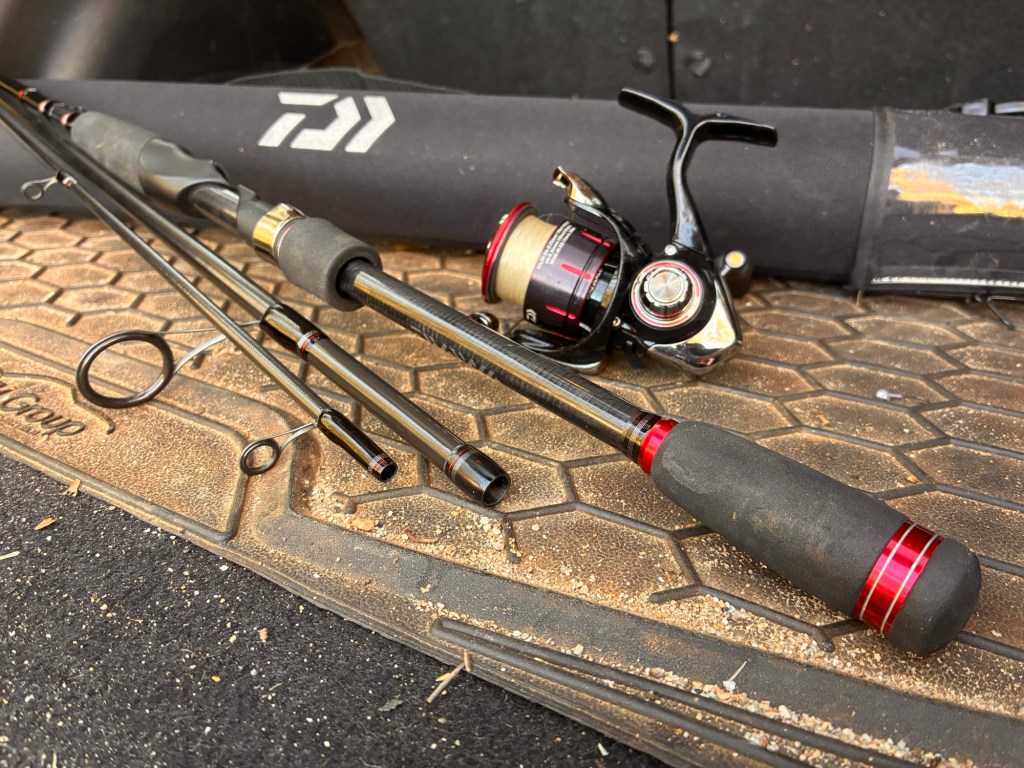
My car combo consists of a DAIWA Ardito 7-6 medium-light three-piece spinning rod and a DAIWA Fuego 200 size reel. I typically keep it spooled with 6-pound mono, but 4 or 8 would also fit nicely if the situation called for going a bit lighter or heavier. The rod is rated for 4- to 15-pound test and 1/8- to 3/8-ounce lures.
The rod came with a tube, which is important. That keeps it protected no matter what other junk I’m tossing into back of my car. Three pieces keep it short enough to fit neatly in the car hatch, but it casts as smoothly as a one-piece rod, from my standpoint.
I do a lot of stream wading — whether for trout, bass or whatever chooses to bite — and quite a bit of fishing from pond banks. This combo is the perfect size for many of the lures I throw and is at least suitable for a pretty good selection of the lures I’m apt use.
I don’t claim to be a super techy gear guy, but I know what feels good and works well. The rod’s fast action makes it easily to deliver accurate casts, even with small lures, and the reel is smooth. After half a year of fishing this outfit, I’m completely happy with how both rod and reel perform — casting, working lures and landing fish.
Add a Rod to Your Car
Shoal bass and travel rod and reel
My intent wasn’t to spin into a review, though. Although this particular travel rod combo has served me well, and I absolutely would recommend it, more important is the general principle of adding a travel rod and a small selection of lures to the stuff you keep in your car.
Because of mine, I’ve done quick fishing outings that I otherwise wouldn’t have — when I found myself near water on other types of outings or passed somewhere interesting on the way to or from somewhere. Having a rod I’m comfortable with and a few favorite lures handy makes it very simple to stop, even if it’s only to make a handful of casts and scout a spot for another time.
Beyond that, it’s one less thing to think about when I’m gathering lures and other equipment for a day on the water. Several days this summer and fall, I didn’t pack any other rods or reels. I just put that one together upon arrival.
The primary consideration in picking out a travel rod to carry in your car is an assessment of the kinds of situations you’re most apt to encounter. I’m an all-species angler and my day-to-day local efforts include a lot of fishing with small lures. Therefore, the medium light spinning outfit suits my needs perfectly. However, if I mostly fished for bass around thick cover or maybe fished in saltwater on a regular basis, I’d want a heavier rod and bigger reel.
Finally, I also mentioned handy lures. I keep that part simple. I carry an old ice cream bucket in my hatch that stays filled with a selection of soft plastics, jigheads and floats and a little box of my favorite hard baits. There’s no exact formula, and the selection varies from time to time, but if I find myself in a situation where I’d really like to make a few casts, I want to have the stuff I need to do just that!
Why I use the lures that I do for the Fishing on Foot blog and YouTube channel.
If you read posts on this site or watch videos on my Fishing on Foot YouTube channel, it won’t take long to figure out some of my favorite fishing lures or notice that I talk repeatedly about some of the same brands, such as Rebel Lures, Bobby Garland Crappie Baits and Thill Floats.
If you read stuff to the end (appreciated!) or pay attention to video descriptions, you might notice occasional mention of a discount code, FOF15, for 15 percent off orders at Lurenet.com.
Some explanation seemed fitting, in part for the sake of disclosure, but more so because it tells a bit more about what is behind the Fishing on Foot blog and YouTube channel and a bit more about me as an angler.
My Real Job
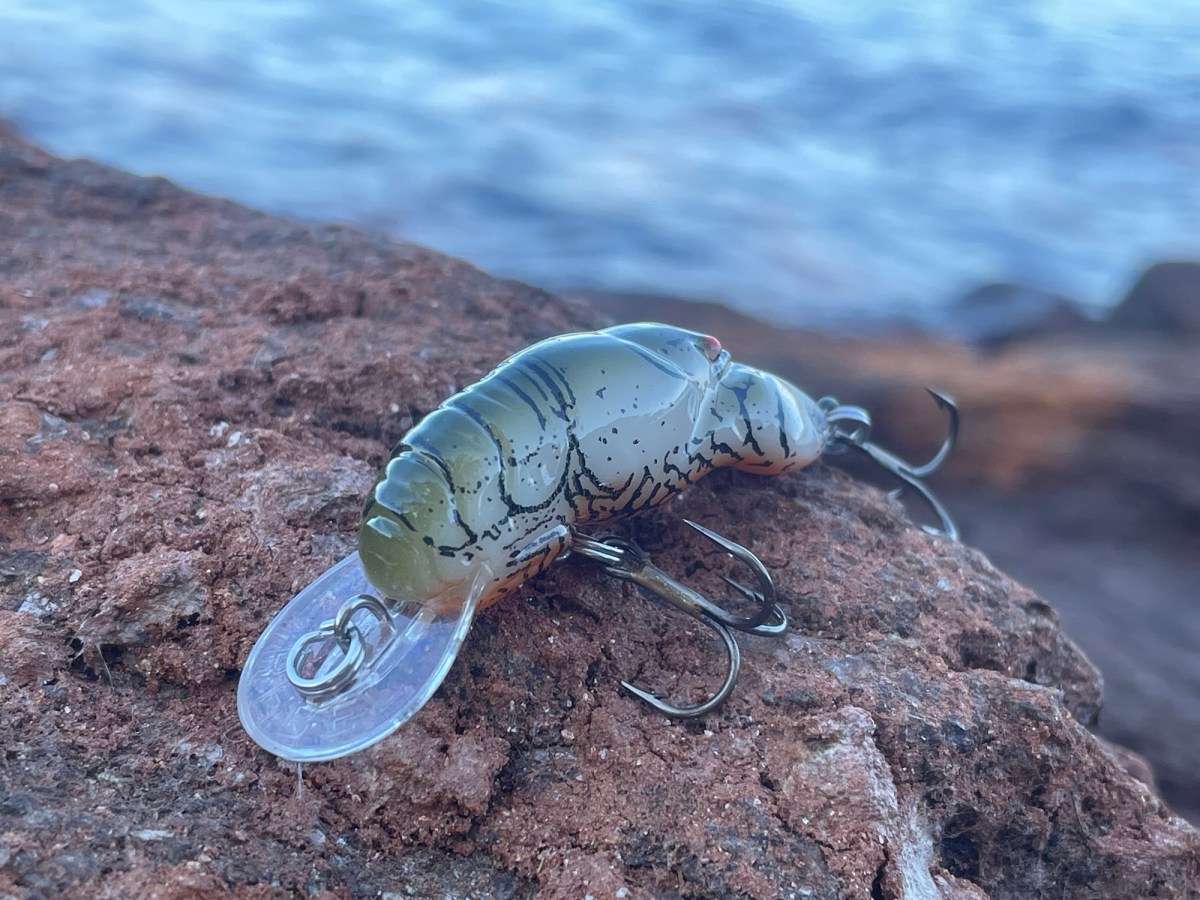
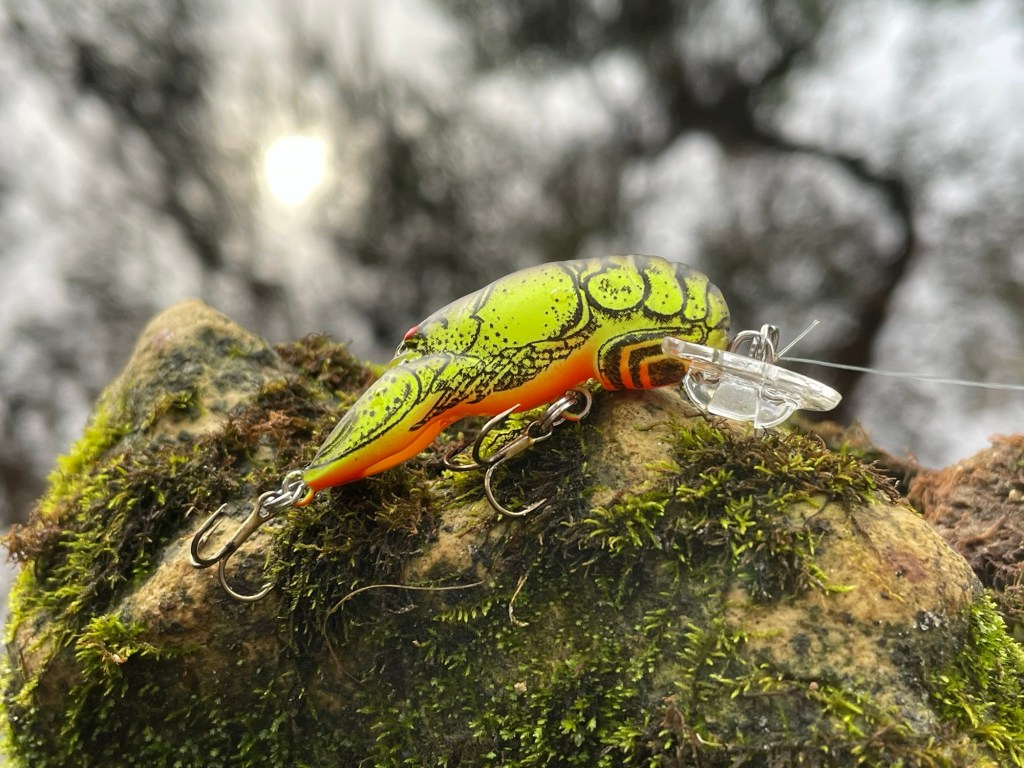
Rebel LIVEflex Creek Craw
Throughout my career I’ve carried the broad title, outdoor writer, and for many years I free-lanced full time, writing fishing stories for magazines and websites and taking on various editing, photography, speaking and writing projects, mostly fishing related.
For the past decade I’ve worked full-time for one company, PRADCO-Fishing, doing the same type of work. I manage the blog at Lurenet, which is our retail site, shoot fishing and lure photos, help with video stuff from both ends of the camera, create social media content for some of our brands and more.
PRADCO-Fishing is a fishing lure manufacturer based in Fort Smith, Arkansas that owns and operates more than 15 lure brands. The brands, which collectively cover pretty much every type of fishing, include iconic brands like Heddon, Smithwick and Rebel and some of the most popular modern brands, including Great Lakes Finesse, YUM and BOOYAH.
The good news for me is that MANY lures from these brands were among my go-to lures long before I went to work for the company. Examples include Rebel Wee-Crawfish, Tracdown Ghost Minnows and Crickhoppers, Heddon Spooks and Tony Torpedoes and Bobby Garland Baby Shads and Stroll’Rs.
Fishing of Foot’s Place
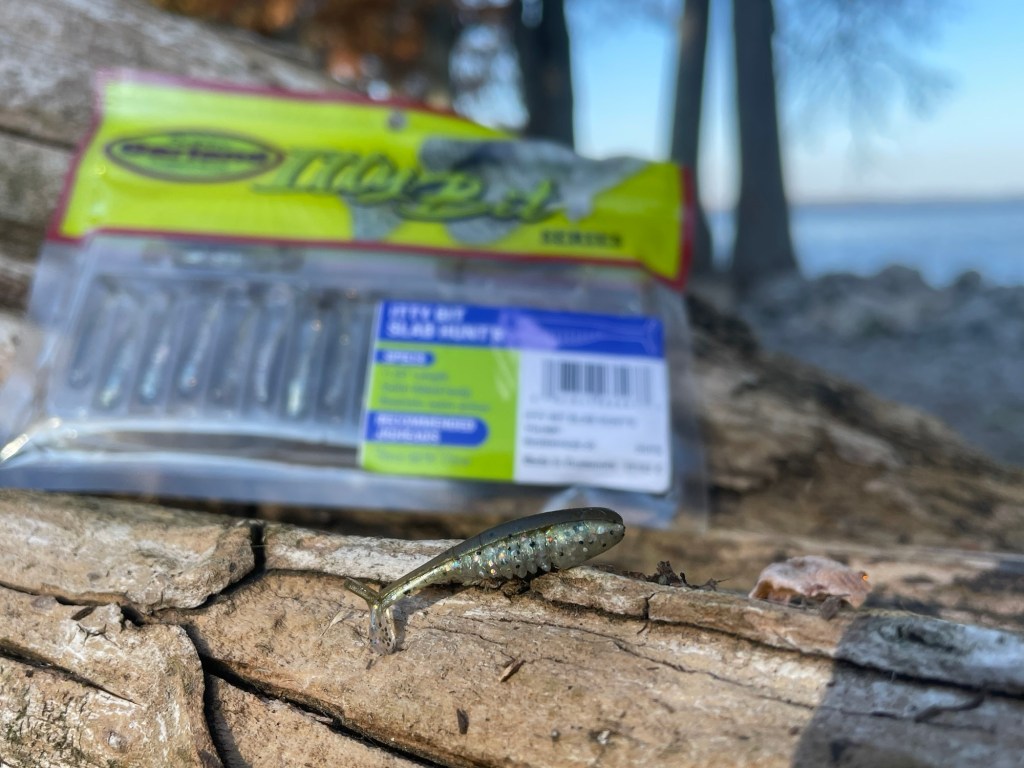
Bobby Garland Itty Bit Slab Hunt’R
The Fishing on Foot channel and blog are before- and after-hours play for me — creative outlets and opportunities to share with a focus on the types of fishing that have always been at the core for me. Neither channel nor blog is intended to sell fishing lures.
That said, my job and my own media are highly complementary. I gather a lot of Fishing on Foot content while I’m out with the primary purpose of shooting photos for work, and I often end up getting content I use for work when I’m fishing on my own in the evenings and on weekends and am mostly seeking Fishing on Foot video content.
Because our brands cover any type of fishing I ever do and because there’s always a need for fresh content with our lures, I genuinely have fished very little with anything else for more than 10 years. I speak and write frequently about Rebel Crawfish, Bobby Garland Mayflies and Lindy Quiver Spoons because they are lures that so often tied to the end of my line — the ones I know the best and can share about with the most confidence and to provide the greatest benefit to readers and viewers.
The Georgia Bass Slam provides a great opportunity to explore Georgia’s diverse bass fisheries and lends itself nicely to Fishing on Foot.
At the start of this year I set myself the challenge of trying to achieve the Georgia Bass Slam. Earning the slam requires catching at least five of 10 black bass species, all in Georgia waters where you have permission to fish and with a minimum size of 8 inches or the legal minimum size for the waters fished. I also self imposed the challenge of achieving the slam by Fishing on Foot, whether wading or walking the bank.
Mission accomplished. I ended up catching qualifying fish of seven bass species.
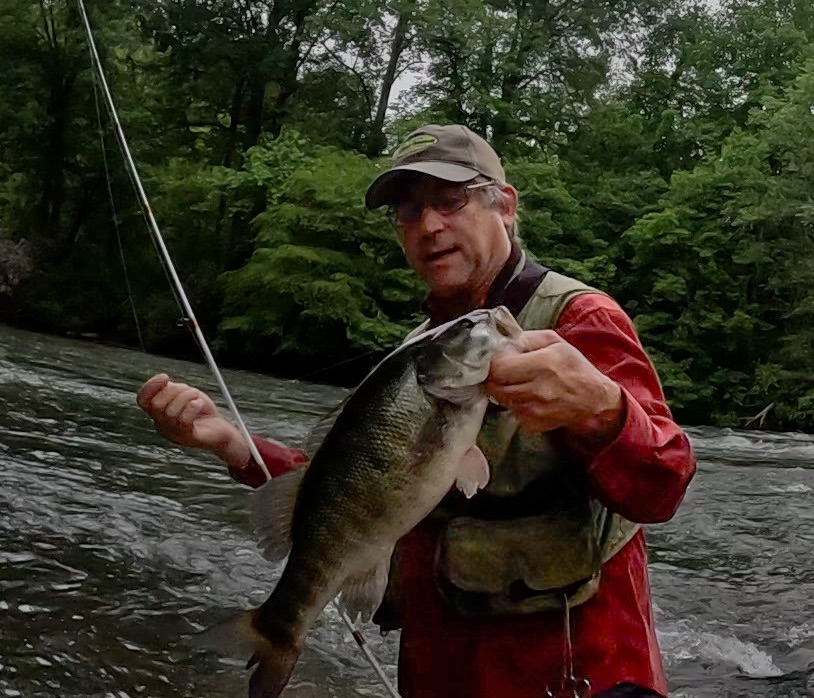
largemouth bass
Bartams bass
shoal bass
spotted bass
Chattahoochee bass
smallmouth bass
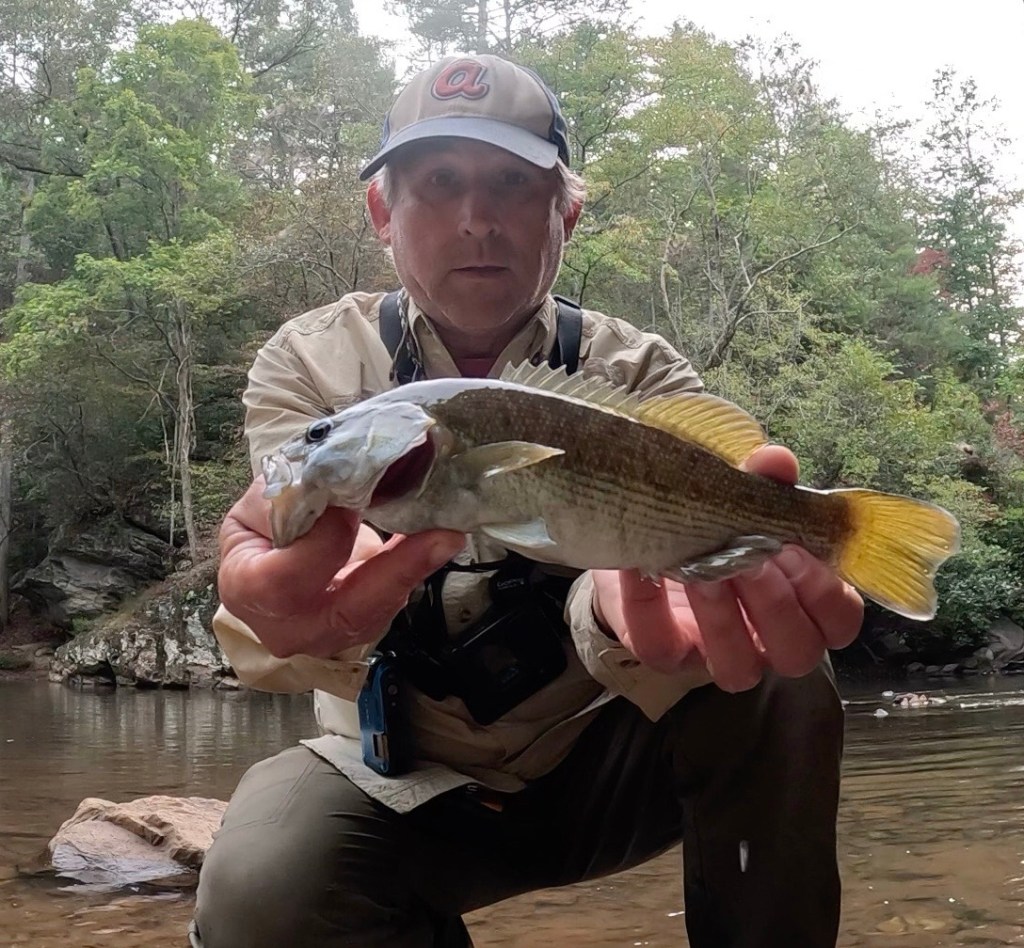
Coosa redeye bass
The three I didn’t get were the Tallapoosa bass, Altamaha bass and Suwannee bass. I did catch one Tallapoosa bass, but it was less than 8 inches in length. I never found my way to waters where the other species live.
About the Georgia Bass Slam
Coosa redeye bass
The Georgia Bass Slam was established to create a fun challenge for anglers and to raise awareness about Georgia’s diverse black bass fisheries.
Georgia has 12 distinct black bass species. Two pairs of species are looked at together for the purpose of the slam, both because of the difficulty of field identification and because of extensive hybridization outside native range. Largemouth bass and Florida bass are treated as one species for the slam, as are spotted bass and Alabama bass.
To certify qualifying fish, you simply submit a photos of the fish on a measuring tape and one of you with the fish and list the species, county it was caught from, length and your name and fishing license number.
Anglers who achieve the slam receive a prize packet and have their names listed on the Georgia Bass Slam page of the Wildlife Resource Division website and at the GO Fish Education Center.
For me the bass slam was a fun challenge, and I certain I’ll try it again and see if I can notch any of the other species. You’ll find videos about all of this year’s catches on my Fishing on Foot YouTube channel.
I really enjoyed learning about the different species and their behavior and studying the range and habitat of each to figure out where I might be able to find and catch them. A few of the species I’d never targeted before.
It was also fun exploring new waters, including some really good spots that were pretty close to home that I had never fished before.