My Favorite Summer Bank Fishing Lure

A Rebel Crickhopper offers easy fishing and excellent opportunities for mixed-bag fishing action from the bank.

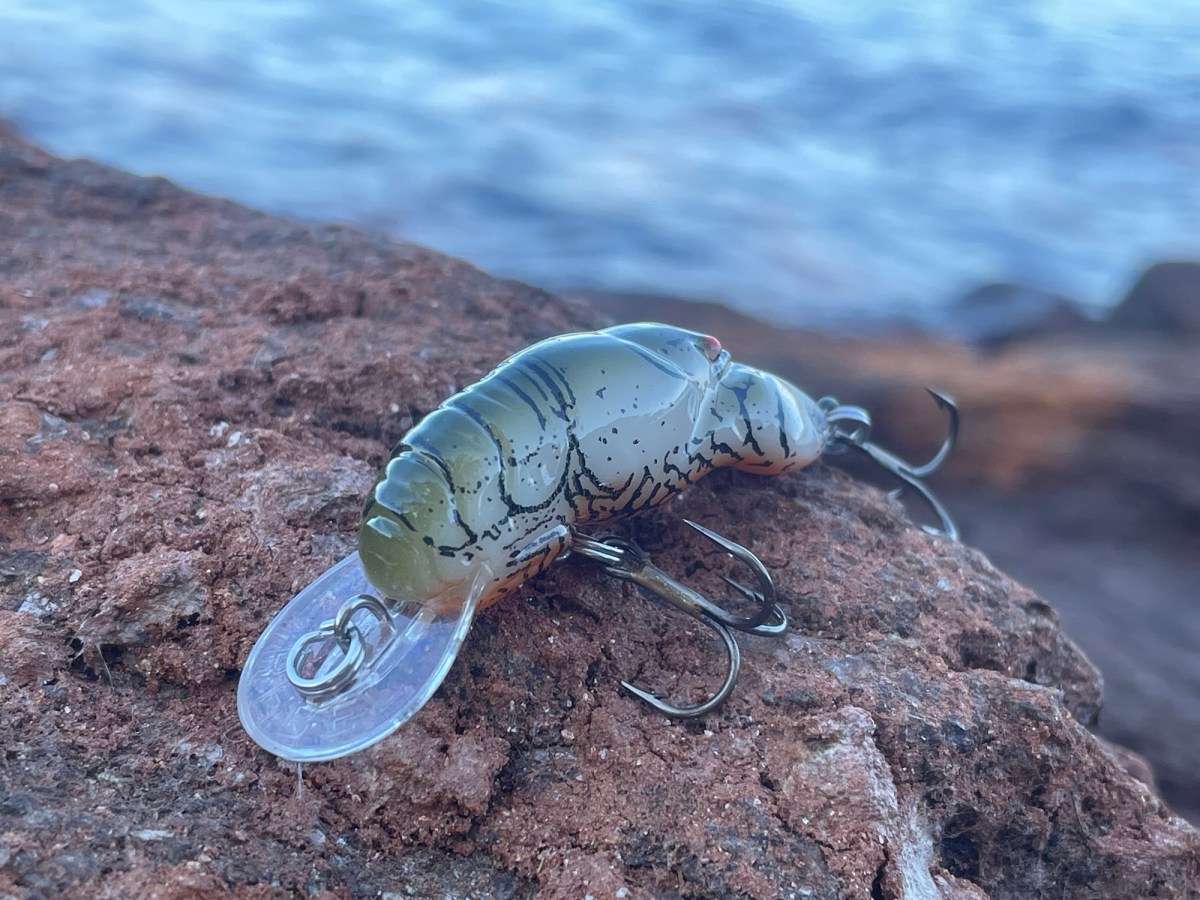
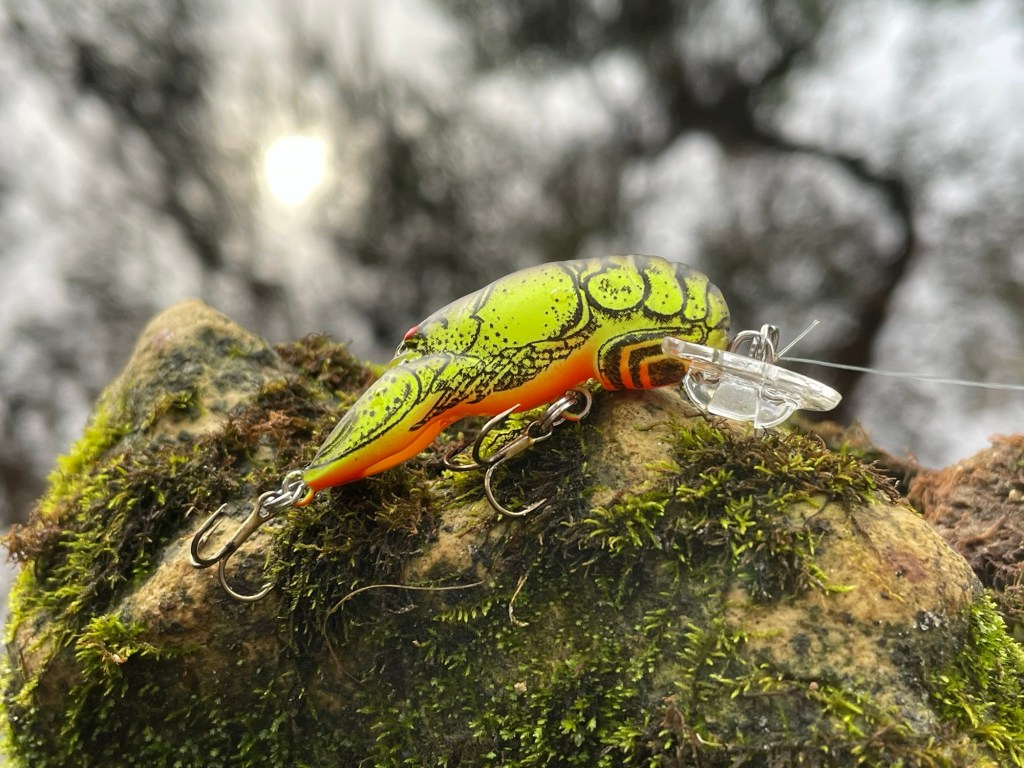
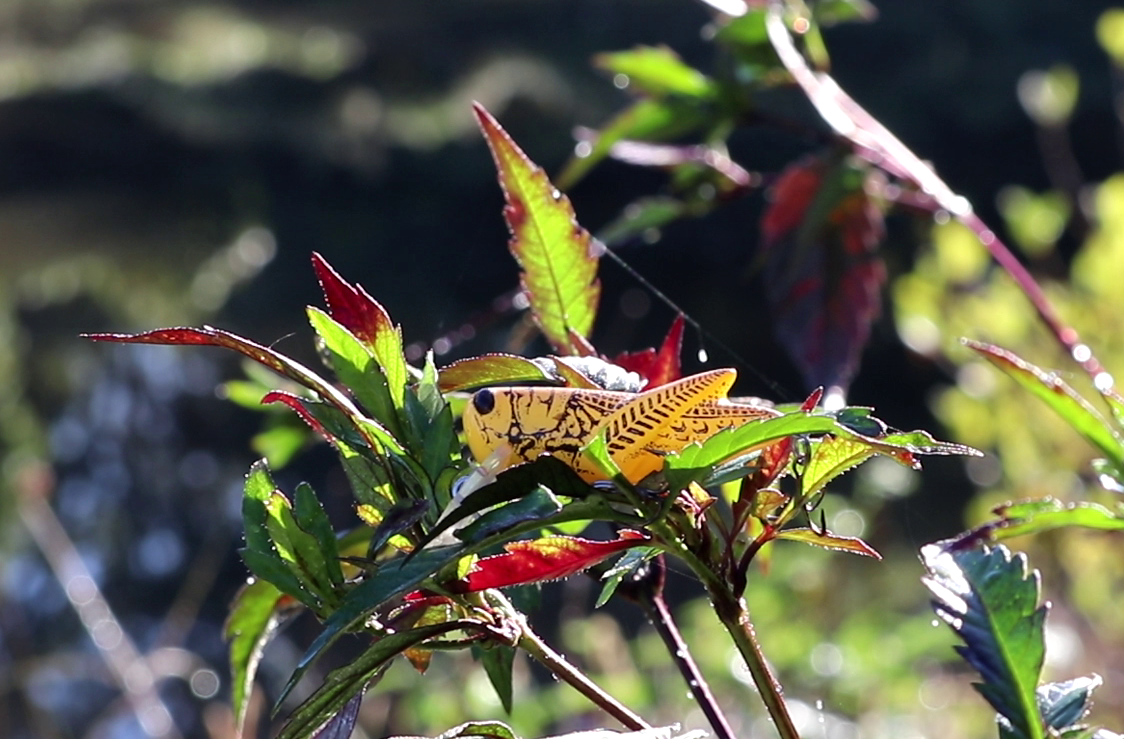
If I’m walking the bank of a pond or creek from late spring through fall, looking for whatever will bite, my starting lure is usually a Rebel Crickhopper. This little floating/diving insect-shaped crankbait is ideal for a multi-species, bank-walking approach.

A Crickhopper excels for the shoreline approach in part because it imitates forage that is normally found near the shore and that appeals to fish holding in shallow water. Because it floats, it’s easy to keep out of underwater snags and to control the positioning to fish near cover. It’s also small enough to appeal to many different fish species.

Fishing a Crickhopper
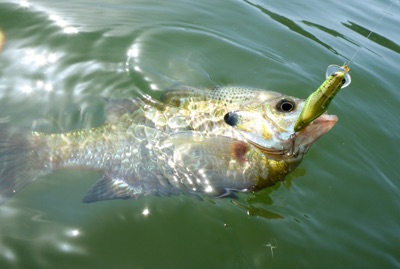
Rebel Crickhopper

The Crickhopper is technically a shallow crankbait, and many anglers enjoy great success just casting and reeling. I fish it primarily as a topwater lure, though, because that presentation, in my mind, best matches the behavior of a displaced terrestrial insect.

After casting, I always let the bait rest a few seconds, at least. Fish hear the landing splash and cone to investigate, and often strike before I move the bait an inch. If none bite, or they peck at it but don’t quite commit (common with this lure), I begin working it on top, usually with small twitches of the rod tip.

Little twitches make the bait dance erratically on top, and it looks strikingly like a grasshopper that has found itself errantly on a pond’s surface and is trying desperately to find dry ground. I pause occasionally to match a bug trying to get oriented. Big strikes commonly come right after a pause.

Sometimes, instead of twitching the lure to make it dance, I’ll reel very slowly with the rod tip kept high. This makes a Crickhopper “wake,” wobbling along right at the surface.

I mix up actions and cadences and even throw in some slow cranking to see what the fish prefer any given day.

Crickhopper Models
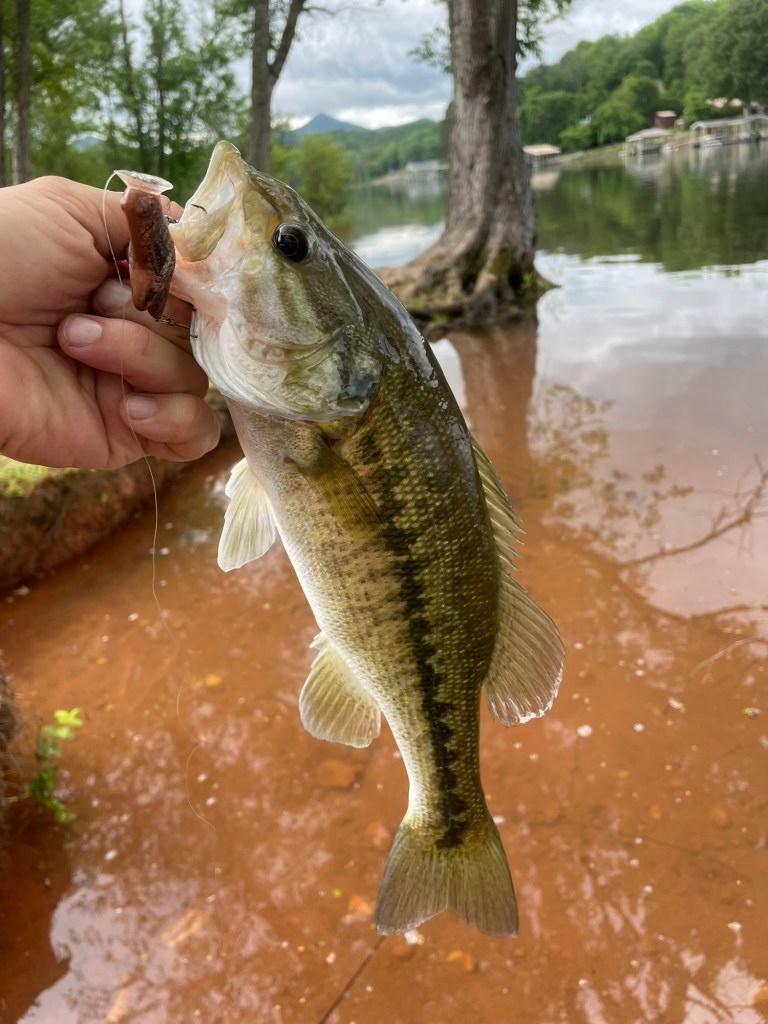
Spotted bass on Crickhopper Popper
  • Original Crickhopper – 1 1/2 inches and weighs 3/32 ounce
  • Bighopper – Same shape and action as original but slightly larger at 1 3/4 inches and 1/8 ounce
  • Crickhopper Popper – Size and profile of Bighopper bit with a cupped popping face.
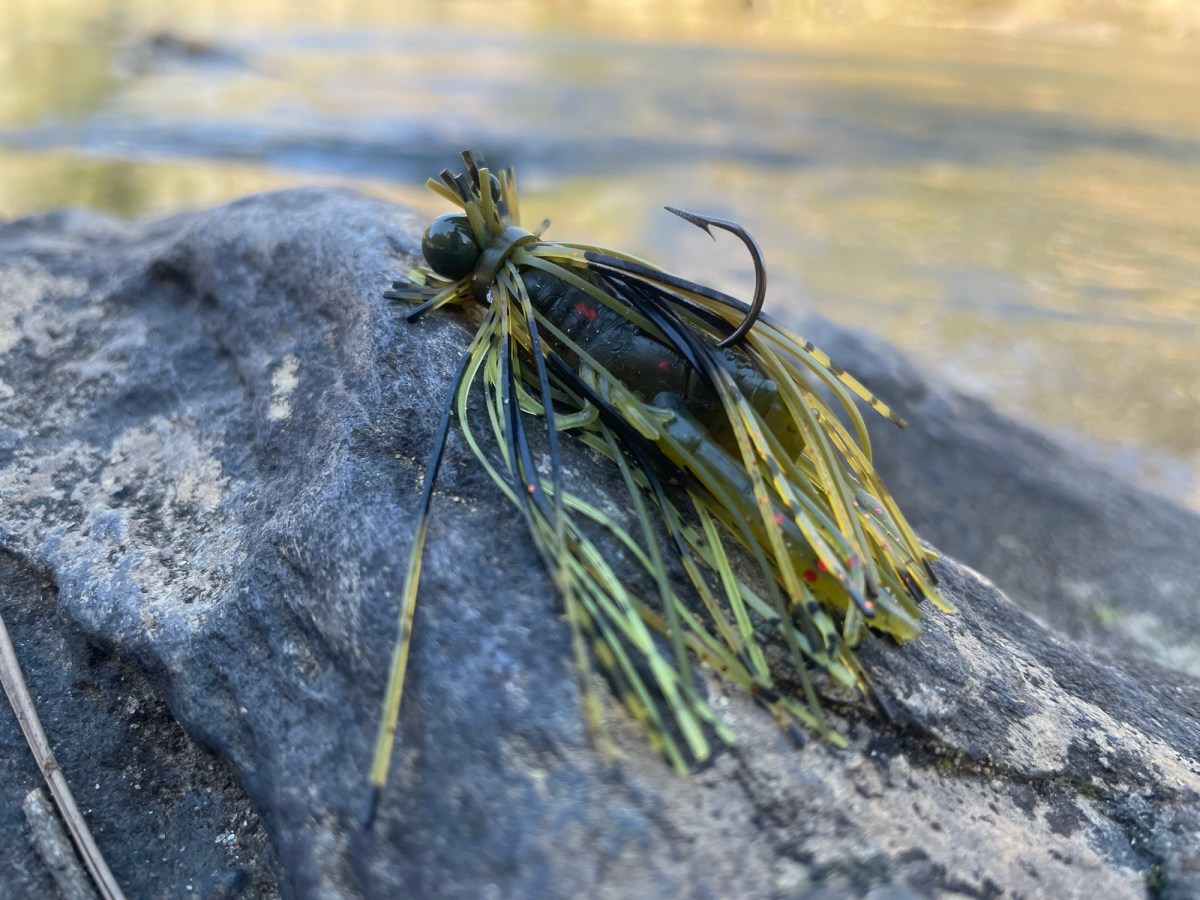
New Ultra-Finesse Jig from Rebel Lures

New jigs are a great fit for multi-species creek fishing.

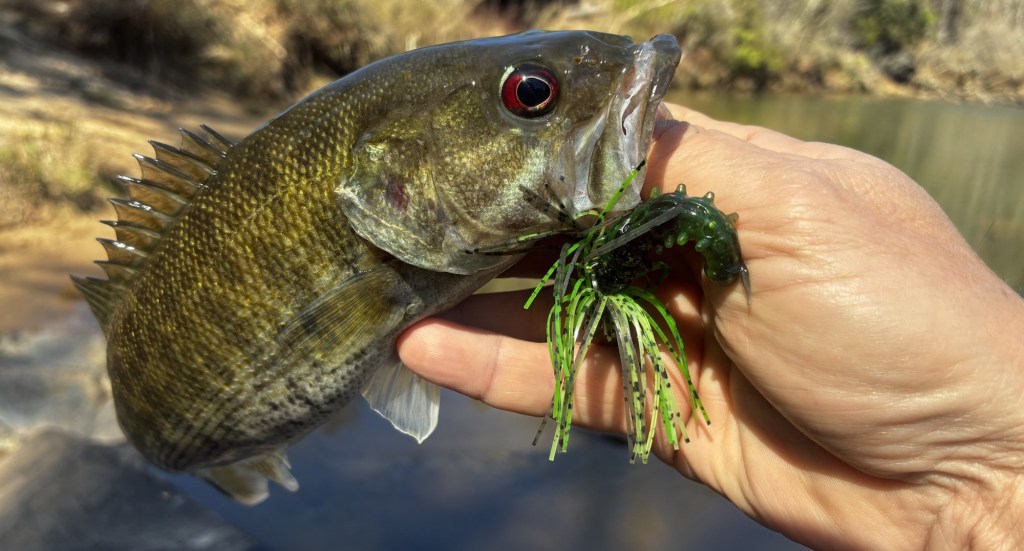
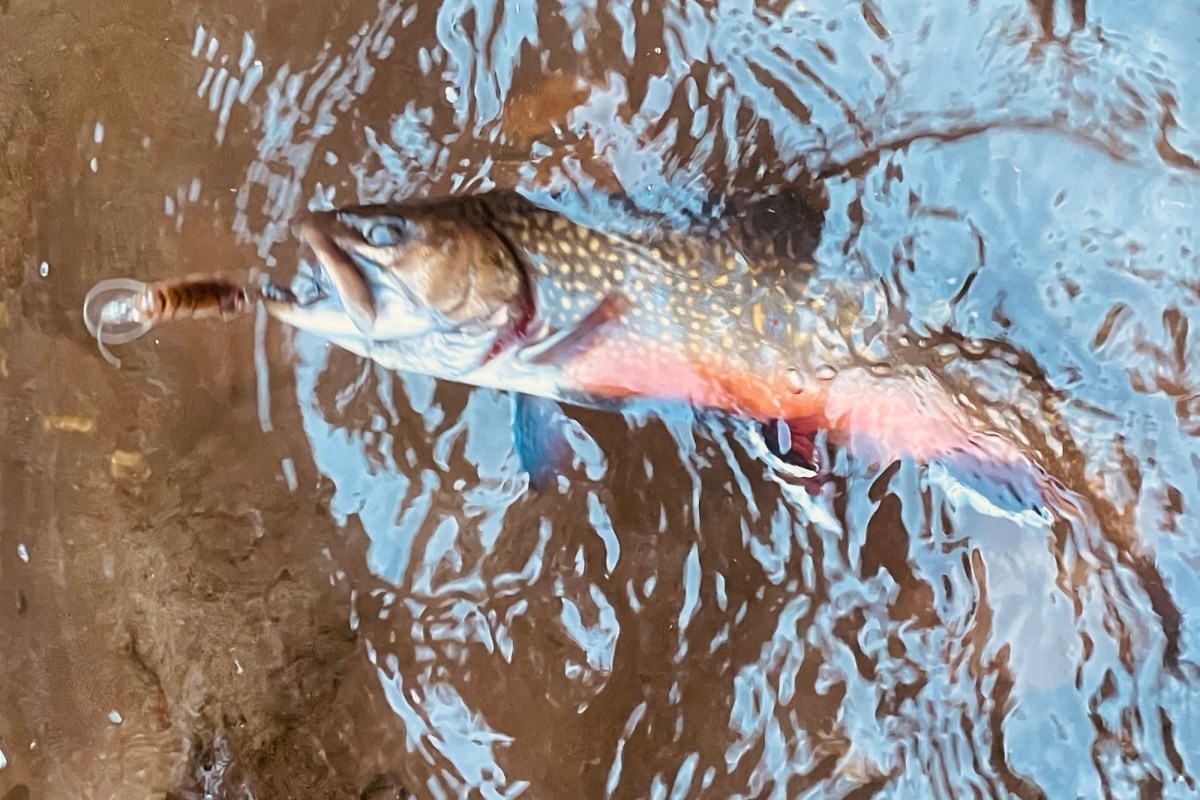
My most recent post focused on a few recent catches, but I failed to note that I caught the Bartrams bass, redbreast and shoal bass on the same kind of jig — the new Ultra-Finesse Jig from Rebel Lures.

The purpose of both short afternoon fishing trips was to get photos of the new jigs for my job. Of course I had to try them out, though, and I was impressed by the results of my short test runs — not just because I caught fish, either. I fished a few versions and was super impressed with how they looked and moved in the water.

The Ultra-Finesse Jig is built with a Keg Head Jig with a small collar added to help secure a silicone finesse skirt, and comes pre-rigged with a LIVEflex soft plastic body.

The buoyant trailers, when combined with the Keg Head design, really stand up nicely, helping fish find the bait. The same buoyancy slows the jig’s sink rate, adding an extra measure of finesse.

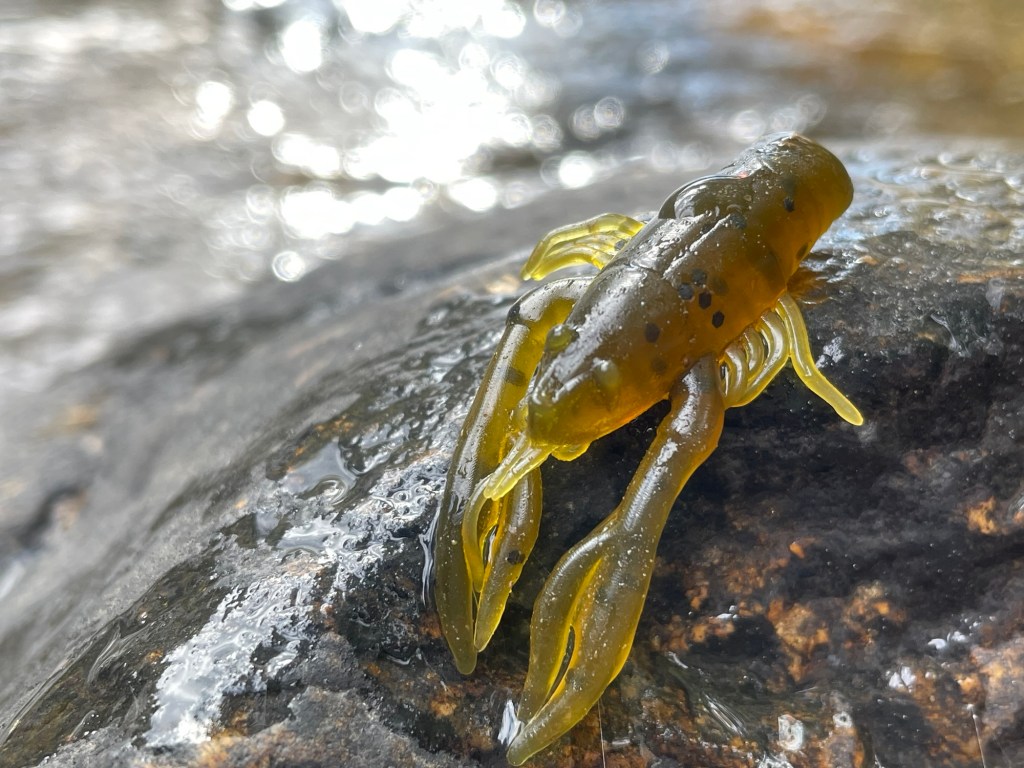
The jigs come in “Snack Packs,” with two jigs rigged with different LIVEflex baits and a spare of each of the soft plastics. All include one jig rigged with a Creek Craw. The second is either a Cata Crawler, which is a small Ned-style worm, or a Shore Shiner, which is a small, narrow swimbait.

I’ve been fishing with LIVEflex baits since the first samples came out, and they play an important role in my creek game. The Ultra-Finesse Jig is a natural progression for me, and having fished them just a tiny bit now, I’m eager to do a lot more!

Bartrams bass on Rebel Ultra-Finesse Jig

Fishing on Foot Lures

Why I use the lures that I do for the Fishing on Foot blog and YouTube channel.

If you read posts on this site or watch videos on my Fishing on Foot YouTube channel, it won’t take long to figure out some of my favorite fishing lures or notice that I talk repeatedly about some of the same brands, such as Rebel Lures, Bobby Garland Crappie Baits and Thill Floats.

If you read stuff to the end (appreciated!) or pay attention to video descriptions, you might notice occasional mention of a discount code, FOF15, for 15 percent off orders at Lurenet.com.

Some explanation seemed fitting, in part for the sake of disclosure, but more so because it tells a bit more about what is behind the Fishing on Foot blog and YouTube channel and a bit more about me as an angler.

My Real Job

Rebel LIVEflex Creek Craw

Throughout my career I’ve carried the broad title, outdoor writer, and for many years I free-lanced full time, writing fishing stories for magazines and websites and taking on various editing, photography, speaking and writing projects, mostly fishing related.

For the past decade I’ve worked full-time for one company, PRADCO-Fishing, doing the same type of work. I manage the blog at Lurenet, which is our retail site, shoot fishing and lure photos, help with video stuff from both ends of the camera, create social media content for some of our brands and more.

PRADCO-Fishing is a fishing lure manufacturer based in Fort Smith, Arkansas that owns and operates more than 15 lure brands. The brands, which collectively cover pretty much every type of fishing, include iconic brands like Heddon, Smithwick and Rebel and some of the most popular modern brands, including Great Lakes Finesse, YUM and BOOYAH.

The good news for me is that MANY lures from these brands were among my go-to lures long before I went to work for the company. Examples include Rebel Wee-Crawfish, Tracdown Ghost Minnows and Crickhoppers, Heddon Spooks and Tony Torpedoes and Bobby Garland Baby Shads and Stroll’Rs.

Fishing of Foot’s Place

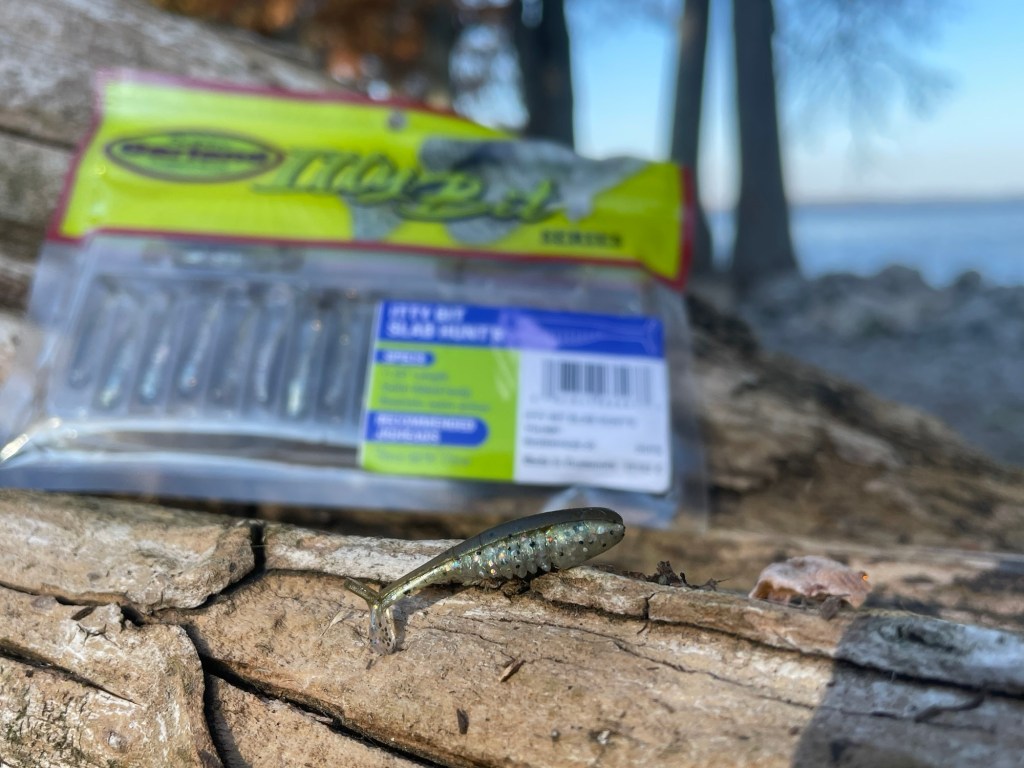
Bobby Garland Itty Bit Slab Hunt’R

The Fishing on Foot channel and blog are before- and after-hours play for me — creative outlets and opportunities to share with a focus on the types of fishing that have always been at the core for me. Neither channel nor blog is intended to sell fishing lures.

That said, my job and my own media are highly complementary. I gather a lot of Fishing on Foot content while I’m out with the primary purpose of shooting photos for work, and I often end up getting content I use for work when I’m fishing on my own in the evenings and on weekends and am mostly seeking Fishing on Foot video content.

Because our brands cover any type of fishing I ever do and because there’s always a need for fresh content with our lures, I genuinely have fished very little with anything else for more than 10 years. I speak and write frequently about Rebel Crawfish, Bobby Garland Mayflies and Lindy Quiver Spoons because they are lures that so often tied to the end of my line — the ones I know the best and can share about with the most confidence and to provide the greatest benefit to readers and viewers.

So, in case you’ve wondered, now you know!

Rebel Middle Wee-Crawfish

Change Hooks for Special Regulations Streams

Switching hooks on small crankbaits and minnow baits opens a lot of options for fishing special regulations trout waters.

Many of my favorite trout streams, including delayed harvest waters in and a few Southern states and wild trout waters in North Carolina, can only be fished with single-hook artificial lures. Fly-fishing is the most popular approach on most of these waters, and spin-fishermen typically fish wish small jigs or they clip two of three points from the trebles of spoons or inline spinners.

My preferred approach much of the time — and one that often seems overlooked for special regs waters — is to fish with a small crankbait or minnow bait with a single hook rigged on the back split ring. Trout in these waters typically see a lot of the same fly patterns and small jigs and spoons with similar profiles, so a more aggressive imitation of a minnow or crawfish often prompts strikes and can be especially good for larger trout.

A few of my favorite specific baits for special regulations trout streams are a Rebel Teeny Wee-Craw, Deep Teeny Wee-Craw and Tracdown Ghost Minnow. The craws and minnows have very different profiles and actions, and the most productive one really varies with the fish’s moods from one day to the next.

All of these baits come with stock trebles that work great as trebles but would leave too little hook if trimmed to a single point. I like to remove both treble hooks and replace the back one with a short-shanked hook that is two or three sizes larger than the original treble hook. I do likewise with my favorite trout spoon – the Lindy Rattl’n Quiver Spoon, which comes with a single small treble hook.

I also like micro jigs for trout, especially when the water is extra low and clear. However, having several minnows and crawfish crankbaits rigged for single hook regular opens far more opportunities to fish the way I like to and to catch more fish.