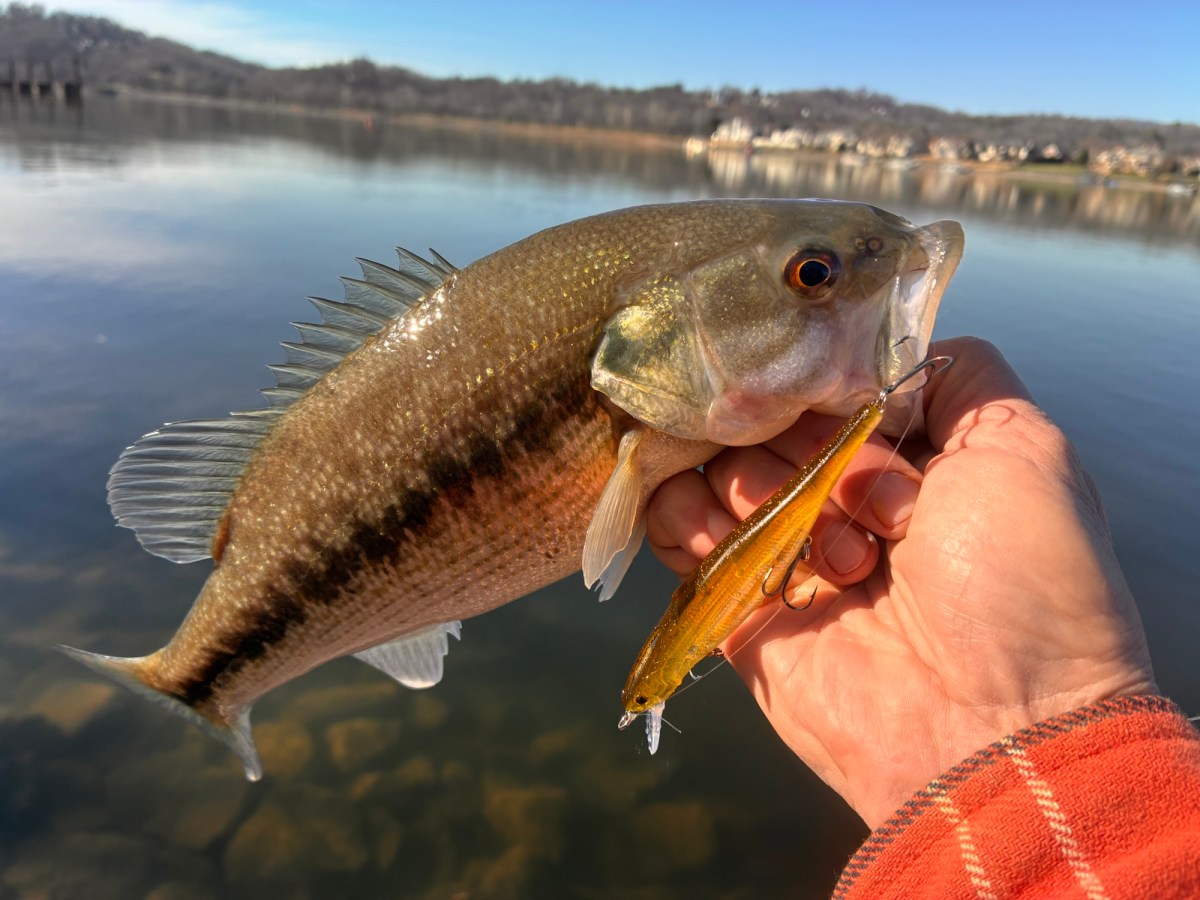
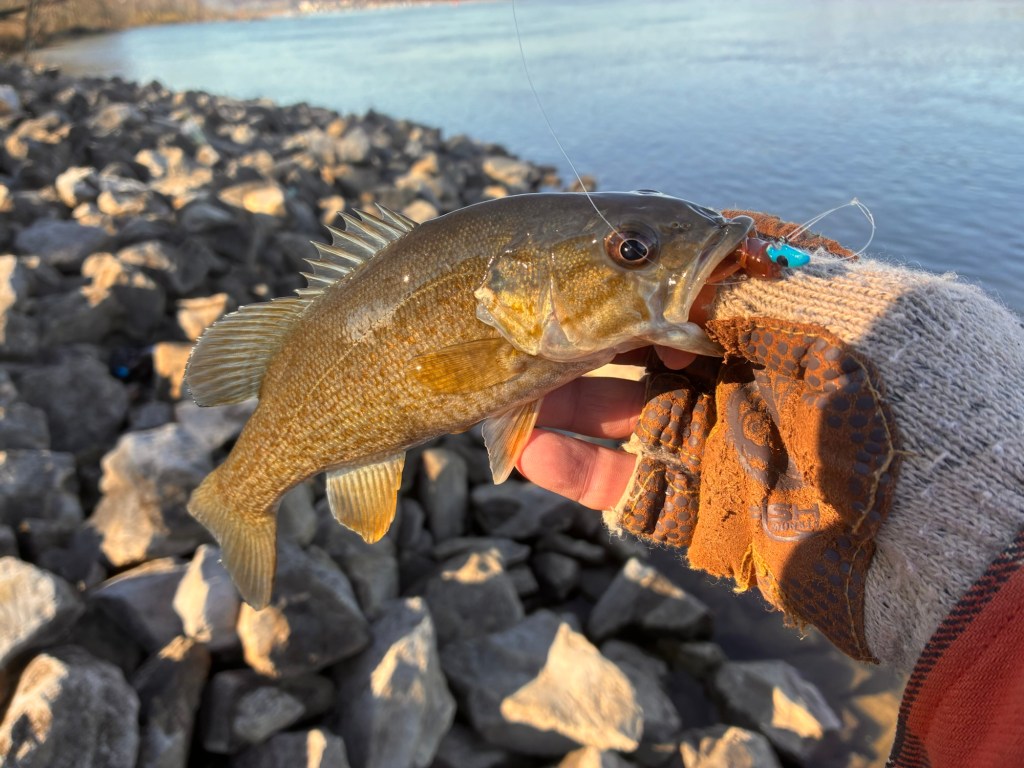
From a fishing standpoint, the Chattooga National Wild & Scenic River is best known for its trout offerings. Overlooked by many is a splendid population of native Bartram’s bass, an upland river bass species that is only found in the upper Savannah River drainage.
The trout attention is reasonable. Beginning in its headwaters high on Whiteside Mountain in Western North Carolina and continuing along the Georgia/South Carolina border, the Chattooga offers many miles of splendid trout habitat. Diverse offerings include wild populations of brook, rainbow and brown trout, put-and-take trout waters, a semi-wild browns that grow to large sizes and a highly popular delayed-harvest section.
I’m a big fan of trout in this river and have spent many great days trout fishing on the Chattooga. The Bartram’s are my favorites, though, and often I head straight to the lower half of the river, where the bass are the primary game fish species. More often than not I have these waters and the beautiful bass that inhabit them to myself.
Through several miles of the river, both above and below the Highway 28 bridge, the trout and bass are mixed, with trout being generally more prevalent during winter and spring but more bass moving into those areas and getting active through summer and fall.
I’ve been fishing the Chattooga for Bartram’s bass for around 30 years. Of course, the species hadn’t been identified when I first started targeting them. They were initially lumped in with shoal bass and then separated as redeye bass. Eventually, biologists began recognizing genetically distinct upland bass species in various watersheds, including the Bartram’s in the Savannah drainage. They have been named and known for more than a decade, but only officially designated as a distinct species about a year ago.
Chattooga Waters

From my experience, there is no “best area” for Bartram’s on the Chattooga. I’ve enjoyed good fishing days from well up onto trout waters to the farthest downstream I’ve fished, which is less than a mile from the free-flowing river’s end, where it backs into Lake Tugaloo.
I’ll pick spots based on how far I want to walk any given day, the water level, and simply the river section I want to explore. Some sections offer a modest walk and fairly easy access for a short outing. Others lend themselves to more of a day’s adventure, with more walking and bushwhacking and more challenging wading.
The Chattooga is both accessible and remote. It’s almost entirely on public land and has trails along much it, along with various spur trails that lead to the water. Wild and Scenic River designation stops roads at least 1/4 mile from the river, though, and only two bridges cross the Bartram’s bass waters. Because of the depth of some pools and rapids in places, some parts of the river legitimately aren’t accessible by foot. And in places, a paralleling trail might be 100 feet or more above the water.
That said there is no lack of fishing areas at reasonable water levels. Despite my having fished the river for three decades, there are accessible areas I’ve still never explored.
Water levels are worth noting. As a free-flowing river with steep sides, the Chattooga varies dramatically in character depending on recent rainfall patterns, and Bartram’s fishing can be extremely limited during high spring flows.
I keep my fishing tactics simple. I use light spinning tackle with 6-pound test for targeting Bartram’s bass and small topwater lures, crankbaits and soft-plastic lures.
5 Top Bartram’s Bass Lures

- Rebel Crickhopper
- Heddon Teeny Torpedo
- Rebel Teeny Wee-Craw
- Bobby Garland Mayfly
- Rebel LIVEflex Hellgrammite