Overnight pier outings in my late teens and early 20s will forever remain some of my all-time favorite fishing trips.
Most evenings I’d arrive at Big Pier 60 a bit before sunset, toting an already rigged medium-weight spinning outfit and carrying nothing else, except one spare lure packet in a pocket. I’d roam back to the car to head home just after sunrise, carrying the same stuff, possibly minus the spare lure packet.
No bucket, tackle box, stringer, cooler or anything else. I’d fish all night with the same lures, never keeping any fish – although occasionally I’d give trout to other pier anglers who were nearby and wanting fish to take home.
Most outings were solo. Kind of, anyway. Pier fishing is a community experience. When someone hooks a good fish, a flash mob of coaches and assistants forms, and when a really big fish finds its way onto the pier, everyone grabs at least a little ownership in their own minds.
That was extra true on Pier 60 if anyone ever landed a snook, but that’s another topic for another time.
My Trout Rig
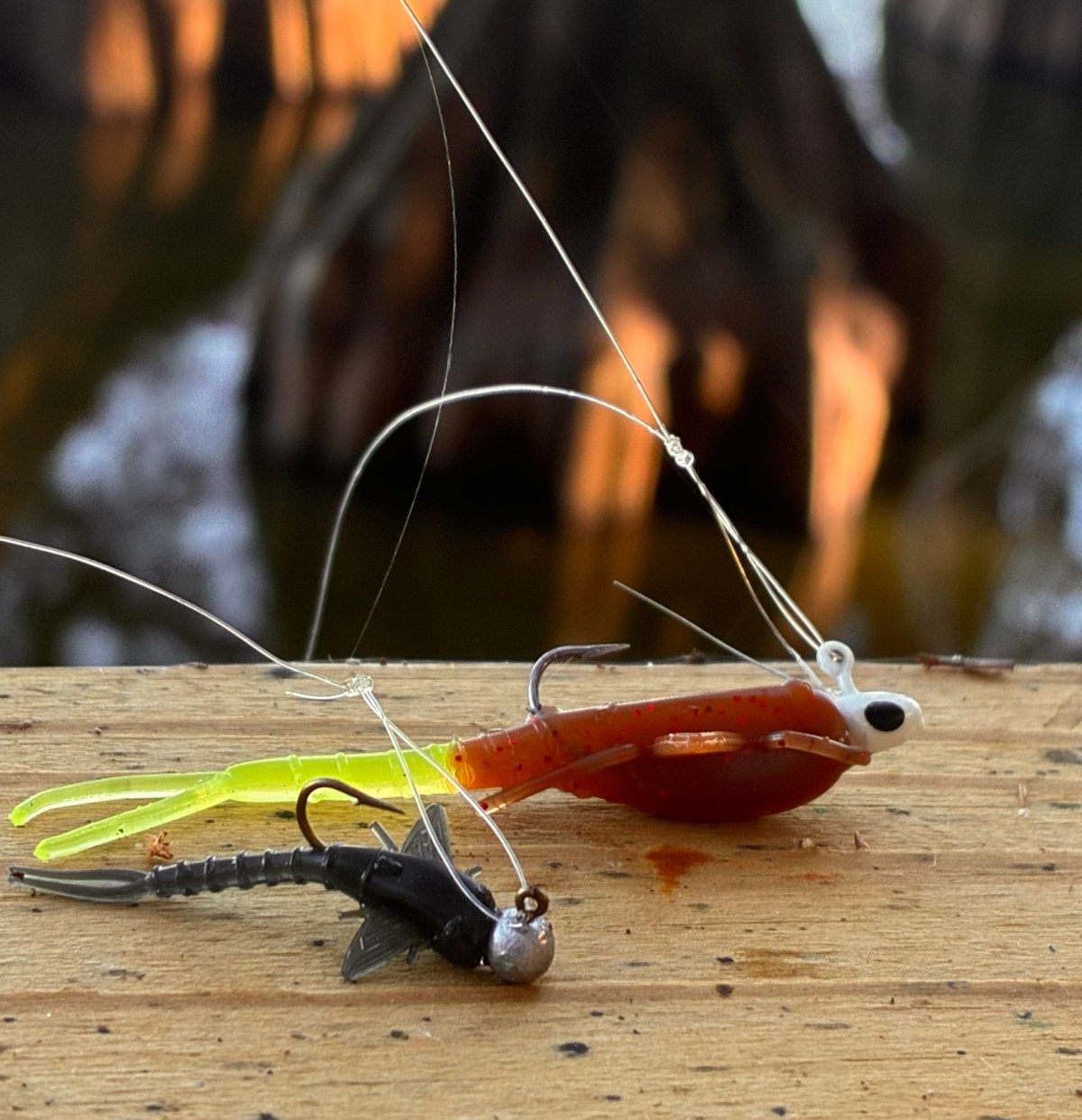
My lures never varied. Hot pink, straight-tailed Love’s Lures, which were small grub-like baits that were sold tandem rigged on jigheads.
Love’s Lures was a Florida brand. It went away years ago, but the baits were once quite popular in the Tampa Bay Area and worked very well, especially for trout. I’m pretty sure some Florida anglers still generically refer to tandem grub rigs as love lures.
I hadn’t thought about it before, but I’m sure my extreme fondness for tandem jig rigs began to form on Big Pier 60.
Pier Night Plan
The trout would feed at night beneath lights that were aimed at the water on both sides of the pier for the purpose of concentrating feeding fish. I would move from light to light, looking for trout and for baitfish, and trying a few casts, at least, whether or not I saw fish.
Depending on where I found fish and how they bit, I might hop from light to light throughout the night or end up mostly camped in one spot. That’s partly why I traveled light. I wanted to remain mobile!
Sometimes I’d vertical jig right in front of a visible fish to coax a strike. More often I’d make an underhand cast across the lit area or parallel to its edge, let the lures sink a few seconds and then dance them by twitching the rod tip as I reeled slowly. It was a pattering game. No switching lures. Just changing cadences, depths and rod movements and figuring out how the fish were positioned and how they wanted the lures moving that night.
Some nights shallow lights produced the best action. Other nights, deep ones. Likewise, the fish could be mostly on the left or right side or evenly distributed. Overall action also varied. I always caught fish, but some nights I caught LOTS of fish.
I’m certain those variances related to conditions, season, tide stages and other factors that probably made sense. I didn’t think much about such things, though. I went whenever I could, stayed all night and searched till I found the fish.
Pier Trout
I sought and mostly caught speckled trout, but also a mix of other species, like ladyfish and butterfish. The trout were seldom large, with most in the 10- to 14-inch range.
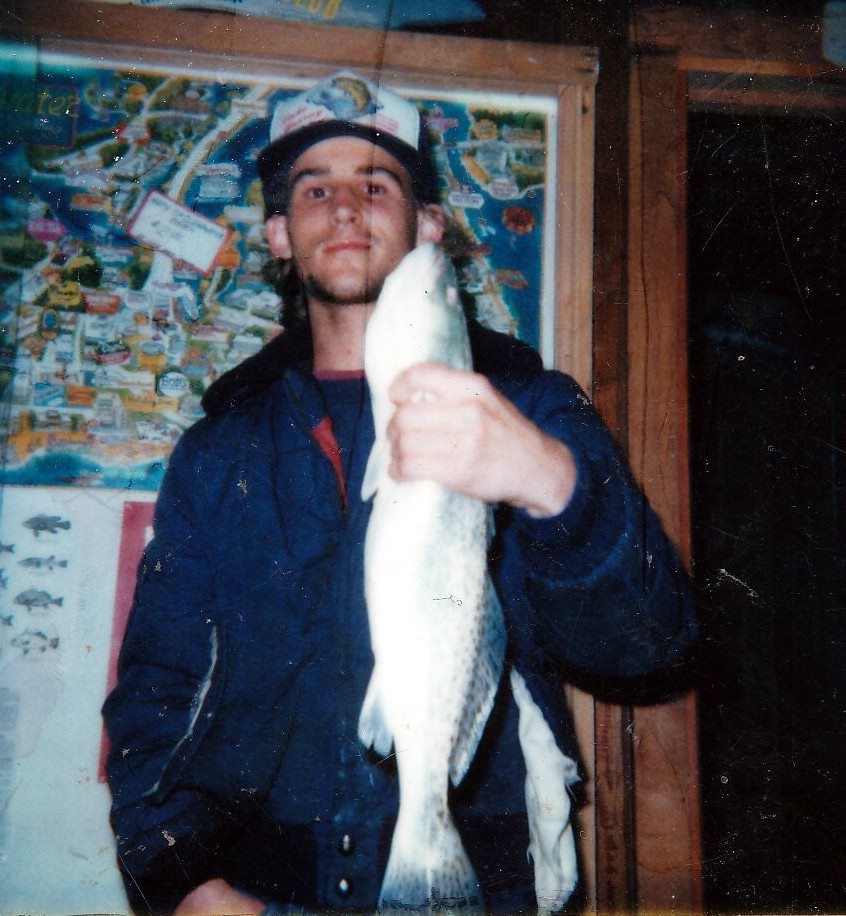
The fish in the photo on top was the best one I ever caught on a pier outing. I think it was 17 or 18 inches long and weighed about 3 pounds. Someone from the pier crowd ran and got the attendant, who wanted a photo for the bulletin board. He snapped a second one and gave it to me.
I won’t deny I was pretty proud of my fish and mug making the bragging board. It remains one my favorite photos of me with a fish, but not because of that specific fish. It reminds me of magical pier nights that were far more formative than I realized for a long time.



 Fishing on Foot