Wading Staff Opens Access & Adds Safety

Discussing the virtues of a wading staff and detailing the staff I carry.

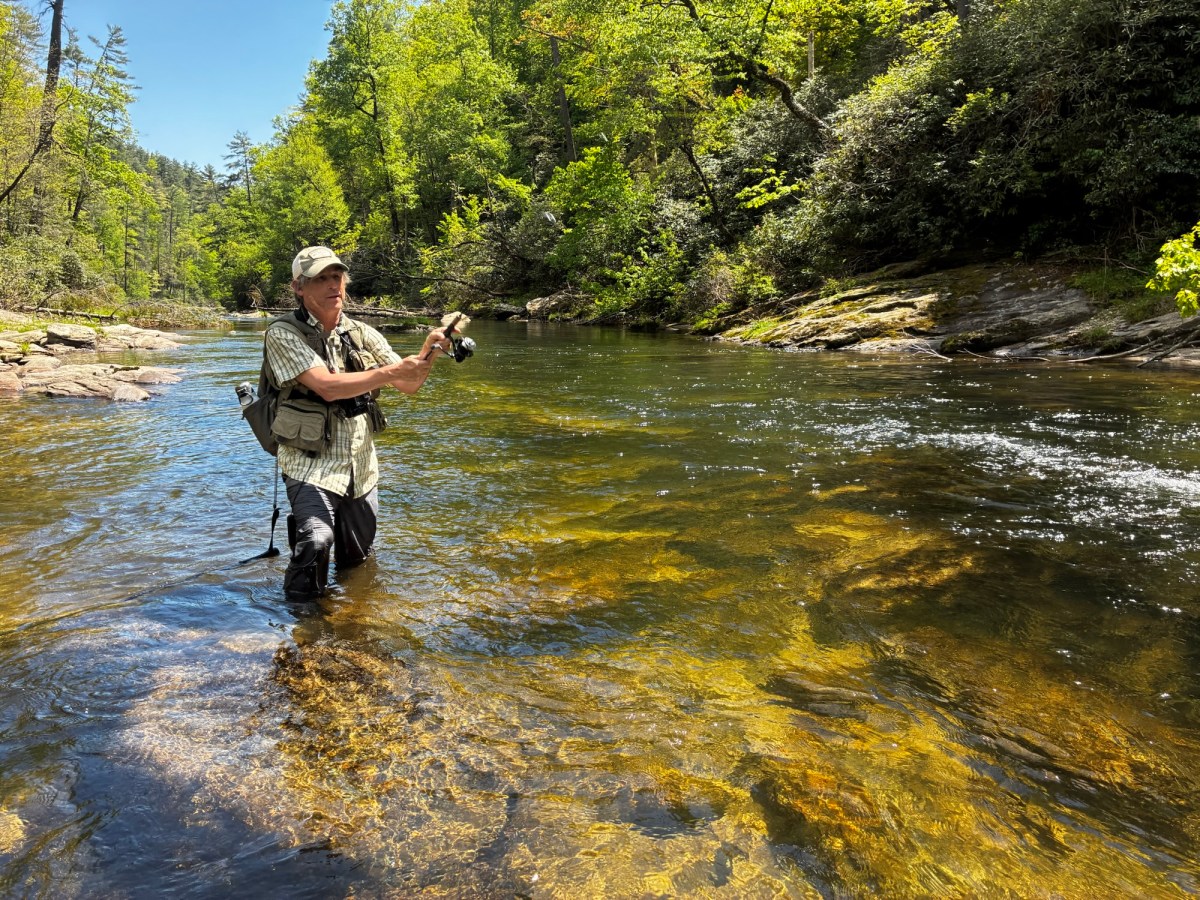
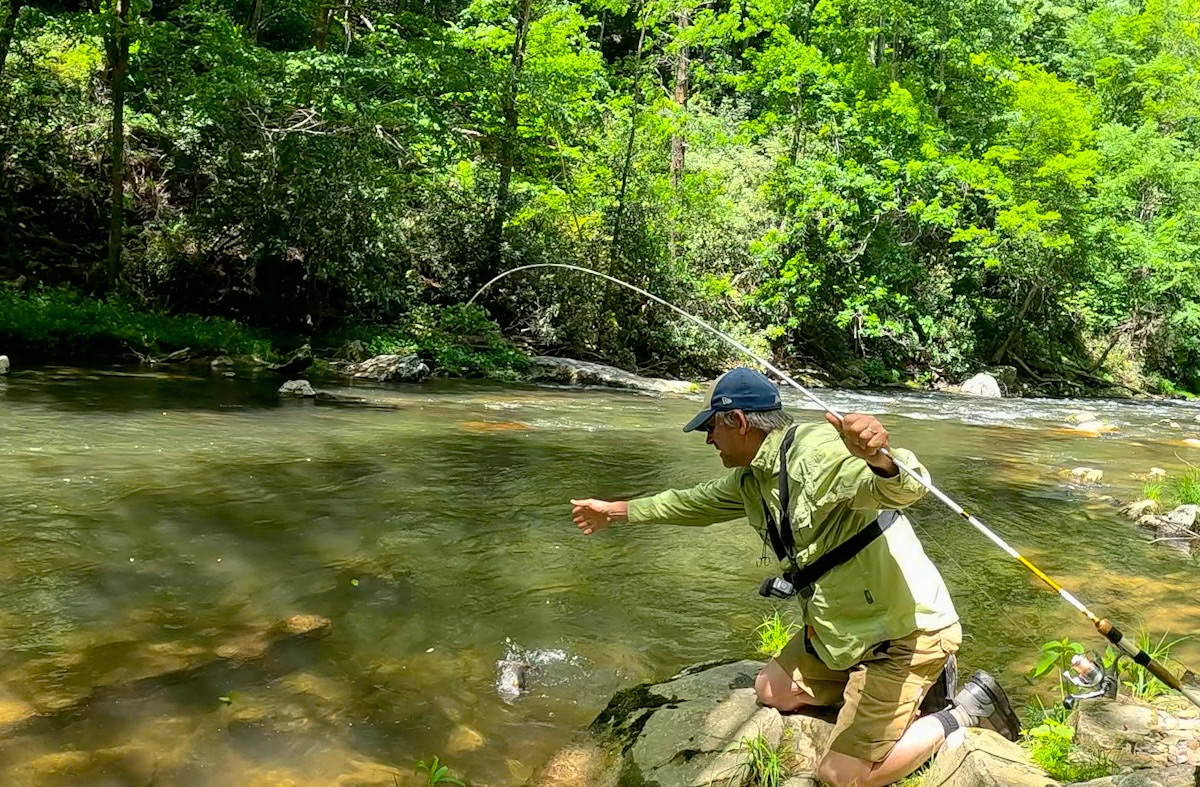
A few times while fishing the Chattooga River last week I thought about how thankful I was to have a wading staff in hand to test the depth of the next step or provide a “third leg” of stability while crossing the the river in significant current.

It was actually a previous trip to the same river with the same friend that prompted me to finally add a wading staff to my stream gear. Very early that day, we came to a spot where we had to cross to continue upstream, and I was apprehensive because of the depth, amount of current, and uneven bottom. My friend, Eric, had brought a wading staff, as he typically does. He ended up crossing easily, with aid of the staff, and then tossed it back to me so I could find my way across.

Eric actually forgot his wading staff at home last week. After realizing that as we geared up by my car before hiking to the river, he went into search mode along the trail and found himself a stick that was a good length and sufficiently sturdy for the job.

I should have picked up a wading staff long ago, and I’m still working on remembering to bring it (and use it when I have it). Having a probe to test the bottom depth and makeup and a third point of support makes it SO much easier and safer to wade anywhere depth, current and/or an uneven bottom make-up add wading challenges.

My Wading Staff

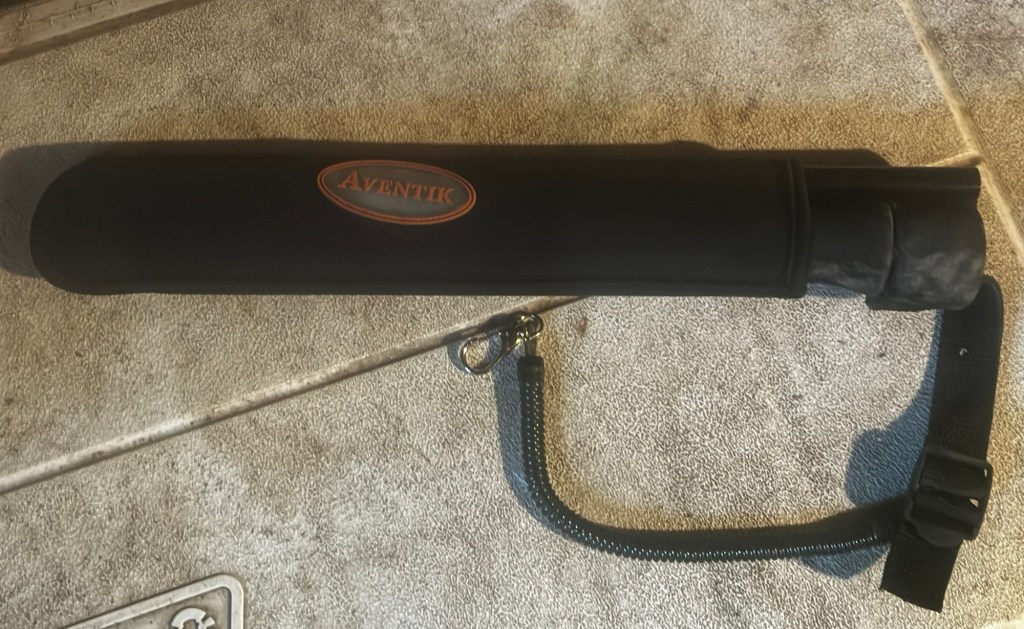
Aventik Foldable Wading Staff

My wading staff is made by Aventik. I’ve been happy with its functionality through several uses.

It’s a four-piece design, with elastic through the center, so it can be folded small but extends and snaps together like a tent pole. It’s 55 inches long and has a tungsten pointed tip and an EVA foam grip.

A coiled leash allows you to tether the staff to a belt loop or vest. It also has a camera mount on the handle to use the staff as a monopod, but I haven’t experimented with that application.

An included neoprene sheath is designed to hold the folded-up staff when not in use. I found the sheath tended to twist, and the pole would fall out. That’s not an issue for me, though. I keep the staff folded in the sheath at home and in the car, but wouldn’t want to keep folding and re-extending it astream anyway and would prefer to just let it drag behind me.

I like the light weight of an aluminum staff and definitely prefer something I can attach because I don’t like carrying extra things that I have to set down and remember to pick back up whenever I move. That said, a simple wooden hiking stick or even a stick you find by the trail or the river can do the job and is far better than not having a wading staff when you need one!

3 Keys to Wade Fishing Streams Successfully

Whatever species you are targeting in creeks and rivers, these simple tips can help you catch more fish.

Wading provides an excellent way to fish creeks and many rivers for multiple species including various trout, black bass and panfish.

Specific techniques and lures vary substantially by species, season, stream size and conditions. However, following these few principles can help you fish more effectively in most stream wading situations.

Stay Back

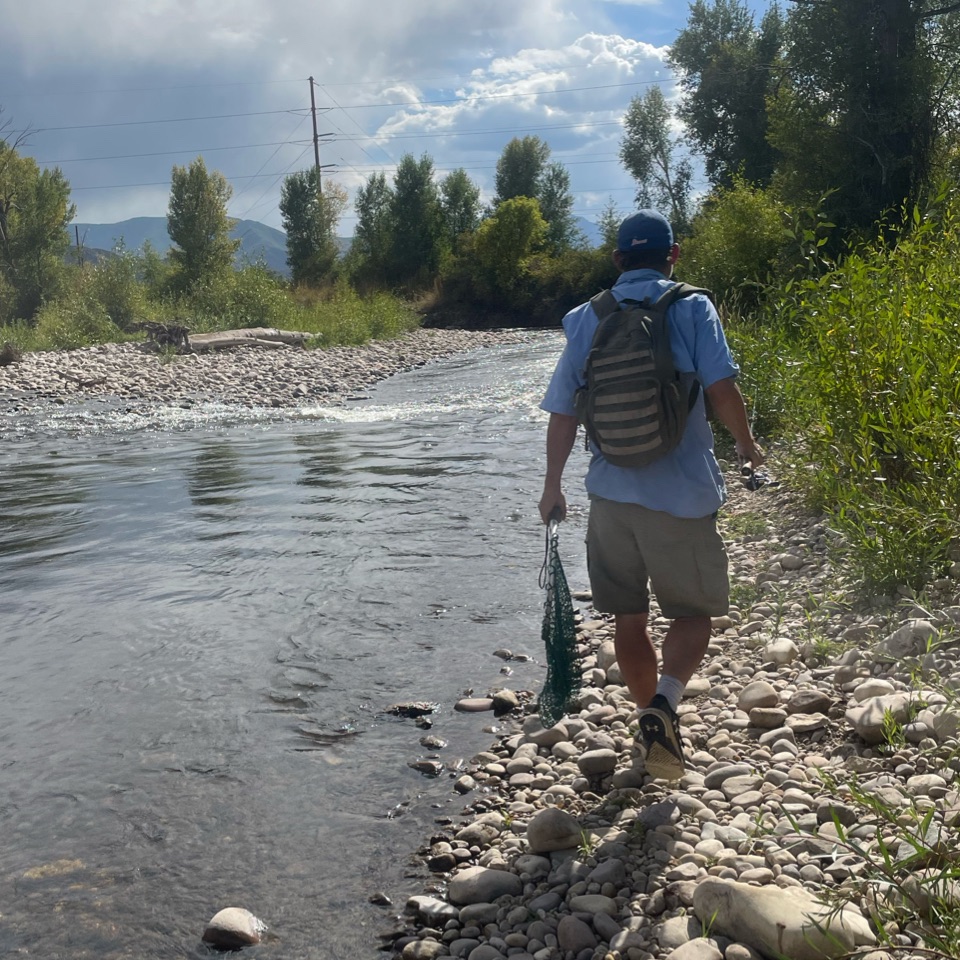
You’ll see a lot of anglers who will wade out to the center of a stream before they start. This admittedly opens things for backcasts, but it also makes the angler far more visible to the fish.

Try to work from the edges of a creek or river, as much as the situation allows, and even cast from a few feet back from the stream’s edges at times for small streams and clear water. The less fish are aware of your presence, the more likely they are to feed without inhibitions.

Of course, the degree of stealth needed depends on stream size, water flow and color and the fish’s general “mood,” but being aware of your visibility can make a significant difference in many stream wading situations.

Wade Upstream

Whenever possible, position yourself downstream of the spots you want to work. Since a fish propels itself with its tail, to stay in place in current it has to face into the current. When you cast upstream and work lures or drift flies back toward you, that puts you behind the fish, where you are less apt to be detected.

If you’re wading through a section of stream, starting at the lower end of that section and working your way upstream keeps you downstream of the spots you haven’t fished yet. That approach also allows the fish to see your offering, moving in a natural direction.

Casts don’t need to be straight upstream. Most situations call for some casts that angle across and upstream, and for larger waters, especially, some casts might be straight across. Some runs on the far side of a river might even be best fished by allowing the bait to swing or drift downstream of your position. Nevertheless, generally orienting yourself upstream as your fish tends to work the best.

Capitalize on Ambush Positions

Stream reading is an important part of stream fishing success. A vital aspect of that is leaning to identify gamefish’s ambush positions and then making effective presentations.

Most fish don’t like fighting current continually, but they like the foodstuff current lines carry. Therefore they love to hold at the edged of eddies, just out of the flow, facing the current. The eddy might be formed by a boulder, a downed tree, a ledge, a cut in the bank or something else. If it creates a protected spot with current sweeping past, it’s apt to be a good fish-holding spot.

Once you identify a good ambush spot, position yourself less than a cast’s length downstream and possibly across and cast your offering upstream just enough that it can be engaged and swimming properly as it sweeps past the obstruction.

If a fish’s first awareness of your offering is seeing it pass through the prime ambush zone, a reaction strike is likely!