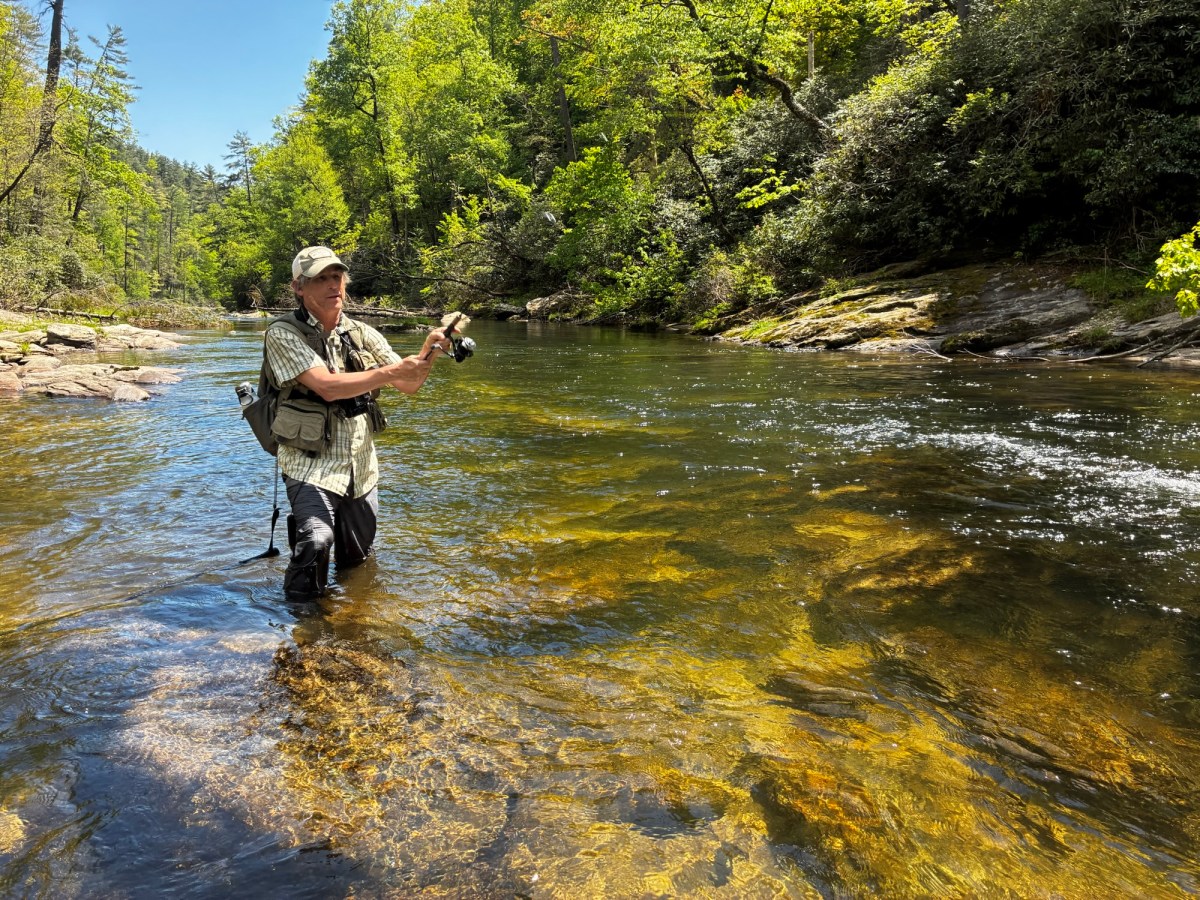
A few times while fishing the Chattooga River last week I thought about how thankful I was to have a wading staff in hand to test the depth of the next step or provide a “third leg” of stability while crossing the the river in significant current.
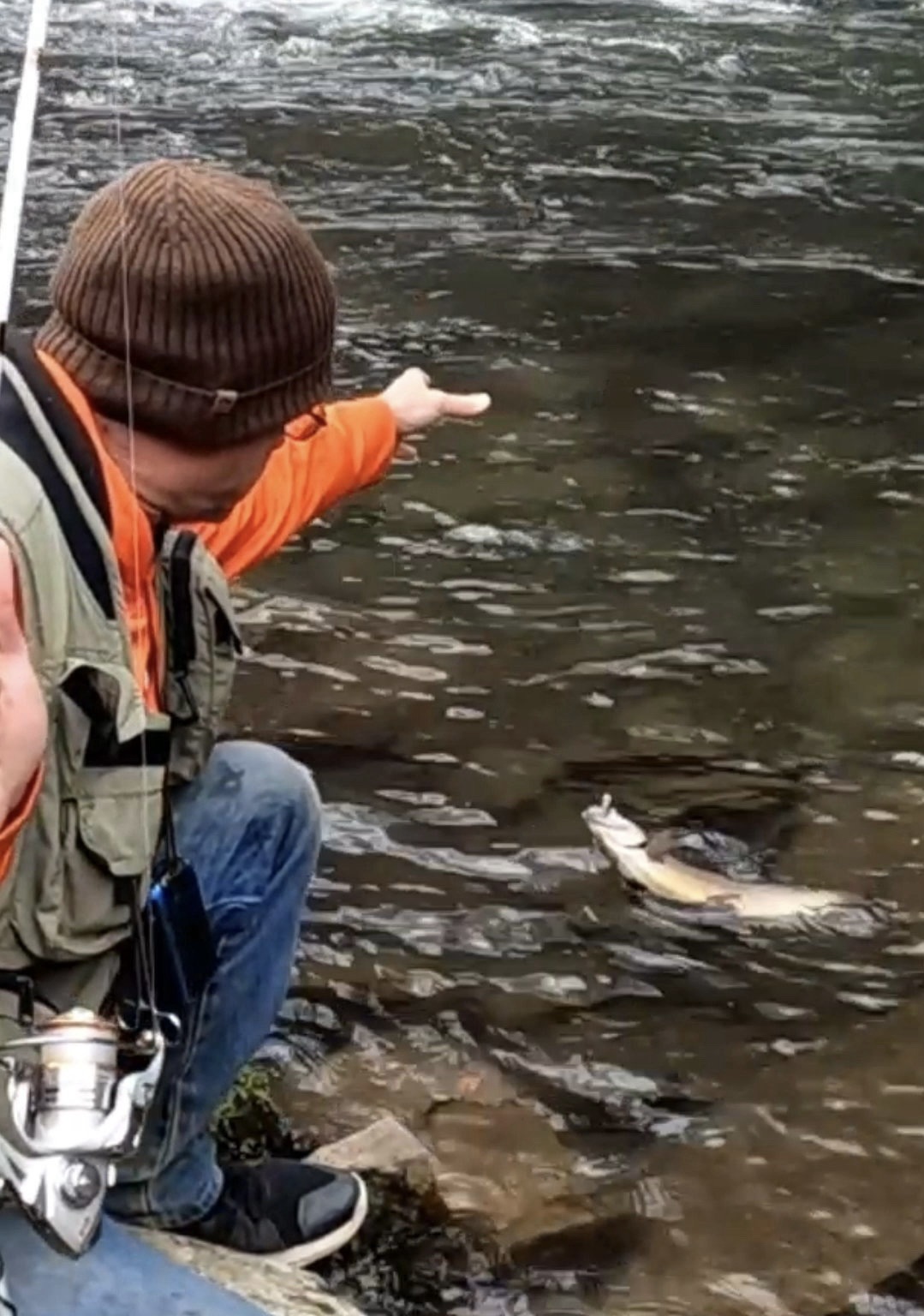
It was actually a previous trip to the same river with the same friend that prompted me to finally add a wading staff to my stream gear. Very early that day, we came to a spot where we had to cross to continue upstream, and I was apprehensive because of the depth, amount of current, and uneven bottom. My friend, Eric, had brought a wading staff, as he typically does. He ended up crossing easily, with aid of the staff, and then tossed it back to me so I could find my way across.
Eric actually forgot his wading staff at home last week. After realizing that as we geared up by my car before hiking to the river, he went into search mode along the trail and found himself a stick that was a good length and sufficiently sturdy for the job.
I should have picked up a wading staff long ago, and I’m still working on remembering to bring it (and use it when I have it). Having a probe to test the bottom depth and makeup and a third point of support makes it SO much easier and safer to wade anywhere depth, current and/or an uneven bottom make-up add wading challenges.
My Wading Staff
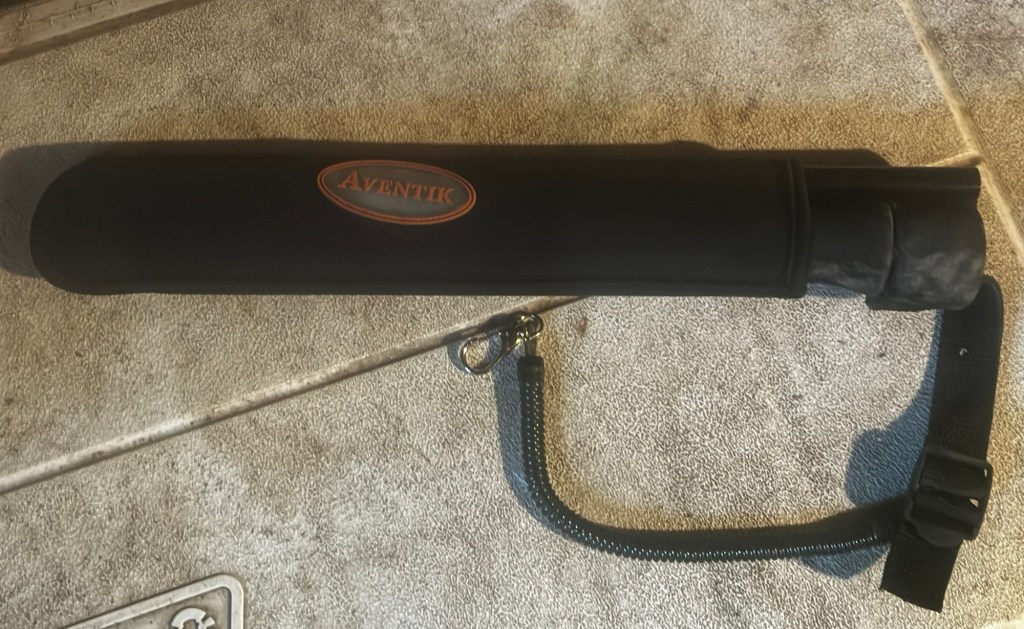
My wading staff is made by Aventik. I’ve been happy with its functionality through several uses.
It’s a four-piece design, with elastic through the center, so it can be folded small but extends and snaps together like a tent pole. It’s 55 inches long and has a tungsten pointed tip and an EVA foam grip.
A coiled leash allows you to tether the staff to a belt loop or vest. It also has a camera mount on the handle to use the staff as a monopod, but I haven’t experimented with that application.
An included neoprene sheath is designed to hold the folded-up staff when not in use. I found the sheath tended to twist, and the pole would fall out. That’s not an issue for me, though. I keep the staff folded in the sheath at home and in the car, but wouldn’t want to keep folding and re-extending it astream anyway and would prefer to just let it drag behind me.
I like the light weight of an aluminum staff and definitely prefer something I can attach because I don’t like carrying extra things that I have to set down and remember to pick back up whenever I move. That said, a simple wooden hiking stick or even a stick you find by the trail or the river can do the job and is far better than not having a wading staff when you need one!