Plentiful Bank-Fishing Access in Chattanooga

If you’re looking for a place to bank fish for the day and like variety, Chattanooga warrants consideration.

Work travel earlier this week took me through Chattanooga. A couple of exploration stops, when combined with things I’ve found on previous trips, helped me realize that the Chattanooga area offers an amazing amount of shoreline fishing access. It’s an area I’m now eager to explore more with more dedicated fishing time at my disposal.

I should note up front that this post won’t be a detailed fishing guide. More so it’s reporting what I’m beginning to discover. I’ll detail more as I learn more, probably showing some of the access points in video form on the Fishing on Foot YouTube channel.

Chickamauga Lake & Tailwater

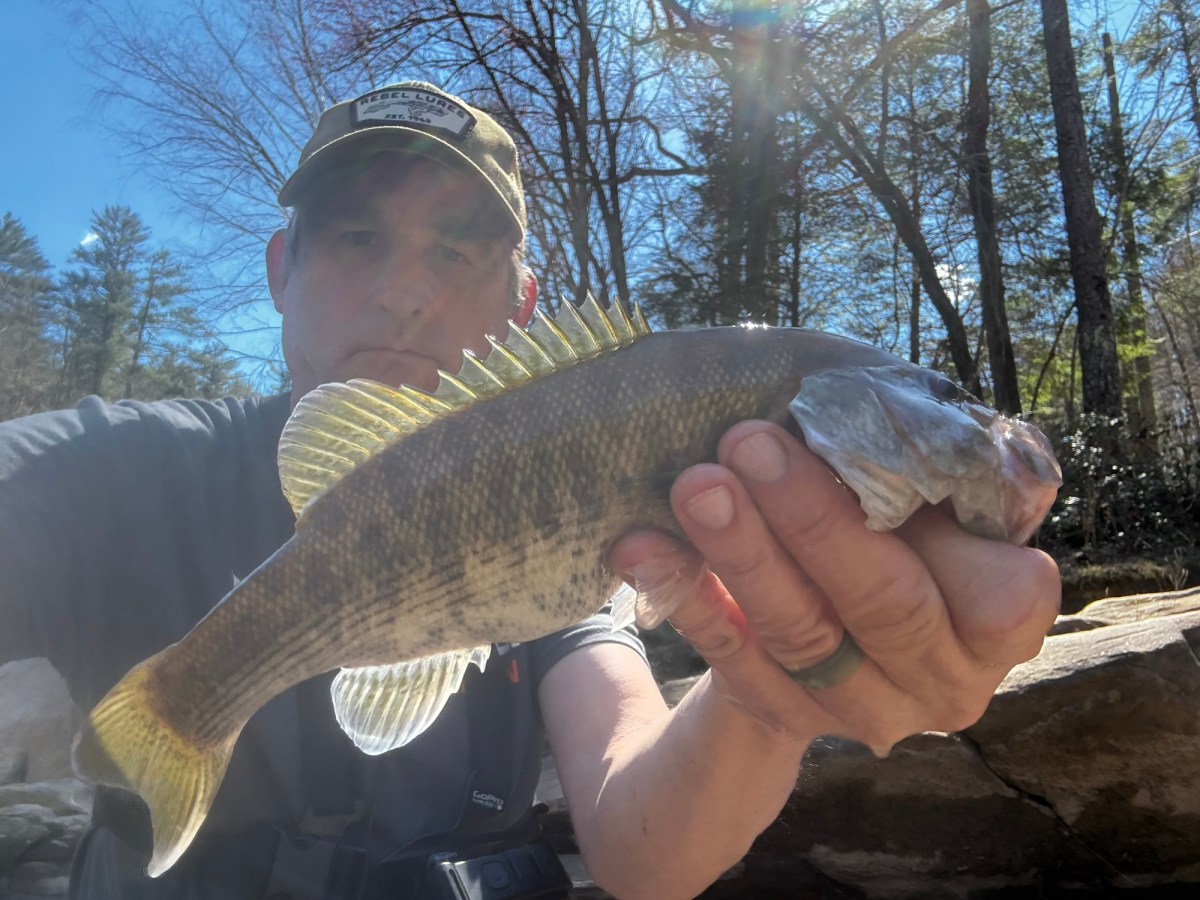
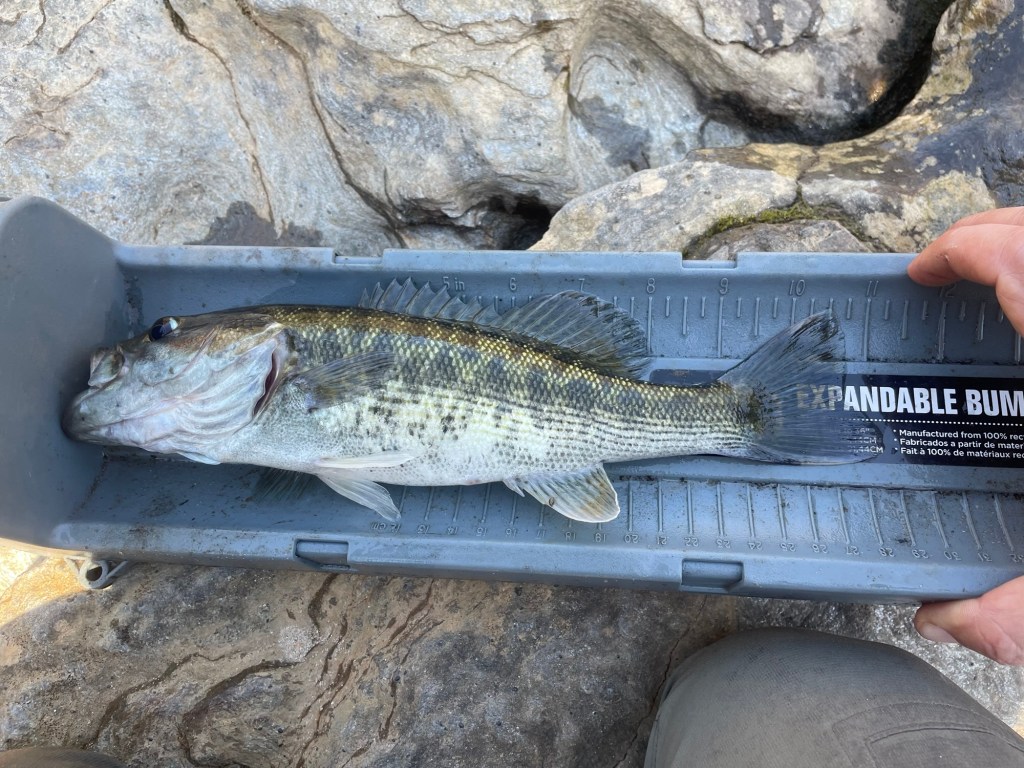
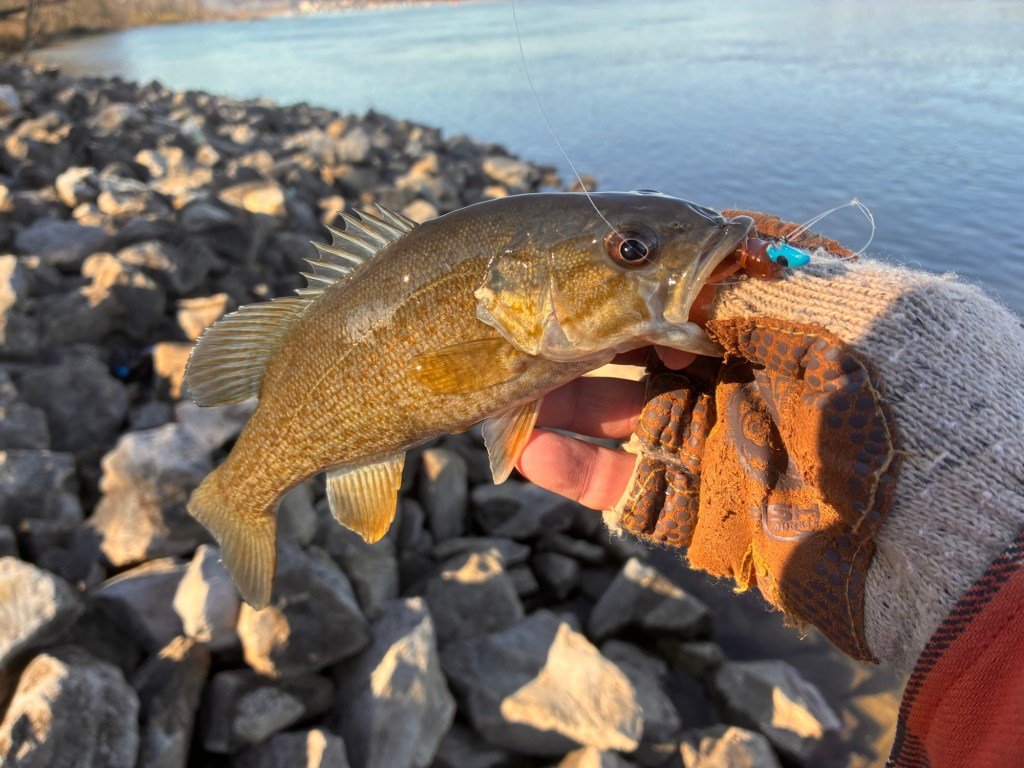
Tennessee River smallmouth bass

Although there are other fishing spots in the area, the main areas I’m taking about are toward the lower end of Chickamauga Lake and along the Tennessee River, downstream of the dam.

On the lake, Booker T Washington State Park and the Chickamauga Dam Day Use Area both offer extensive access for Fishing in Foot, and while they are near one another geographically, opportunities differ substantially.

The Bay, which is within the state park, is a dedicated fishing area, with a fishing pier and parking that’s handy to the pier, a riprap point that connects a big bay with a cove that’s off it and significant sections of shore along the bay and the cove.

Anglers I’ve seen on past visits to this park have been targeting crappie, but I have little doubt that at times it’s a good place to catch bass, bream and catfish.

The day use area at the dam again offers easy access to a long section of shore. The main difference is that it’s on the lake’s main body, instead of a creek or cove, and includes access to the riprap at the end of the dam.

Like the dams that create most Tennessee River impoundments, Chickamauga Dam has good access to riprap banks immediately below the dam and a fishing pier close to the dam. I knew that and had fished within sight of the dam before.

What I didn’t realize is that a park-like corridor of public access extends several miles below the dam with places to fish the river running through downtown. Included in the first few miles is what is officially called a “fishing park” and includes several fishing piers.

Big river tailwaters are almost like saltwater fisheries on terms of the variety of fish species and opportunities they provide. Any fish that bites could turn out to be one of many different kinds of fish, and the nature of the fishing varies enormously according to the season, the river level and which turbines are turning.

Blue catfish, smallmouth bass, crappie and white bass are some of the species most frequently sought beneath the dam.

Keep an eye on this blog and my YouTube channel for more on shoreline fishing around Chattanooga.

Ready for Whatever

When you don’t know what a fishing day will hold, sometimes you have to tote a little bit of everything!

Tomorrow is a travel day, and part of my work plan is to do some bank fishing and shoot lure photos (hopefully some with lures on fish’s mouths). That sort of plan can make for tough car packing because I really don’t know what the day will end up looking like or how I’ll be fishing.

I have several idea for places I might stop. They differ notably in character and are diverse in their offerings, so I’m not sure of the lures I’ll end up using or even the size rod and reel, and all of that might change from stop to stop or even within any given stop.

Complicating things more, a few of tomorrow’s most likely stops are access points I’ve never actually visited, and they are big-river spots that vary dramatically in character based on the amount of water flowing.

What that means from a practical standpoint is that I’m toting a fair amount of fishing gear (along with the usual array of cameras and accessories) for what might not amount to a ton of actual fishing time. Some stuff, almost undoubtedly, will never leave the car hatch. I want it available, though, just in case.

Hoping my next post affirms that I packed the right stuff and includes catch photos and a success story.

One-Cast Fishing Trip

Some of the trips we would most like to forget remain the most memorable! This one qualifies.

Anticipation swelled as I drove a familiar 40-minute route that I hadn’t traveled in too long. It was Day 1 of Christmas break from college, and I had just enough time free to walk the banks of Brooker Creek and catch some bass.

The creek, which wound through a park, was a go-to destination for the first few years after I got my driver’s license. There were plenty of spots in the park to make for a solid day trip, and it was just right distance from home to be manageable but feel like an adventure.

College had me living eight hours from home and without a similar fishing getaway, so I was beyond eager to hit some of my favorite areas of creek and figure out the bass.

I can picture the spot clearly, despite four decades having passed. The creek alternated between being creek-like and pond-like, and this was one of the pond-like areas — although it narrowed not far to my right and went beneath a footbridge. Handy to a parking area for picnic tables across the bridge and a good catching spot, it was a common place for me to begin a day.

I toted a single baitcasting outfit, along with a six-tray tackle box that contained every lure I owned at the time. I don’t recall the starting lure, but I’m guessing it was either a surface plug or a Texas-rigged plastic worm.

The Bass’ Taunt

My first cast should have been toward the bridge, just out from a weedlne that paralleled that bank. I was envisioning that cast when a substantial-seeming bass made a taunting splash near the bank across from me.

The ruckus was probably beyond my casting range, so the best plan might have walk across the bridge to a better casting vantage and make a good presentation. Instead, I reached back for a little extra and gave it everything I had. In haste, I failed to notice a pesky palmetto that was right where my lure went on the exaggerated reach back.

When I let loose my ambitious cast, the reel blew up into what remains the biggest backlash I’ve ever created (or seen, for that matter). I stared bewildered for a moment and then sat down and started picking. For the better part of an hour the picking continued with little to no progress.

With no knife in my tackle box and maybe not enough line beneath the knots anyway, all I could do was drive home with my reunion fishing trip over before it ever began .

Travel Rod for Car

Earlier this year, I added a pack rod combo to the stuff I always carry in my car, and now I can’t imagine ever not having a “car rod.”

For the past six months, I’ve immensely enjoyed keeping a quality travel rod in back of my car — all the time. In part due to the convenience and in part because it fits so much of the fishing I do, I’ve used my car rod combo extensively for the amount of time I’ve owned it.

I had previously carried a cheap telescopic rod combo in my car — just in case opportunities arose — but it didn’t cast well and wasn’t great for working lures or landing fish. So, what I found was that I was just driving it around. I always grabbed a different rod for a trip, and even if some chance to fish came up, it generally wasn’t suited for the task.

I’ve also tried just keeping a regular fishing rod handy in my car, but even a two-piece rod gets in the way and always seems like it’s just waiting to be broken.

My Travel Rod & Reel

My car combo consists of a DAIWA Ardito 7-6 medium-light three-piece spinning rod and a DAIWA Fuego 200 size reel. I typically keep it spooled with 6-pound mono, but 4 or 8 would also fit nicely if the situation called for going a bit lighter or heavier. The rod is rated for 4- to 15-pound test and 1/8- to 3/8-ounce lures.

The rod came with a tube, which is important. That keeps it protected no matter what other junk I’m tossing into back of my car. Three pieces keep it short enough to fit neatly in the car hatch, but it casts as smoothly as a one-piece rod, from my standpoint.

I do a lot of stream wading — whether for trout, bass or whatever chooses to bite — and quite a bit of fishing from pond banks. This combo is the perfect size for many of the lures I throw and is at least suitable for a pretty good selection of the lures I’m apt use.

I don’t claim to be a super techy gear guy, but I know what feels good and works well. The rod’s fast action makes it easily to deliver accurate casts, even with small lures, and the reel is smooth. After half a year of fishing this outfit, I’m completely happy with how both rod and reel perform — casting, working lures and landing fish.

Add a Rod to Your Car

Shoal bass and travel rod and reel

My intent wasn’t to spin into a review, though. Although this particular travel rod combo has served me well, and I absolutely would recommend it, more important is the general principle of adding a travel rod and a small selection of lures to the stuff you keep in your car.

Because of mine, I’ve done quick fishing outings that I otherwise wouldn’t have — when I found myself near water on other types of outings or passed somewhere interesting on the way to or from somewhere. Having a rod I’m comfortable with and a few favorite lures handy makes it very simple to stop, even if it’s only to make a handful of casts and scout a spot for another time.

Beyond that, it’s one less thing to think about when I’m gathering lures and other equipment for a day on the water. Several days this summer and fall, I didn’t pack any other rods or reels. I just put that one together upon arrival.

The primary consideration in picking out a travel rod to carry in your car is an assessment of the kinds of situations you’re most apt to encounter. I’m an all-species angler and my day-to-day local efforts include a lot of fishing with small lures. Therefore, the medium light spinning outfit suits my needs perfectly. However, if I mostly fished for bass around thick cover or maybe fished in saltwater on a regular basis, I’d want a heavier rod and bigger reel.

Finally, I also mentioned handy lures. I keep that part simple. I carry an old ice cream bucket in my hatch that stays filled with a selection of soft plastics, jigheads and floats and a little box of my favorite hard baits. There’s no exact formula, and the selection varies from time to time, but if I find myself in a situation where I’d really like to make a few casts, I want to have the stuff I need to do just that!

First Use of the Travel Rod That Lives in my Car

Fishing on Foot Lures

Why I use the lures that I do for the Fishing on Foot blog and YouTube channel.

If you read posts on this site or watch videos on my Fishing on Foot YouTube channel, it won’t take long to figure out some of my favorite fishing lures or notice that I talk repeatedly about some of the same brands, such as Rebel Lures, Bobby Garland Crappie Baits and Thill Floats.

If you read stuff to the end (appreciated!) or pay attention to video descriptions, you might notice occasional mention of a discount code, FOF15, for 15 percent off orders at Lurenet.com.

Some explanation seemed fitting, in part for the sake of disclosure, but more so because it tells a bit more about what is behind the Fishing on Foot blog and YouTube channel and a bit more about me as an angler.

My Real Job

Rebel LIVEflex Creek Craw

Throughout my career I’ve carried the broad title, outdoor writer, and for many years I free-lanced full time, writing fishing stories for magazines and websites and taking on various editing, photography, speaking and writing projects, mostly fishing related.

For the past decade I’ve worked full-time for one company, PRADCO-Fishing, doing the same type of work. I manage the blog at Lurenet, which is our retail site, shoot fishing and lure photos, help with video stuff from both ends of the camera, create social media content for some of our brands and more.

PRADCO-Fishing is a fishing lure manufacturer based in Fort Smith, Arkansas that owns and operates more than 15 lure brands. The brands, which collectively cover pretty much every type of fishing, include iconic brands like Heddon, Smithwick and Rebel and some of the most popular modern brands, including Great Lakes Finesse, YUM and BOOYAH.

The good news for me is that MANY lures from these brands were among my go-to lures long before I went to work for the company. Examples include Rebel Wee-Crawfish, Tracdown Ghost Minnows and Crickhoppers, Heddon Spooks and Tony Torpedoes and Bobby Garland Baby Shads and Stroll’Rs.

Fishing of Foot’s Place

Bobby Garland Itty Bit Slab Hunt’R

The Fishing on Foot channel and blog are before- and after-hours play for me — creative outlets and opportunities to share with a focus on the types of fishing that have always been at the core for me. Neither channel nor blog is intended to sell fishing lures.

That said, my job and my own media are highly complementary. I gather a lot of Fishing on Foot content while I’m out with the primary purpose of shooting photos for work, and I often end up getting content I use for work when I’m fishing on my own in the evenings and on weekends and am mostly seeking Fishing on Foot video content.

Because our brands cover any type of fishing I ever do and because there’s always a need for fresh content with our lures, I genuinely have fished very little with anything else for more than 10 years. I speak and write frequently about Rebel Crawfish, Bobby Garland Mayflies and Lindy Quiver Spoons because they are lures that so often tied to the end of my line — the ones I know the best and can share about with the most confidence and to provide the greatest benefit to readers and viewers.

So, in case you’ve wondered, now you know!

Rebel Middle Wee-Crawfish

Georgia Bass Slam Challenge

The Georgia Bass Slam provides a great opportunity to explore Georgia’s diverse bass fisheries and lends itself nicely to Fishing on Foot.

At the start of this year I set myself the challenge of trying to achieve the Georgia Bass Slam. Earning the slam requires catching at least five of 10 black bass species, all in Georgia waters where you have permission to fish and with a minimum size of 8 inches or the legal minimum size for the waters fished. I also self imposed the challenge of achieving the slam by Fishing on Foot, whether wading or walking the bank.

Mission accomplished. I ended up catching qualifying fish of seven bass species.

  • largemouth bass
  • Bartams bass
  • shoal bass
  • spotted bass
  • Chattahoochee bass
  • smallmouth bass
  • Coosa redeye bass

The three I didn’t get were the Tallapoosa bass, Altamaha bass and Suwannee bass. I did catch one Tallapoosa bass, but it was less than 8 inches in length. I never found my way to waters where the other species live.

About the Georgia Bass Slam

Coosa redeye bass

The Georgia Bass Slam was established to create a fun challenge for anglers and to raise awareness about Georgia’s diverse black bass fisheries.

Georgia has 12 distinct black bass species. Two pairs of species are looked at together for the purpose of the slam, both because of the difficulty of field identification and because of extensive hybridization outside native range. Largemouth bass and Florida bass are treated as one species for the slam, as are spotted bass and Alabama bass.

To certify qualifying fish, you simply submit a photos of the fish on a measuring tape and one of you with the fish and list the species, county it was caught from, length and your name and fishing license number.

Anglers who achieve the slam receive a prize packet and have their names listed on the Georgia Bass Slam page of the Wildlife Resource Division website and at the GO Fish Education Center.

Georgia Bass Slam Page

My Bass Slam Experience

For me the bass slam was a fun challenge, and I certain I’ll try it again and see if I can notch any of the other species. You’ll find videos about all of this year’s catches on my Fishing on Foot YouTube channel.

I really enjoyed learning about the different species and their behavior and studying the range and habitat of each to figure out where I might be able to find and catch them. A few of the species I’d never targeted before.

It was also fun exploring new waters, including some really good spots that were pretty close to home that I had never fished before.

Speckled Trout Nights on Big Pier 60

Overnight pier outings in my late teens and early 20s will forever remain some of my all-time favorite fishing trips.

Most evenings I’d arrive at Big Pier 60 a bit before sunset, toting an already rigged medium-weight spinning outfit and carrying nothing else, except one spare lure packet in a pocket. I’d roam back to the car to head home just after sunrise, carrying the same stuff, possibly minus the spare lure packet.

No bucket, tackle box, stringer, cooler or anything else. I’d fish all night with the same lures, never keeping any fish – although occasionally I’d give trout to other pier anglers who were nearby and wanting fish to take home.

Most outings were solo. Kind of, anyway. Pier fishing is a community experience. When someone hooks a good fish, a flash mob of coaches and assistants forms, and when a really big fish finds its way onto the pier, everyone grabs at least a little ownership in their own minds.

That was extra true on Pier 60 if anyone ever landed a snook, but that’s another topic for another time.

My Trout Rig

My lures never varied. Hot pink, straight-tailed Love’s Lures, which were small grub-like baits that were sold tandem rigged on jigheads.

Love’s Lures was a Florida brand. It went away years ago, but the baits were once quite popular in the Tampa Bay Area and worked very well, especially for trout. I’m pretty sure some Florida anglers still generically refer to tandem grub rigs as love lures.

I hadn’t thought about it before, but I’m sure my extreme fondness for tandem jig rigs began to form on Big Pier 60.

Pier Night Plan

The trout would feed at night beneath lights that were aimed at the water on both sides of the pier for the purpose of concentrating feeding fish. I would move from light to light, looking for trout and for baitfish, and trying a few casts, at least, whether or not I saw fish.

Depending on where I found fish and how they bit, I might hop from light to light throughout the night or end up mostly camped in one spot. That’s partly why I traveled light. I wanted to remain mobile!

Sometimes I’d vertical jig right in front of a visible fish to coax a strike. More often I’d make an underhand cast across the lit area or parallel to its edge, let the lures sink a few seconds and then dance them by twitching the rod tip as I reeled slowly. It was a pattering game. No switching lures. Just changing cadences, depths and rod movements and figuring out how the fish were positioned and how they wanted the lures moving that night.

Some nights shallow lights produced the best action. Other nights, deep ones. Likewise, the fish could be mostly on the left or right side or evenly distributed. Overall action also varied. I always caught fish, but some nights I caught LOTS of fish.

I’m certain those variances related to conditions, season, tide stages and other factors that probably made sense. I didn’t think much about such things, though. I went whenever I could, stayed all night and searched till I found the fish.

Pier Trout

I sought and mostly caught speckled trout, but also a mix of other species, like ladyfish and butterfish. The trout were seldom large, with most in the 10- to 14-inch range.

The fish in the photo on top was the best one I ever caught on a pier outing. I think it was 17 or 18 inches long and weighed about 3 pounds. Someone from the pier crowd ran and got the attendant, who wanted a photo for the bulletin board. He snapped a second one and gave it to me.

I won’t deny I was pretty proud of my fish and mug making the bragging board. It remains one my favorite photos of me with a fish, but not because of that specific fish. It reminds me of magical pier nights that were far more formative than I realized for a long time.

Brown Trout Aren’t Like Other Trout

Understanding how brown trout differ from other trout species allows you to fish for them more effectively.

If you want to be successful catching brown trout, the first step is to recognize that browns are different from other trout. Understanding their unique “personality” can help you fish for them more efficiently.

From the onset I should acknowledge that I’m not a biologist, so this isn’t a scientific life science breakdown. That said, I’ve had the opportunity to spend substantial time with top trout anglers and have spent quite a bit of time reading about brown trout and interviewing biologists for magazine stories.

More importantly, I’ve invested my share of hours in creeks and rivers across the country and have seen for myself where brown trout lurk and how they behave.

Brown Trout Distinctives

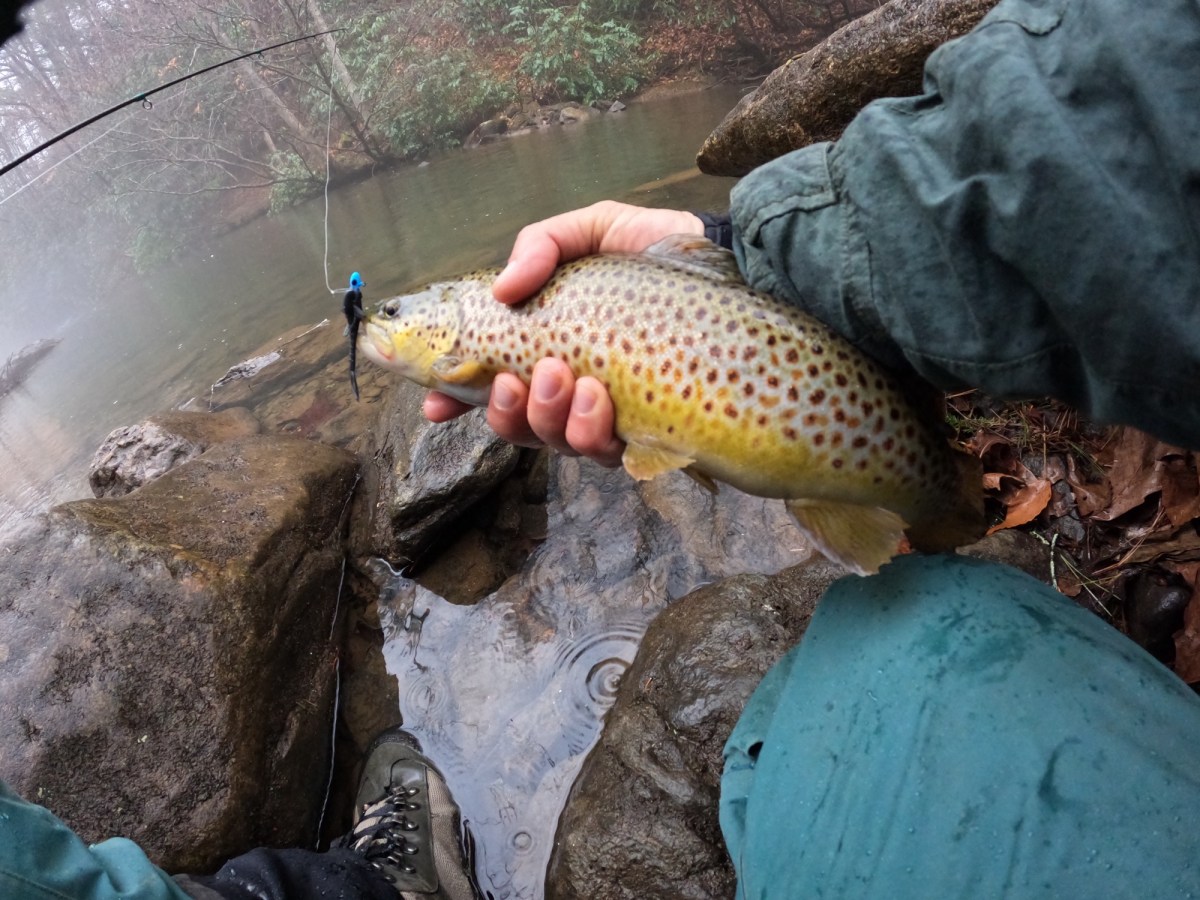
Brown trout from an Appalachian stream.

More so than other trout, brown trout avoid current. They’ll often hold near current, within ambush range, but in a hard eddy. They relate heavily to cover, whether that’s a boulder or a downed tree, and tend to hold in the toughest place for making good presentations and getting them out of one does bite.

They also avoid bright light when possible, lurking in shady undercuts and feeding best early and late and on dreary days. Mature browns are actually largely nocturnal. They can be coaxed into biting by day but do most of their hunting under the stars.

Brown trout also favor larger meals than most other trout, feeding heavily on minnows, sculpins and other fish along with crawfish and large aquatic and terrestrial insects.

Browns also seem to be the most wary of the trout, and that only increases with age. If a mature brown becomes aware of you, the chance to catch it diminishes dramatically.

As a final note, larger browns, especially, tend to be loners. Unlike rainbows, which will stack up in a good feeding lane, a big brown is apt to own a dark undercut bluff hole or might be a part of a small, loose group in a major pool in a large river.

I’ll save fishing tactics for future posts, but if you intentionally consider how browns differ from other trout in their behavior, the spots to target and best tactics become far more intuitive. I will list a few of my favorite brown trout lures below.

Brown trout caught from the bank from the White River in Arkansas.

5 Top Brown Trout Lures

Brown trout on a Rebel Tracdown Ghost Minnow
  • Smithwick Suspending Rogue
  • Tasmanian Devil
  • Rebel Wee-Crawfish
  • Rebel Tracdown Ghost Monnow
  • Great Lakes Finesse Juicy Hellgrammite

Use the code FOF15 for 15 percent off your entire order at Lurenet.com.

Daydreaming About Ice Fishing

A Facebook memory popped up today, with a photo of an ice fishing graph as an airplane carry-on, and I can’t deny I’m a little envious of myself that year.

I’m a BIG fan of ice fishing. Walking across the top of a lake is true Fishing on Foot! Living in Georgia and having other fishing priorities for work, I don’t find my way to ice country nearly as often as I’d like.

Odd for a Georgia angler, I suppose, I do own ice rods, electronics, lures and clothes, and even an auger and simple sled for dragging stuff across the ice. I just don’t find enough opportunities to use my ice gear.

Simple Ice Fishing

Bluegill make great targets for simple ice fishing excursions.

My favorite ice excursions are the simplest sorts — when fish are close enough to the shore or a lake is small enough that you can simply walk to a fishing spot, carrying gear in a bucket or pulling a small shed.

I’m not opposed to fishing from a shelter when it’s needed. If it’s bearable, though, I’d rather fish in the open and stay mobile, carrying only a rod or two and hopping from hole to hole to search for fish.

Trout are my favorite winter targets — maybe because they are cold oriented and tend to be turbo charged when other species are a bit slower than normal. That said, I really like catching bluegill and crappie through the ice, and there’s no species I wouldn’t enjoy catching.

No ice plans for this winter, as of now, which I guess is why the picture makes me jealous of myself. I certainly wouldn’t pass on the right opportunity, though, so I’m not yet ready to give up on this winter!

My all time favorite ice catch was this lake trout from the Black Hills of South Dakota that was part of a marvelous winter trip to Deadwood.

Double Mayfly Rig for Crappie, Trout & More

Tandem jig rigs provide a host of advantages for many fishing situations, so I use them quite a bit, including a variety of configurations. Recently, I’ve made extra heavy use of a specific double Mayfly combination, especially when I’m wading a trout stream or walking a riprap bank or dock to fish for crappie.

The specific combination is a Bobby Garland Mayfly, which is 2.25 inches long, and Itty Bit Mayfly, which is 1.25 inches long. The bigger one goes in front and is on a slightly heavier jighead. It sinks first, often getting fish’s attention, with the irresistible tiny one then falling into the zone.

I like big/little combinations with the same shape of bait because they move the same ways in the water, and in trout streams or around crappie cover I especially like the Mayfly shape because aquatic insect nymphs are often prevalent forage that the fish are used to seeing and eating.

Rigging Specifics

I tie both jigs on using loop knots to free the action and get the bait away from the line and typically space them about 18 inches apart.

I’ll rig the larger front one on a 1/16- to 1/32 ounce jighead, with depth and current dictating the specific weight, and the smaller on a 1/48-ounce Itty Bits Jighead.

Often I’ll match the colors, but at times I’ll mix them up, and if one far outperforms the other, I’ll switch the color of the other to match to try to determine whether size or color has been the difference maker.

Fishing the Double Mayfly

In trout streams, I fish mostly near the bottom and let the current do the bulk of the delivery work to match what the fish are used to seeing. I’ll orient casts upstream, let the rig sink as it drifts, and then reel and use gentle upward lifts of the rod tip. I lift just enough to keep the bait from dragging and hanging and to add a bit of wavering action.

For crappie (and other lake fish), I’ll either pitch the rig and let it swing down, or suspend it straight beneath the rod tip and experiment with different movements and with holding the rod tip completely still.

The best presentation varies daily, but as a rule, adding less action produces best. Both Mayfly baits have a natural shape and very enticing subtle wavering action when held still or barely twitched.

Bobby Garland Mayflies and Itty Bit Mayflies are available from many outdoors retailers, including Lurenet. Use the code FOF15 at checkout for 15 percent of your entire order at Lurenet.