No Itty Bits in Car Kit!

I always have micro jigs in the back of my car. Well — almost always!

One of my sons has a pond on the property of the home he recently bought. Of course, I can’t visit without he and I making at least a few casts.

Last weekend we started out trying to catch bass. Me with topwater and him with a YUM Dinger. He had one fish on but didn’t land it. Nothing for me. We both had bluegills and green sunfish pecking at our bass lures, though, and we wanted to catch something, so we decided to downsize.

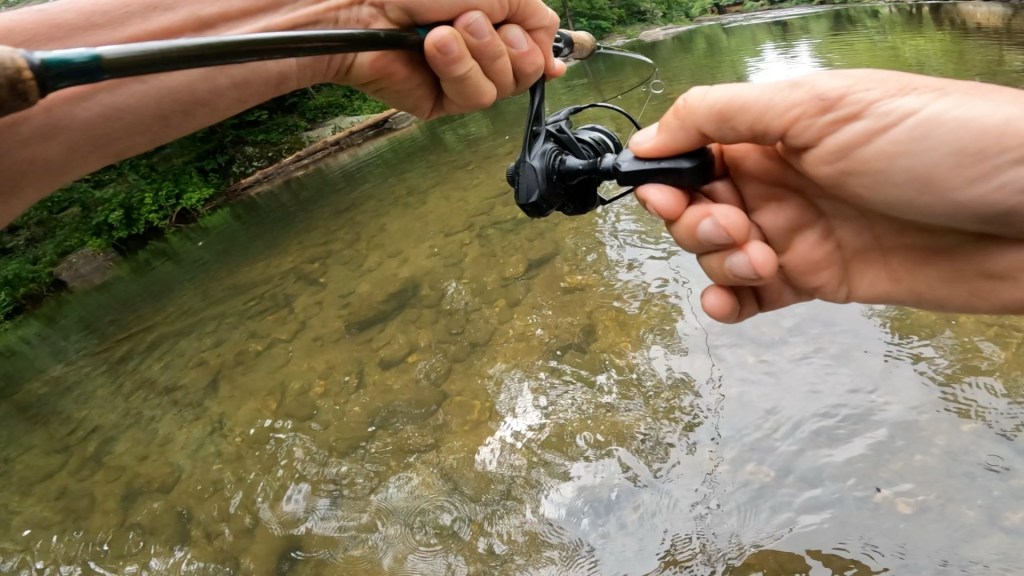
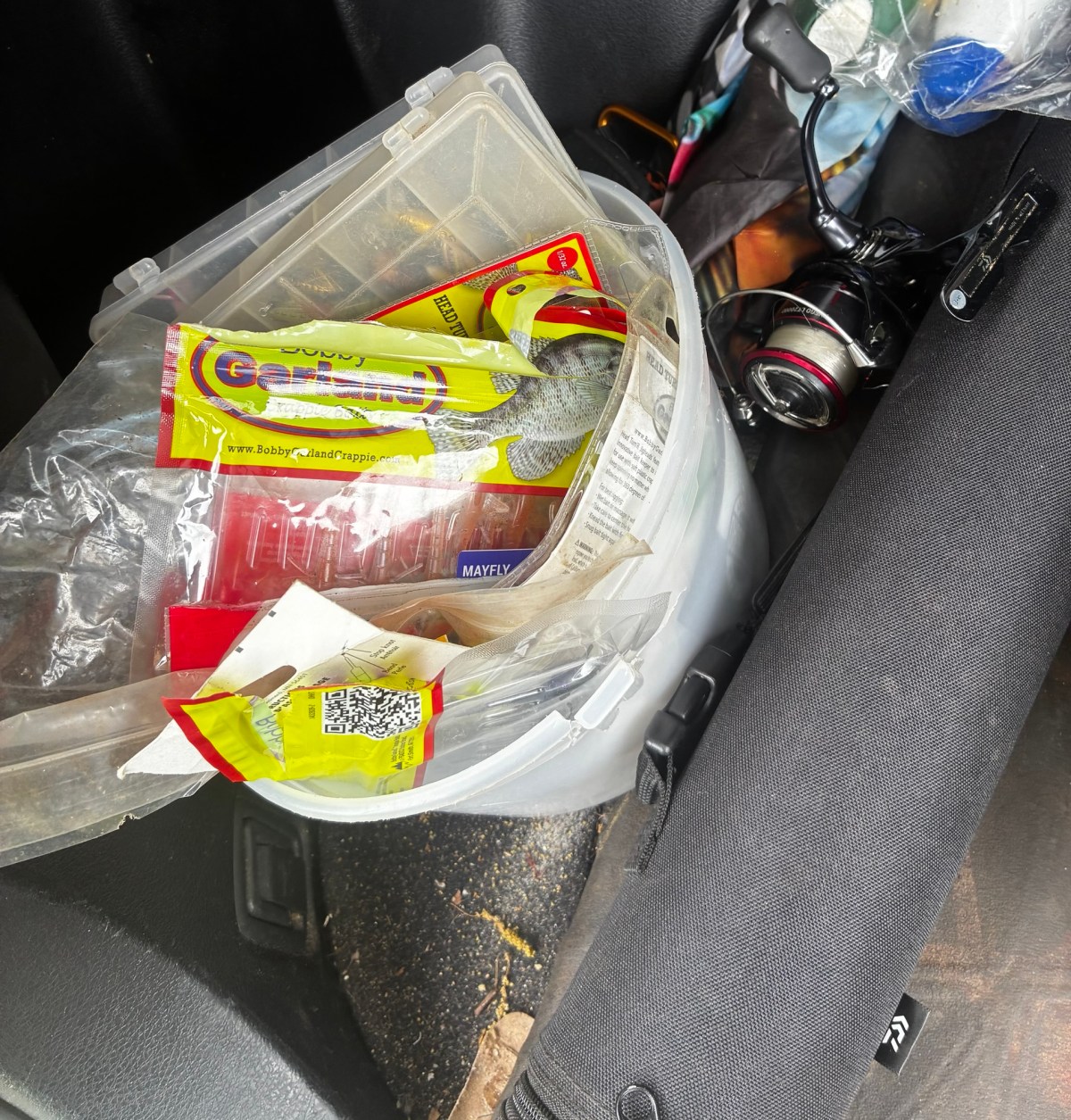
My car “fishing kit,” which consists of a pack rod, a light spinning reel and an ice cream bucket with miscellaneous lures and terminal tackle in it, always includes at least a couple of packages of Bobby Garland Itty Bit baits. Or at least it is supposed to. To my surprise and dismay, there were zero Itty Bit packets in the bucket that day!

The kit doesn’t have a formula, and its contents change a lot. I’m often throwing things in and grabbing things from it, and if I grab something from the bucket and put it in a vest pocket one day, it might end up getting put away in the basement instead of going back in the bucket. So I can see how it happened. Still, there are usually multiple Itty Bit packets. That’s the closest thing there is to a standard item.

There was one packet of 1/48-ounce Itty Bit Jigheads, and my son found a single Itty Bit Slab Hunt’R loose in the bottom of the bucket. He tied that on and and I rigged one of the little jigheads with just the tail section of a Bobby Garland Mayfly.

Those did the job fine, and we managed to catch several bream and one shiner. I felt very ill equipped with no Itty Bits packages in my bucket, though.

That has since been fixed!

Along-the-Way Fishing Stops

I’m always on the lookout for stops along travel routes that allow for simple fishing breaks.

I spend more than a little time staring at Google Maps on my phone or a computer — searching for parks, greenways, canoe launches and rights-of-way that front a creek or river or maybe have a pond or two on the property. And that searching revs up whenever I’ll be traveling by car and suspect I might have a bit of extra time.

If a spot seems to have potential, I pull up the satellite view and zoom close to see what I can discern about the character of the waterway and the quality of the access. I’ll also look at reviews to see what happens to be mentioned about fishing, but unless something credible seeming mentions fishing not being permitted, a lack of good reports definitely doesn’t keep me from stopping.

Some stops work out great, and I find myself wishing I had more time but am glad to have more knowledge about them for the next time. Others are very quick because they don’t turn out to be that interesting or possibly because the access area is small and other anglers are already fishing. Most fall in between.

I made three stops during a recent drive. One was to a spot I’d visited before so I knew what was there. It’s a canoe access with no other developed facilities, but it offers a couple hundred yards of river access, with easily waded shoals and bank access to big pools.

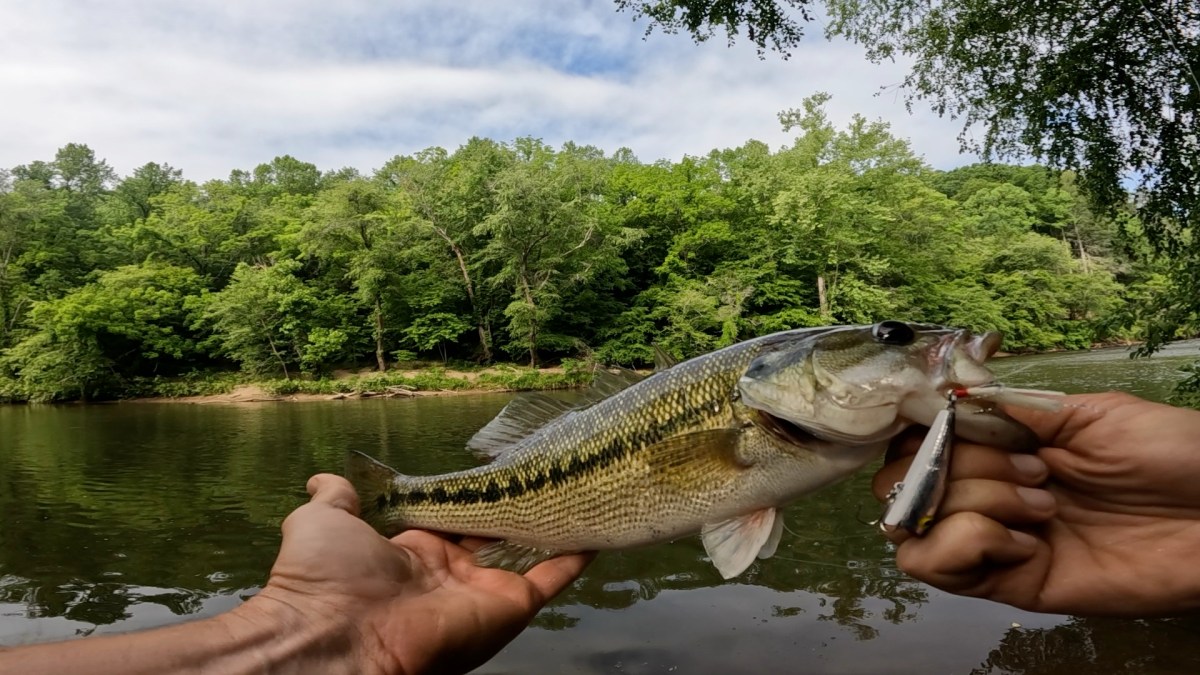
I caught two spotted bass, including one solid fish that hit a Pop-R, got some lure photos I needed for work, and enjoyed a nice little driving break.

The second and third stops were pure scouting. One was a linear city park along a river. It has ballfields, a playground, picnics tables, a walking trail, etc. No mention of fishing online, but there were obvious fishermen’s trails to shoal areas, and one other angler I spoke with said he catches trout and bass there at times.

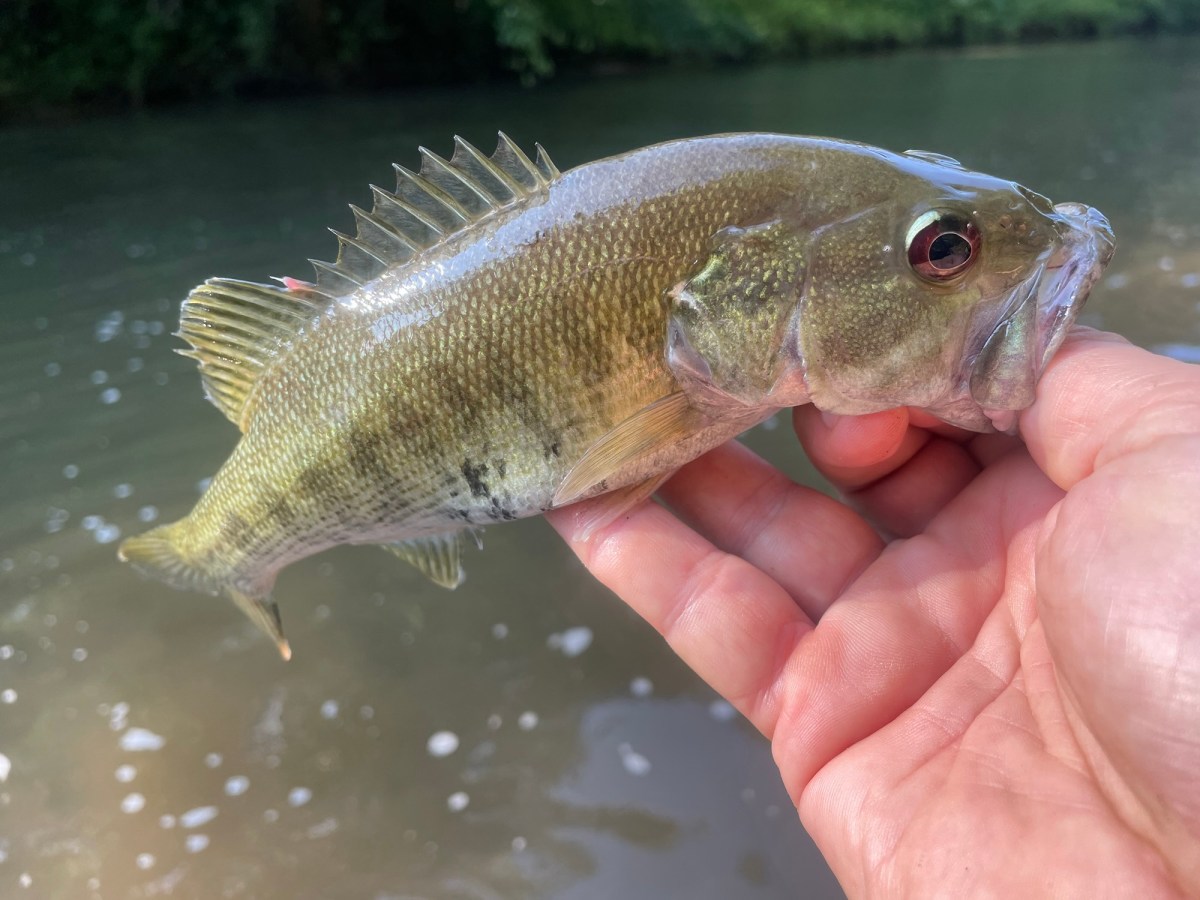
I just fished one spot, and not for too long, but I caught one little redeye bass and got a few hits — I think from panfish. I was impressed by my findings and definitely will stop there again when I have more time.

The third was a Greenway trail along a creek. The creek was too small to see much on the satellite. As it turned out it was ditch-like and a bit muddy, with high banks and only a few gaps in trees to provide casting vantages. I didn’t stay long at all and probably won’t return to that one.

Interestingly, although it isn’t listed as a fishing spot and didn’t look that great, I saw three other fishermen in a short visit. All had backpacks and a couple of rods and looked like fairly dedicated bass anglers. I spoke to one angler who said it had good fish in it, but they could be challenging to catch, and he hadn’t caught any that day.

Of course, to me it’s less about what I find at any given spot and more about the value or searching out stops and keeping a bit of gear handy in my car and the fun of discovery.

My Favorite Summer Bank Fishing Lure

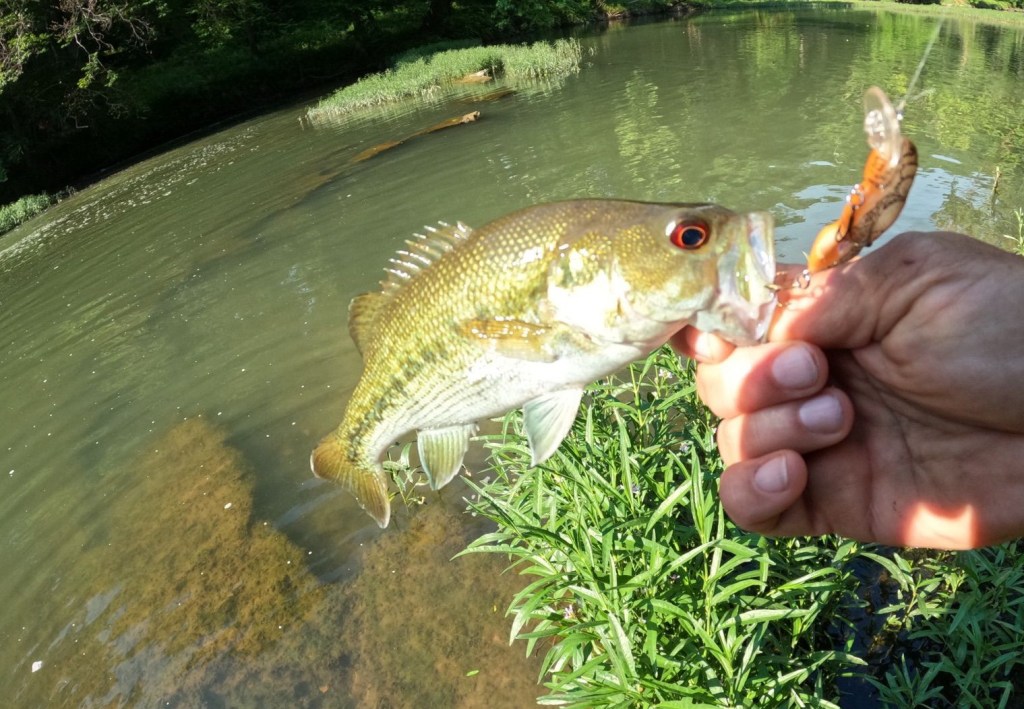
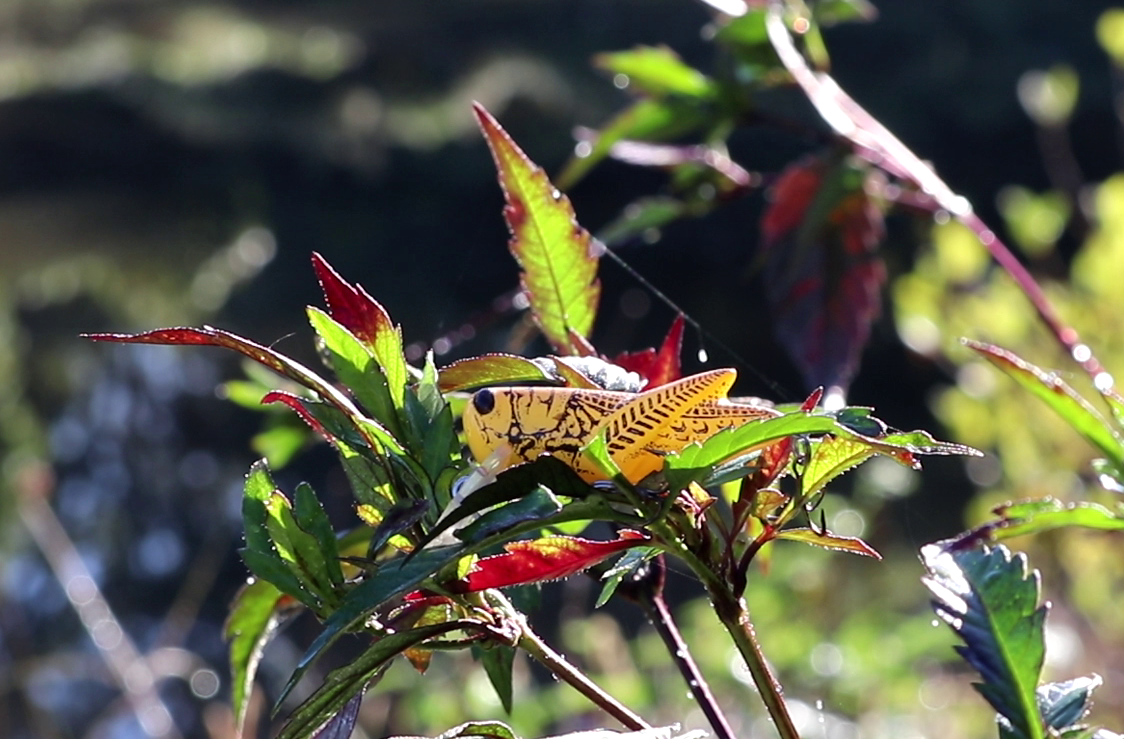
A Rebel Crickhopper offers easy fishing and excellent opportunities for mixed-bag fishing action from the bank.

If I’m walking the bank of a pond or creek from late spring through fall, looking for whatever will bite, my starting lure is usually a Rebel Crickhopper. This little floating/diving insect-shaped crankbait is ideal for a multi-species, bank-walking approach.

A Crickhopper excels for the shoreline approach in part because it imitates forage that is normally found near the shore and that appeals to fish holding in shallow water. Because it floats, it’s easy to keep out of underwater snags and to control the positioning to fish near cover. It’s also small enough to appeal to many different fish species.

Fishing a Crickhopper

Rebel Crickhopper

The Crickhopper is technically a shallow crankbait, and many anglers enjoy great success just casting and reeling. I fish it primarily as a topwater lure, though, because that presentation, in my mind, best matches the behavior of a displaced terrestrial insect.

After casting, I always let the bait rest a few seconds, at least. Fish hear the landing splash and cone to investigate, and often strike before I move the bait an inch. If none bite, or they peck at it but don’t quite commit (common with this lure), I begin working it on top, usually with small twitches of the rod tip.

Little twitches make the bait dance erratically on top, and it looks strikingly like a grasshopper that has found itself errantly on a pond’s surface and is trying desperately to find dry ground. I pause occasionally to match a bug trying to get oriented. Big strikes commonly come right after a pause.

Sometimes, instead of twitching the lure to make it dance, I’ll reel very slowly with the rod tip kept high. This makes a Crickhopper “wake,” wobbling along right at the surface.

I mix up actions and cadences and even throw in some slow cranking to see what the fish prefer any given day.

Crickhopper Models

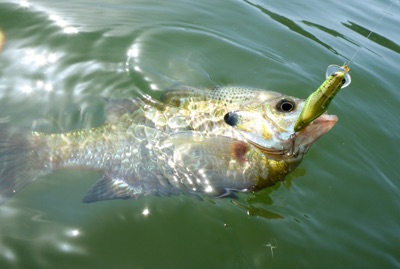
Spotted bass on Crickhopper Popper
  • Original Crickhopper – 1 1/2 inches and weighs 3/32 ounce
  • Bighopper – Same shape and action as original but slightly larger at 1 3/4 inches and 1/8 ounce
  • Crickhopper Popper – Size and profile of Bighopper bit with a cupped popping face.

Biggest One that Got Away

The biggest fish I’ve ever hooked bit while I was fishing alone from a bridge.

In a recent post about my most heartbreaking lost fish — a bull redfish that I hooked from a bridge when I was around 16 — I noted I had once lost a fish that was substantially larger than that one.

Completely unlike the big redfish, which I was very close to landing when it surged and broke my line, I genuinely never had a chance at catching this fish.

I actually never glimpsed the fish, but I assume it was a big shark. Officially that was what I was after, although when a buddy and I put out our “shark rods” we usually only caught stingrays or overzealous sail cats, and when I think about it now, I don’t know how I would have landed even a small shark had I hooked one that day. I suppose that was a “cross that bridge when I come to it” concept.

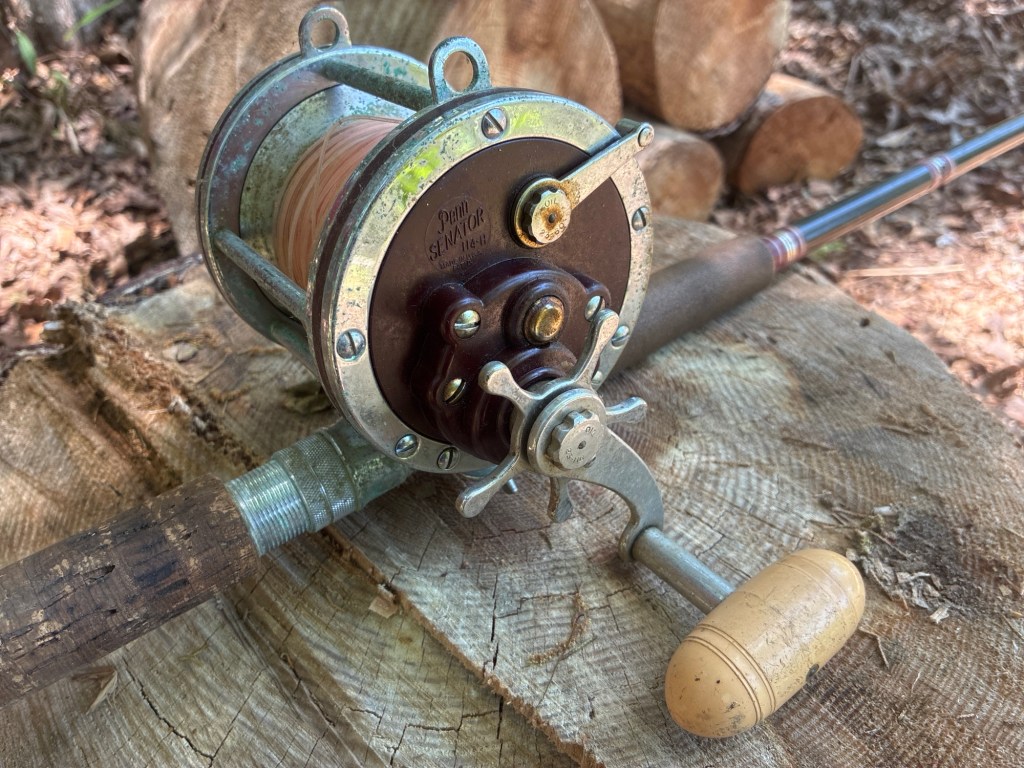
My “shark rod” when I was growing up was a deep sea outfit I had inherited from my grandpa.

Like the lost redfish day, I was fishing alone and from a bridge. I’d guess I was 17 or 18 years old. This time it was the bridge over Johns Pass, between Madeira Beach and Treasure Island, along Florida’s Gulf Coast. My “shark rod” was my late Grandpa’s old custom boat rod and Penn Senator 114H he had used for deep sea fishing, spooled with 50-pound test, I think.

A simple bottom rig and big hook was almost certainly baited with a pinfish, grunt or chunk of ladyfish I had caught with my other rod. The shark rod was always something I put out if I caught suitable bait and was out there “just in case.” It was never central to the primary quest, which might be why I didn’t have a landing plan.

I don’t remember any other catches from that day or even how I was fishing with the primary rod, and only know I caught something because I never bought fish for cut bait, and I wouldn’t have bothered putting out squid or shrimp on the big rod.

Here’s what I do remember.

At some point my big reel’s clicker abruptly started singing, and line was spinning off the spool. I grabbed the rod, braced myself, and was ready to set the hook when I put the reel in gear. As it turned out, no hookset was needed or possible. The instant my thumb slid the lever to engage the reel, the fish hooked itself and nearly pulled the rod from my hands.

It’s good that the drag wasn’t locked down, or I probably could not have held on. I don’t know that hooking the fish slowed it at all. I was too frantic to turn off the clicker so the reel continued screaming at the giant fish raced away and burned line off the big reel.

Short story short, because it happened quickly, and there really aren’t other details to tell: I kept gradually tightening the drag as much as I could without the rod being yanked from me, and the fish kept peeling line. I don’t think it ever slowed significantly, and in fairly short order it took all my line. Again, it was good that the line wasn’t attached too securely because there’s no way I could have held on and kept myself on the bridge!

I don’t recall what happened after the fish was gone. I suspect that was enough excitement and that I packed up and went home. As hooked on fishing as I’ve always been, though, I might have just gone back to fishing with the other rod as if that hadn’t happened.

I suppose because I never had a chance, that memory doesn’t sting like the lost bull redfish. It was just a thrilling few minutes that were unlike any others in a lifetime of fishing.

Wading Staff Opens Access & Adds Safety

Discussing the virtues of a wading staff and detailing the staff I carry.

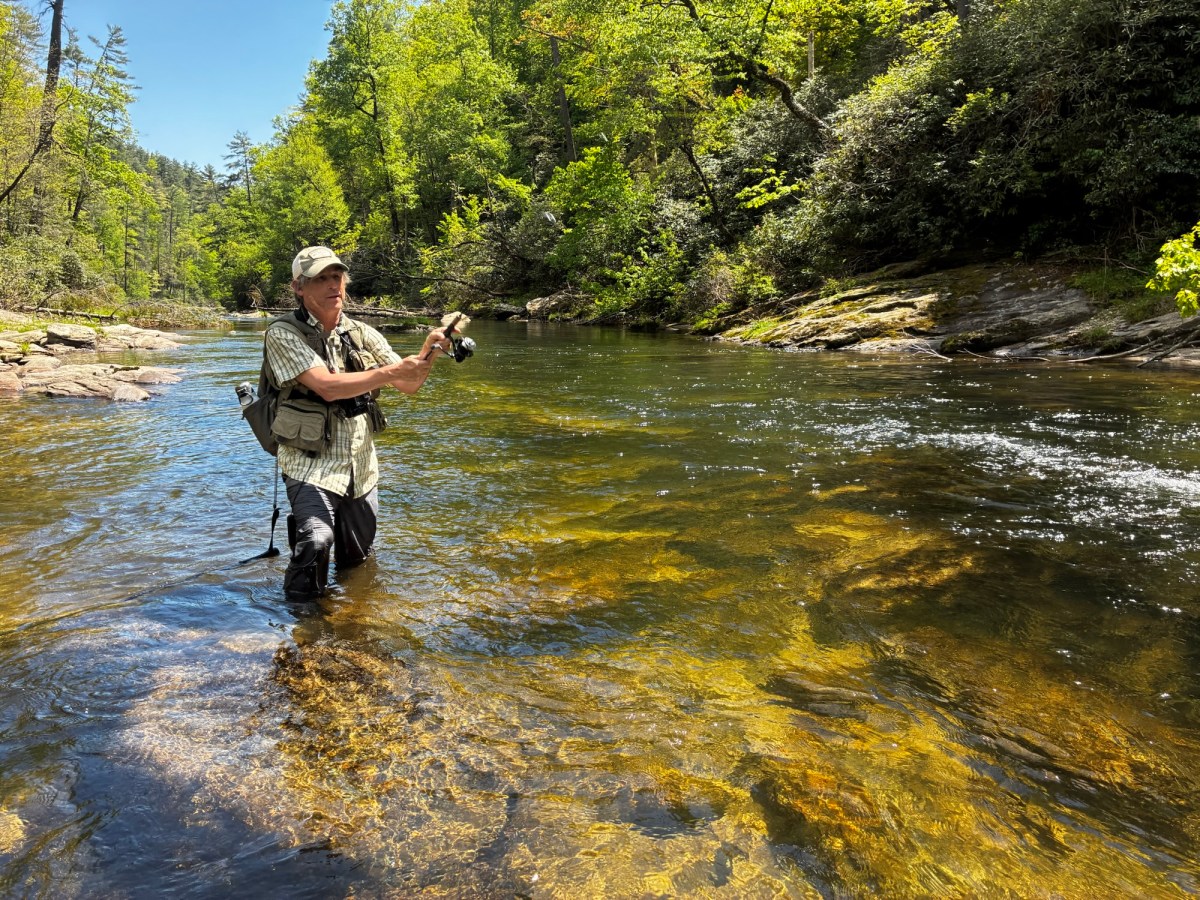
A few times while fishing the Chattooga River last week I thought about how thankful I was to have a wading staff in hand to test the depth of the next step or provide a “third leg” of stability while crossing the the river in significant current.

It was actually a previous trip to the same river with the same friend that prompted me to finally add a wading staff to my stream gear. Very early that day, we came to a spot where we had to cross to continue upstream, and I was apprehensive because of the depth, amount of current, and uneven bottom. My friend, Eric, had brought a wading staff, as he typically does. He ended up crossing easily, with aid of the staff, and then tossed it back to me so I could find my way across.

Eric actually forgot his wading staff at home last week. After realizing that as we geared up by my car before hiking to the river, he went into search mode along the trail and found himself a stick that was a good length and sufficiently sturdy for the job.

I should have picked up a wading staff long ago, and I’m still working on remembering to bring it (and use it when I have it). Having a probe to test the bottom depth and makeup and a third point of support makes it SO much easier and safer to wade anywhere depth, current and/or an uneven bottom make-up add wading challenges.

My Wading Staff

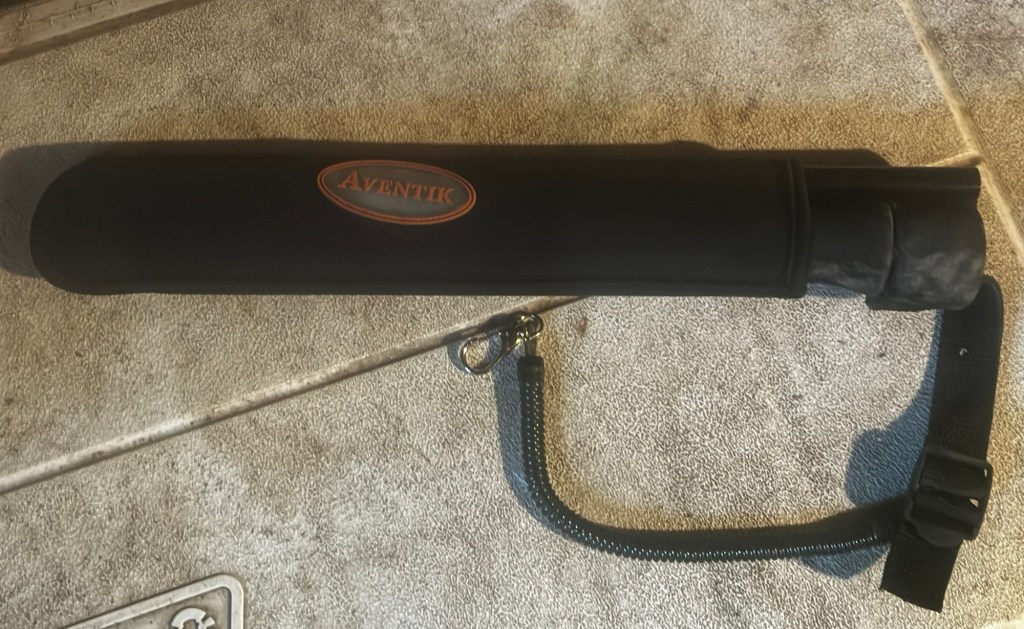
Aventik Foldable Wading Staff

My wading staff is made by Aventik. I’ve been happy with its functionality through several uses.

It’s a four-piece design, with elastic through the center, so it can be folded small but extends and snaps together like a tent pole. It’s 55 inches long and has a tungsten pointed tip and an EVA foam grip.

A coiled leash allows you to tether the staff to a belt loop or vest. It also has a camera mount on the handle to use the staff as a monopod, but I haven’t experimented with that application.

An included neoprene sheath is designed to hold the folded-up staff when not in use. I found the sheath tended to twist, and the pole would fall out. That’s not an issue for me, though. I keep the staff folded in the sheath at home and in the car, but wouldn’t want to keep folding and re-extending it astream anyway and would prefer to just let it drag behind me.

I like the light weight of an aluminum staff and definitely prefer something I can attach because I don’t like carrying extra things that I have to set down and remember to pick back up whenever I move. That said, a simple wooden hiking stick or even a stick you find by the trail or the river can do the job and is far better than not having a wading staff when you need one!

First Cast Blues

Fish on the first cast, then nothing else!

For starters, I’m not superstitious. I don’t believe that catching a fish on the first cast has any “jinxing” effect. Occasionally the only fish that bites just happens to be on the first cast.

That’s exactly what happened to me this week while doing some photo work and fishing on the Georgia coast. I caught a fish on the first cast I made after arriving at St Simons Island, and then I didn’t catch another fish (or get another bite that I detected) the rest of that day or the next day.

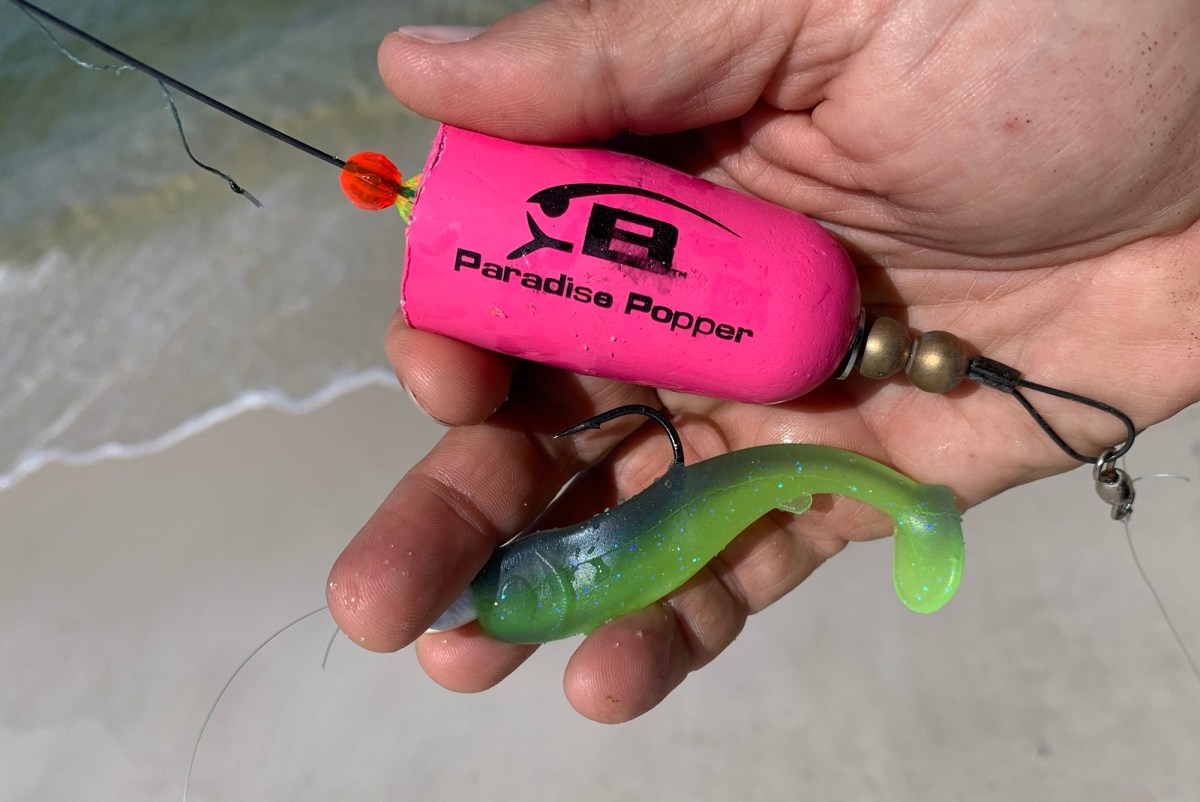
The lone fish, a small bluefish, ate a YUM FF Sonar Minnow fished beneath a Paradise Popper popping cork, cast from the beach near the St Simons Pier. Bluefish aren’t usually alone, so I had high hopes of catching more, and I even tried a couple of flashier, faster-moving lures that tend to prompt bluefish attacks. To no avail.

I will say that I didn’t fish an enormous amount on those days. Shooting lure photos was the main objective and my time priority. I fished some in various spots with hopes of getting some lure-in-mouth photos, I think with some quality presentations in good spots. Nothing else obliged, though.

The bluefish did give me my first saltwater catch of 2026, and one fish is certainly better than no fish!

BIG One that Got Away

My hardest and most memorable big fish that got away.

Broken line. Broken heart. No going back to undo my error. I knelt on the sand staring blankly at the water before walking back to my bridge spot to grab my gear and head for home.

I was alone and had driven myself, so I was at least 16 at the time. I don’t think I was much older, though, and it was probably one of my first solo outings to the bridge from Clearwater Beach to Sand Key.

I don’t recall much that preceded the big fish, but I’m certain I was fishing with live shrimp from Bonnie’s Bait Shop, and there’s a reasonable chance I had caught a few whiting, hardheads, pinfish, grunt, specks or puppy drum.

I remember far too clearly the block of what I’d guess to have been about 45 minutes between setting the hook into what I’d soon learn was a fabulous bull redfish and the moment my line and heart broke simultaneously.

With no opportunity to weigh or measure the fish, I could only estimate its size, and more than four decades have passed since that day, but I’d guess it was between 25 and 30 pounds. Through the latter part of the fight I got very good looks at the thick-bodied, golden-sided fish, which had a half a dozen or so spots on each side.

I didn’t own any saltwater tackle at the time, so I was fishing with my bass-sized baitcaster, which I’m sure was spooled with 12- or 14-pound test. The first run after I set the hook took almost all my line. I could see my spool when I finally persuaded the fish to turn.

At least two similar runs occurred before I could even think about trying to start working toward the end of the bridge, where I would need to climb the rail, hop down to the ground and ease toward the water’s edge. I had neither a pier net, nor help, so a beach landing would be the only possibility.

Without recapping every moment, it was a back and forth affair, and I had to reach around several streetlight poles, most of them more than once when the fish would surge again.

Eventually the fish wore down enough to be more easily influenced and then dragged along at the surface. That allowed me to get down to the sand and keep the line tight as I moved into landing position.

It seemed like I had won as I pulled the fish closer, and I dropped my guard. I was thumbing the spool with the big fish almost within arm’s reach. I don’t know if the fish saw me or felt the bottom, but it suddenly surged, easily snapped my short line and slipped out of sight.

It still makes me a little sad, both because it would have been such an amazing catch for me at that time and because I’ve always wondered if the fish survived. There were no special regulations for large redfish at that time, and I would have kept it simply because of the likelihood of it not surviving after such an extended battle.

It wasn’t the biggest fish I’ve ever lost while Fishing on Foot. That’s another story for another day. However, it definitely was my hardest and most memorable “big one that got away.”

4 Advantages of Fishing From the Bank

Learn about the distinct advantages afforded by an on-foot angling approach.

Fishing from the bank of a river, lake, creek or pond offers distinct advantages over the boating approach. Among the most significant advantages are reduced cost, convenience for easy outings, access to many areas, and fixed positioning. The same advantages apply to wade fishing.

Reduced Fishing Cost

This advantage is pretty straightforward and so obvious it almost doesn’t seem worth mentioning. It’s too important to ignore, though. Simply put, shoes are cheaper than boats.

This is true at the most basic level. Even renting a simple boat for a few hours costs more than walking the bank of a waterway, which might involve some parking or area access fee, but that is usually it.

When you’re taking about owning any kind of boat, the cost difference is much more extreme, and any boat owner will tell you that the cost doesn’t end with the purchase! Fuel, repairs, insurance…

Increased Convenience

One of my favorite things about Fishing on Foot is that quick spontaneous outings are so simple. I can grab a few things from my basement (or even just go with the travel rod and a bit of tackle that’s always in my car hatch), drive to a nearby park or river access and be fishing almost immediately.

Many days, when I only have a short window, I wouldn’t end up fishing if I had to hook up a trailer or load a kayak on top of my car, load the boat at water’s edge and then get to my fishing spot — and then do all the same steps the other way when I’m done fishing. I like to maximize my fishing time with the simplicity of the bank or wading approach.

Similarly, I’ll commonly use the gear in the back of my car or tote a specific rod and reel and lures when I know I’ll be passing an interesting access area or be near a fishing spot when I’m doing completely different activities. The simplicity of bank fishing makes those bonus fishing stops practical.

Exclusive Access

It might sound strange hailing the unique fishing access afforded by fishing from the bank. Without question, a boat allows you to reach far bigger portions of many bodies of water, and I’m certainly not suggesting otherwise.

That said, there are many small streams, shallow flats and waters protected by shoals or sandbars that most boats simply can’t get to, and many of these areas are accessible by bank or by wading and provide excellent fishing opportunities.

Additionally, some entire waterways have no place to launch but can be fished from the bank.

Fixed Positioning

A final highly practical advantage of an on-foot approach to fishing is complete control of your positioning for fishing the shallow zone where so many fish feed.

From solid ground you can work the shallow zone thoroughly with no concern of drifting out of casting range or over the fish, which is sometimes a real challenge from a boat.

The same control of positioning makes it easy to work every piece of cover from exactly the right angle and to repeat casts that produce fish. Sometimes the exact cast that produces a fish will produce more fish, and repeating a cast is far earlier when your position is unchanged.

Fishing on Foot has its advantages.

Qualifying Shoal Bass

I recently blogged about getting my Georgia Bass Slam started for 2026 with a Bartrams bass and ended the blog wondering what species would be next.

The answer came a couple of days ago in the form of a chunky shoal bass. That was an extra good one to notch from my standpoint because of the statewide minimum size for the species. Bass must be of legal size, if a minimum size exists, for bass slam qualification, and the minimum size for shoal bass is 15 inches. That’s not a giant, but it’s a quality fish and not always simple to come by.

My qualifying shoal bass was 16 inches long and probably weighed around 2 1/2 pounds. I also caught a smaller one of maybe 13 inches from the same area. I was fishing a creek in the Upper Chattahoochee River watershed and actually thought I might find a Chattahoochee bass.

Interestingly, I caught the first shoal bass on a tiny crappie jig. I was still rigged up from an earlier crappie trip when I arrived and had a tandem rig of a Bobby Garland Mayfly and Itty Bit Mayfly. The fish hit the Itty Bit version, which is only 1.25 inches long.

Ironically, the smaller shoal bass was on the same rig, but it hit the larger of the two jigs!

Watch for a short video from that afternoon on Fishing on Foot YouTube!

New Ultra-Finesse Jig from Rebel Lures

New jigs are a great fit for multi-species creek fishing.

My most recent post focused on a few recent catches, but I failed to note that I caught the Bartrams bass, redbreast and shoal bass on the same kind of jig — the new Ultra-Finesse Jig from Rebel Lures.

The purpose of both short afternoon fishing trips was to get photos of the new jigs for my job. Of course I had to try them out, though, and I was impressed by the results of my short test runs — not just because I caught fish, either. I fished a few versions and was super impressed with how they looked and moved in the water.

The Ultra-Finesse Jig is built with a Keg Head Jig with a small collar added to help secure a silicone finesse skirt, and comes pre-rigged with a LIVEflex soft plastic body.

The buoyant trailers, when combined with the Keg Head design, really stand up nicely, helping fish find the bait. The same buoyancy slows the jig’s sink rate, adding an extra measure of finesse.

The jigs come in “Snack Packs,” with two jigs rigged with different LIVEflex baits and a spare of each of the soft plastics. All include one jig rigged with a Creek Craw. The second is either a Cata Crawler, which is a small Ned-style worm, or a Shore Shiner, which is a small, narrow swimbait.

I’ve been fishing with LIVEflex baits since the first samples came out, and they play an important role in my creek game. The Ultra-Finesse Jig is a natural progression for me, and having fished them just a tiny bit now, I’m eager to do a lot more!

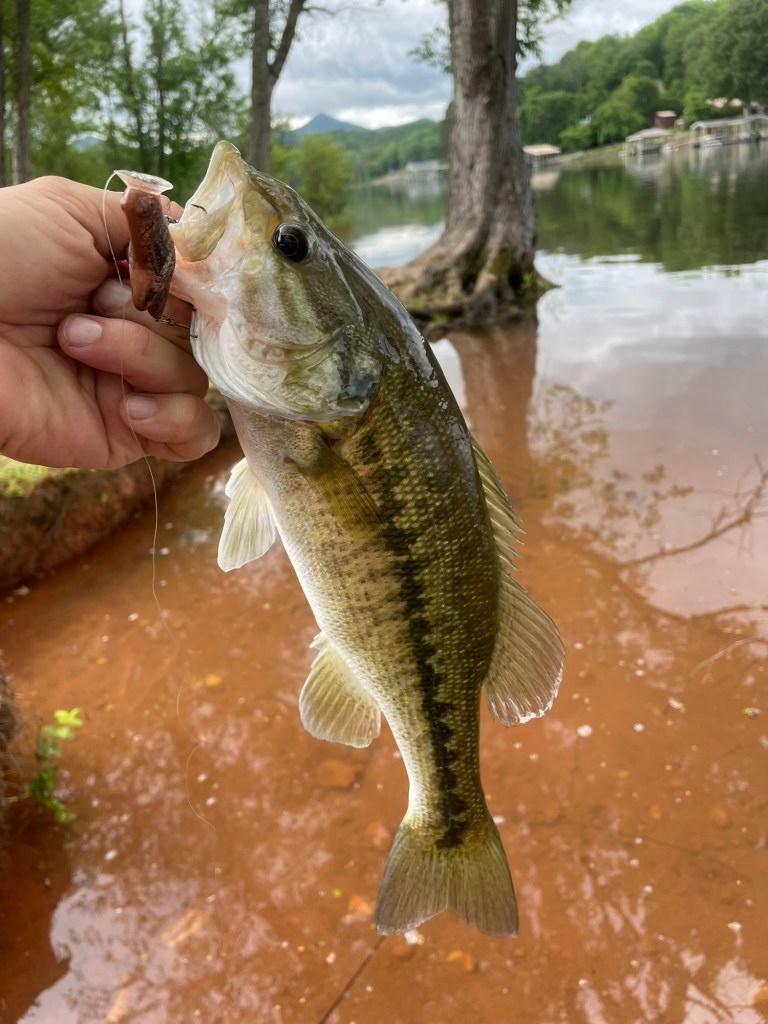
Bartrams bass on Rebel Ultra-Finesse Jig